





























The Impact of Augmented Reality Technology on Visual Perception in Preschool Children at Risk of Specific Learning Disorder
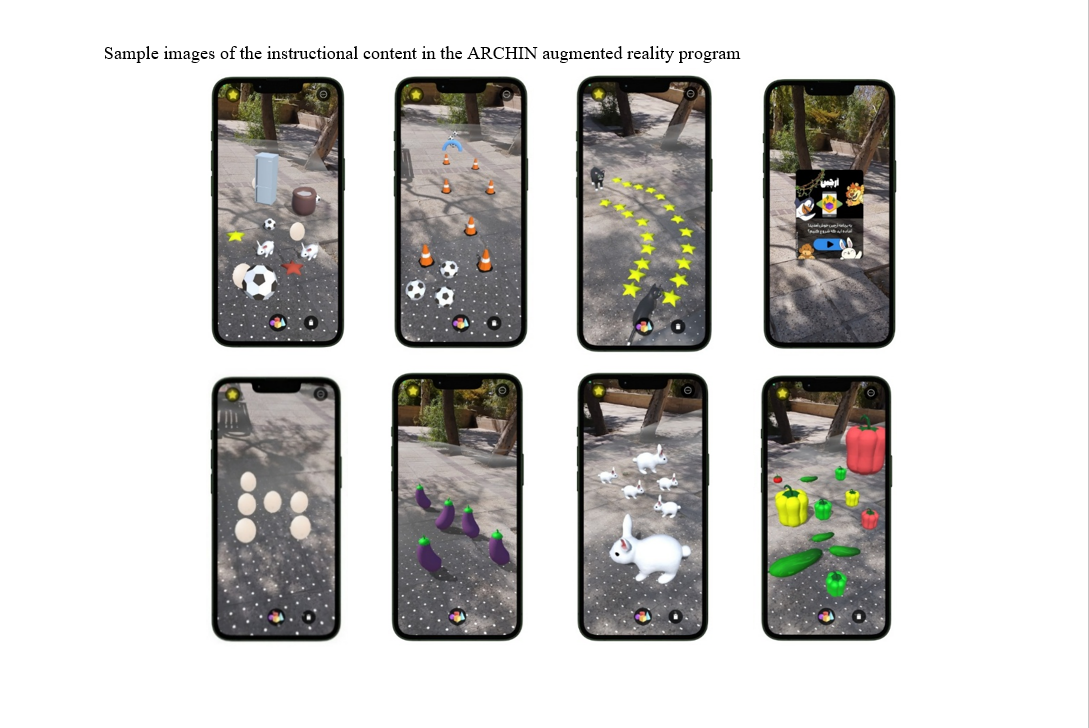
Preschool children at risk of specific learning disorders face challenges in processing visual information due to deficits in visual perception, which can adversely impact their cognitive and academic development. This study aimed to investigate the effect of augmented reality (AR) technology on enhancing visual perception in these children. A quasi-experimental pretest–posttest control group design was employed. The population consisted of preschool children at risk of specific learning disorders in preschools in Darab during the 2024–2025 academic year. Through purposive sampling, 16 children were selected using the Steele (2004) Learning Disabilities Screening Questionnaire and Captain’s Log software, and they were randomly assigned to experimental and control groups (8 children per group). The experimental group underwent eight 30-minute AR-based intervention sessions. The Frostig Visual Perception Test was administered to both groups during the pretest and posttest phases. Analysis of covariance (ANCOVA), controlling for pretest scores, indicated that the experimental group significantly outperformed the control group in visual perception (p < .001, partial η² = .784) and its subcomponents, including eye-motor coordination (p = .007, partial η² = .442), figure-ground discrimination (p = .001, partial η² = .556), constancy of shape (p = .007, partial η² = .443), position in space (p = .018, partial η² = .361), and spatial relationships (p = .017, partial η² = .366). These findings underscore the effectiveness of AR in enhancing visual perception. By providing an interactive, dynamic, and engaging learning environment, AR proves to be an effective tool for early interventions aimed at supporting children with special needs.