





























Structural Model of Fear of Negative Evaluation in Children with Learning Disabilities Based on Maternal Defectiveness/Shame Schema with the Mediating Role of Parental Mentalization
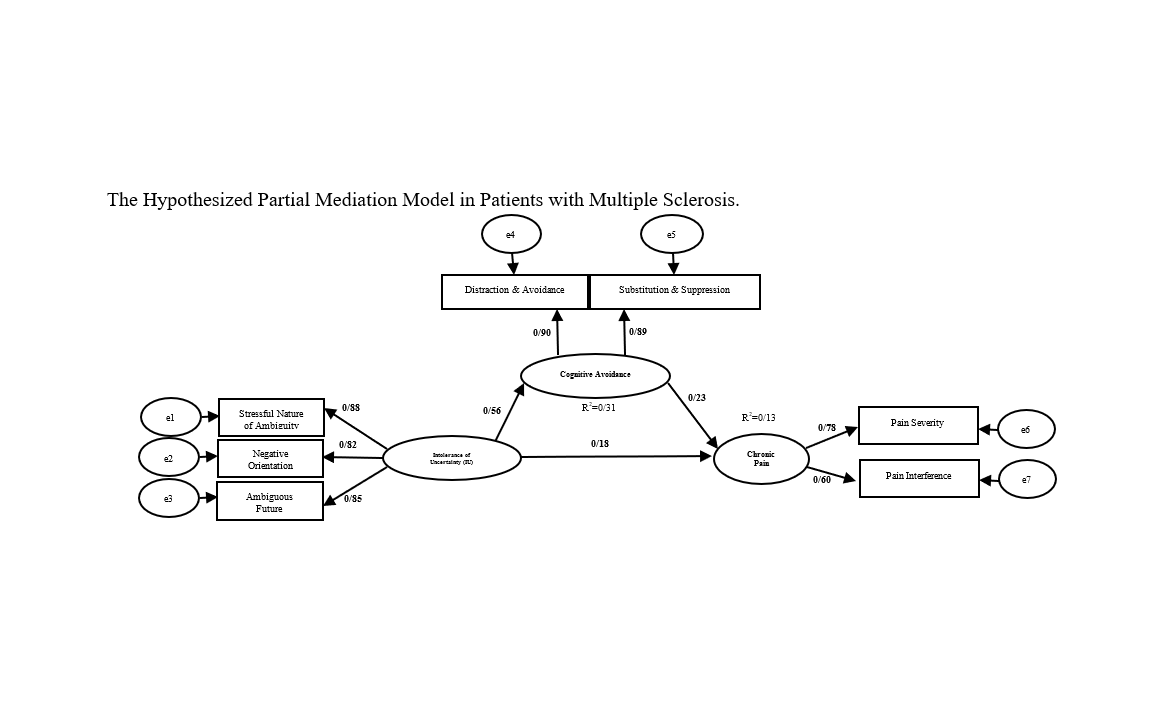
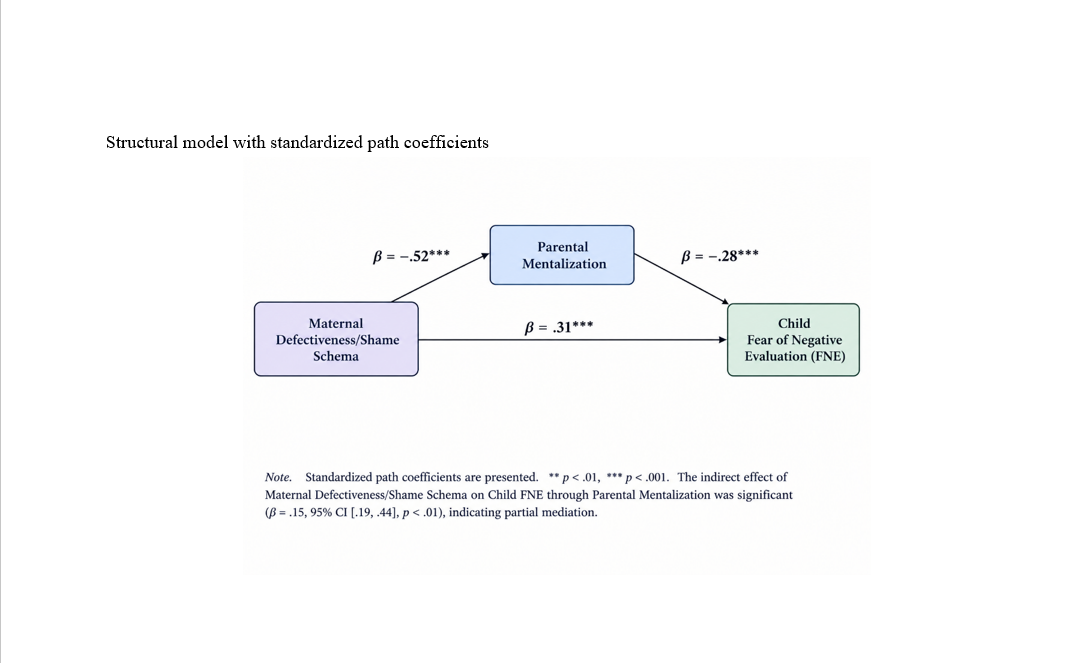
Children with Specific Learning Disabilities (SLD) are highly vulnerable to social anxiety and fear of negative evaluation (FNE); however, the familial mechanisms underlying this vulnerability remain underexplored. This study investigated the mediating role of parental mentalization in the relationship between maternal defectiveness/shame schemas and FNE in children with SLD. Employing a cross-sectional design, the sample consisted of 312 mother-child dyads (children aged 8-12 years). Path analysis was conducted to evaluate the hypothesized structural model, controlling for child's age and mother's education. The structural model demonstrated an excellent fit to the empirical data (χ2/df = 1.87, CFI = 0.98, RMSEA = 0.053). The findings revealed that maternal defectiveness/shame schema significantly and negatively predicted parental mentalization (β = -0.52, p < 0.001) and directly positively predicted child FNE (β = 0.31, p < 0.001). Furthermore, parental mentalization negatively predicted child FNE (β = -0.28, p < 0.001). Bootstrapping analysis confirmed that parental mentalization partially mediated the relationship between maternal defectiveness schema and child FNE (standardized indirect effect = 0.15, unstandardized B = 0.30, p < 0.01). These findings highlight that maternal internalized shame impairs the capacity for reflective functioning, which subsequently exacerbates evaluative fears in children with SLD. Clinical interventions should incorporate family-based approaches, explicitly targeting maternal maladaptive schemas and enhancing parental mentalization to mitigate social anxiety in this clinical population.