Effectiveness of the Cognitive Remediation Therapy (CRT) Program on Behavioral Problems in Children Aged 7 to 9 Years with Attention-Deficit/Hyperactivity Disorder
DOI:
https://doi.org/10.61838/kman.prien.4813Keywords:
attention-deficit/hyperactivity disorder, behavioral problems, cognitive remediation therapyAbstract
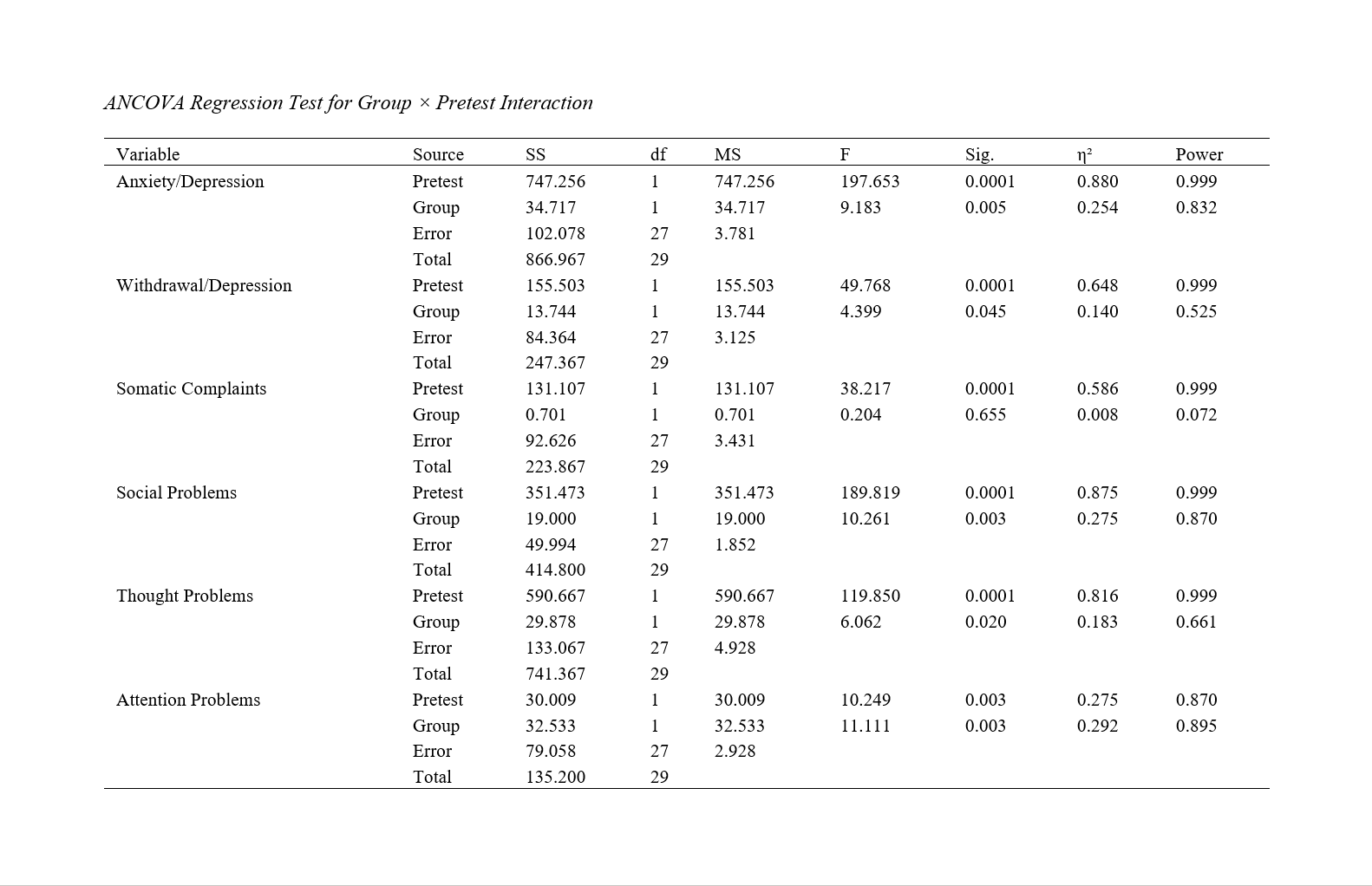
The purpose of this study was to determine the effectiveness of the CRT program on behavioral problems in children with ADHD. This research was a quasi-experimental study using a pretest–posttest design with a control group. The statistical population consisted of all children aged 7 to 9 years diagnosed with ADHD in Ahvaz in 2024. From this population, 30 children were selected through convenience sampling and randomly assigned to experimental and control groups. The CRT intervention was delivered in ten 60-minute sessions, one session per week, for the experimental group, while the control group received no intervention. Data were collected using the Child Behavior Checklist (CBCL). Descriptive statistics (mean and standard deviation) and inferential statistics (multivariate and univariate analysis of covariance) were used for data analysis, employing SPSS version 26. The results indicated that the CRT intervention had a significant effect on the variables of anxiety/depression, withdrawal/depression, social problems, thought problems, attention problems, and aggressive behavior, leading to improvement in these problems in the experimental group compared to the control group (p < .05). However, the intervention did not have a significant effect on somatic complaints or rule-breaking behavior. The findings of this study confirm the effectiveness of the CRT program as an intervention method for reducing several behavioral problems in children with ADHD. Accordingly, implementing this program alongside other psychological and educational interventions in clinical and school settings is recommended for this group of children. Nevertheless, the lack of impact on some areas, such as somatic complaints, highlights the necessity of complementing CRT with additional approaches or designing more specialized sessions.
Downloads
References
Asayesh, M. H., & Parsakia, K. (2025). Paradoxical Timetable Therapy and Psychological Problems: Mechanisms of Change and Implications. Mental Health and Lifestyle Journal, 3(3), 1-21. https://doi.org/10.61838/mhlj.3.3.11
Barkley, R. A. (2012). Executive functions: What they are, how they work, and why they evolved. Guilford Press. https://psycnet.apa.org/record/2012-15750-000
Barkley, R. A. (2015). Attention-deficit hyperactivity disorder: A handbook for diagnosis and treatment. Guilford Press. https://psycnet.apa.org/record/2014-57877-000
Budman, J., Maeir, A., Velder-Shukrun, I., & Zaguri‐Vittenberg, S. (2025). Effectiveness of the Cognitive–Functional Intervention for Adults (Cog–Fun A) in Assessing ADHD: A Retrospective Case Series. American Journal of Occupational Therapy, 79(4). https://doi.org/10.5014/ajot.2025.051045
Cicerone, K. D., Goldin, Y., Ganci, K., Rosenbaum, A., Wethe, J. V., Langenbahn, D. M., Malec, J. F., Bergquist, T. F., Kingsley, K., Nagele, D., Trexler, L. E. F. M., Bogdanova, Y., & Harley, J. P. (2019). Evidence-based cognitive rehabilitation: Systematic review of the literature from 2009 through 2014. Archives of Physical Medicine and Rehabilitation, 100(8), 1515-1533. https://doi.org/10.1016/j.apmr.2019.02.011
Cortese, S., Ferrin, M., Brandeis, D., Buitelaar, J., Daley, D., Dittmann, R. W., Holtmann, M., Santosh, P., Stevenson, J., Stringaris, A., Zuddas, A., & Sonuga-Barke, E. J. (2015). Cognitive training for attention-deficit/hyperactivity disorder: Meta-analysis of clinical and neuropsychological outcomes from randomized controlled trials. Journal of the American Academy of Child & Adolescent Psychiatry, 54(3), 164-174. https://doi.org/10.1016/j.jaac.2014.12.010
Dalsgaard, S., Østergaard, S. D., Leckman, J. F., Mortensen, P. B., & Pedersen, M. G. (2015). Mortality in children, adolescents, and adults with attention deficit hyperactivity disorder: A nationwide cohort study. The lancet, 385(9983), 2190-2196. https://doi.org/10.1016/S0140-6736(14)61684-6
Diamond, A. (2012). Activities and programs that improve children's executive functions. Current Directions in Psychological Science, 21(5), 335-341. https://doi.org/10.1177/0963721412453722
DuPaul, G. J., & Stoner, G. (2014). ADHD in the schools: Assessment and intervention strategies. Guilford Press. https://psycnet.apa.org/record/2014-36924-000
Izadkhah, F., Moradi, J., Bahrami, A., & Janbozorgi, Z. (2024). The Effect of Motor and Cognitive Exercises on Working Memory and Selective Attention in Athletes with ADHD. The Journal of Tolooebehdasht. https://doi.org/10.18502/tbj.v23i3.16481
Klingberg, T. (2010). Training and plasticity of working memory. Trends in Cognitive Sciences, 14(7), 317-324. https://doi.org/10.1016/j.tics.2010.05.002
Pliszka, S. R. (2015). Comorbid psychiatric disorders in children with ADHD. In Attention-Deficit Hyperactivity Disorder: A Handbook for Diagnosis and Treatment (pp. 140-168). Guilford Press. https://psycnet.apa.org/record/2014-57877-005
Polanczyk, G. V. W. E. G., Salum, G. A., Kieling, C., & Rohde, L. A. (2014). ADHD prevalence estimates across three decades: An updated systematic review and meta-regression analysis. International journal of epidemiology, 43(2), 434-442. https://doi.org/10.1093/ije/dyt261
Poon, K., Ho, M. S., Wang, L. C., Lee, H. M., Lau, W. K., & Chan, W. W. L. (2024). Improving cognitive function in Chinese children with ADHD and/or RD through computerized working memory training. BMC psychology, 12(1), 1-15. https://doi.org/10.1186/s40359-024-02065-1
Rabipour, S., & Davidson, P. S. (2015). Do you believe in brain training? A questionnaire about expectations of computerised cognitive training. Behavioural Brain Research, 295, 64-70. https://doi.org/10.1016/j.bbr.2015.01.002
Rabipour, S., & Raz, A. (2012). Training the brain: Fact and fad in cognitive and behavioral remediation. Brain and Cognition, 79(2), 159-179. https://doi.org/10.1016/j.bandc.2012.02.006
Rubia, K. (2018). Cognitive neuroscience of attention deficit hyperactivity disorder (ADHD) and its clinical translation. Frontiers in human neuroscience, 12, 100. https://doi.org/10.3389/fnhum.2018.00100
Shabannezhad, A. (2024). Comparison of Cognitive Behavioral Therapy and Mindfulness on Anxiety, and Positive and Negative Affect in Female Students. Journal of Adolescent and Youth Psychological Studies (JAYPS), 5(1), 133-141. https://doi.org/10.61838/kman.jayps.5.1.16
Shams, A., NosratAbadi, M. E., Sangari, M., & Mirmoezzi, M. (2024). The Effect of Cognitive Rehabilitation, Physical and Concurrent Training on Sustained, Selective and Shifting Attention in Children with ADHD. Iran J Psychiatry Behav Sci, 27(3), 1-10. https://ijpcp.iums.ac.ir/article-1-3176-en.html
Shokoohi Yekta, M., & Motamed Yeganeh, N. (2024). Effects of Cognitive-Based Problem-Solving skills On Changing Parenting Styles and Reducing Parental Anger. Applied Family Therapy Journal (AFTJ), 5(1), 26-35. http://journals.kmanpub.com/index.php/aftj/article/view/1799
Sonuga-Barke, E. J., Brandeis, D., Cortese, S., Daley, D., Ferrin, M., Holtmann, M., Stevenson, J., Danckaerts, M., van der Oord, S., Döpfner, M., Dittmann Ralf, W., Simonoff, E., Zuddas, A., Banaschewski, T., Buitelaar, J., Coghill, D., Hollis, C., Konofal, E., Lecendreux, M., . . . Sergeant, J. (2013). Nonpharmacological interventions for ADHD: Systematic review and meta-analyses of randomized controlled trials of dietary and psychological treatments. American Journal of Psychiatry, 170(3), 275-289. https://doi.org/10.1176/appi.ajp.2012.12070991
Tavakoli, S., Abbasi, F., Heydari, B., & Akhondzadeh, M. (2024). Comparing the Effectiveness of Cognitive Behavioral Play Therapy and Gestalt Play Therapy on Vandalistic Behaviors, Impulsivity, and Cognitive Flexibility in Aggressive Male Elementary Students. Journal of Assessment and Research in Applied Counseling (JARAC), 6(3), 28-36. https://doi.org/10.61838/kman.jarac.6.3.4
Vosoughi Kalantari, A., Marashian, F. S., Dasht Bozorgi, Z., & Hafezi, F. (2025). Effectiveness of Cognitive-Behavioral Play Therapy on Behavioral Adjustment and Problem-Solving Skills in Students with Dyslexia. International Journal of School Health, 12(1), 1–2. https://doi.org/10.30476/intjsh.2024.103497.1427
World TSRFAC. (2024). Cognitive Behavioral Therapy: Applications and Effectiveness. https://books.google.com/books?hl=en&lr=&id=_jIeEQAAQBAJ&oi=fnd&pg=PA314&dq=Cognitive+behavioral+therapy+(CBT)+has+demonstrated+efficacy+in+managing+pain+by+addressing+maladaptive+cognitions+that+contribute+to+emotional+distress+and+behavioral+problems&ots=cVaBJjf60P&sig=0MxmEOUp-IA5Xs8JjuBdC2qmtWQ
Downloads
Additional Files
Publication Timeline
- Submitted
- Revised
- Accepted