Effectiveness of Group Attachment Based Intervention (GABI) on Improving Emotional Safety and Perceived Stress of Vulnerable Children
DOI:
https://doi.org/10.61838/kman.prien.3.3.8Keywords:
Group Attachment-Based Intervention (GABI), Emotional Safety, Perceived Stress, Vulnerable ChildrenAbstract
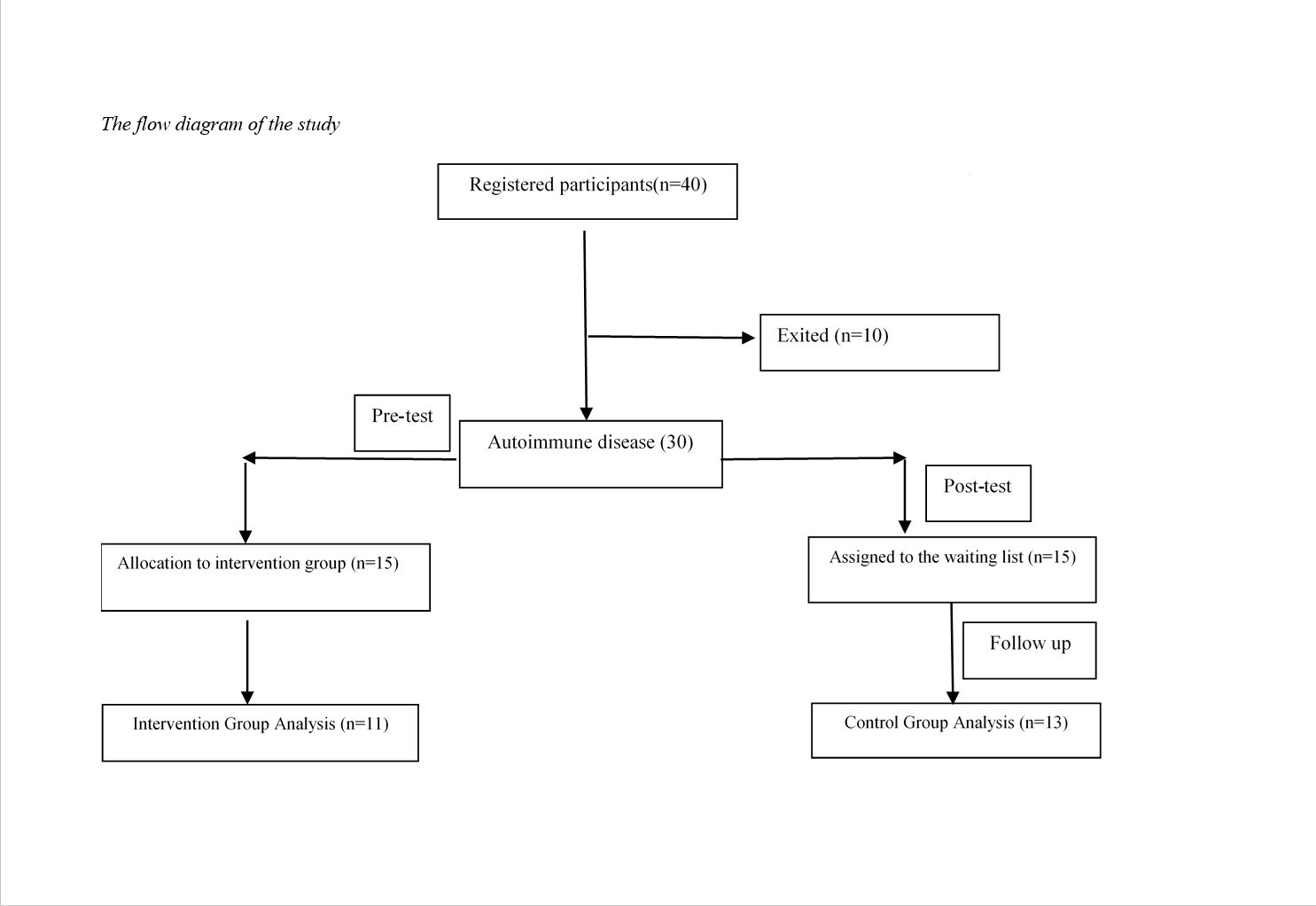
This study aimed to assess the effectiveness of a group attachment-based intervention in enhancing emotional safety and reducing perceived stress among vulnerable children. The present study was semi-experimental research involving a pre-test-post-test design and a three-month follow-up period, with both a control group and an experimental group. The study focused on vulnerable children in care centers supervised by the Welfare Department in Tehran during the summer and fall of 2023. A total of 30 participants were selected through purposive sampling. The interventions were attachment-based and followed a program designed by the researcher, with eight sessions held twice a week, each lasting 45 minutes. These sessions took place in one of the center's offices for the experimental group. The evaluation tools used were the Belonging and Emotional Security Tool (BEST) and the Perceived Stress Questionnaire (PSQ). The data collected were analyzed using SPSS version 27 software, with descriptive statistics (mean and standard deviation) and statistical methods like Kruskal-Wallis H, repeated measure ANCOVA, and Bonferroni's post hoc test applied at a -value of 0.05. According to the findings of the study, the P-value for the emotional safety variable in the Between-Subjects Effects showed statistical significance (p<0.001). Likewise, the Within-Subjects Effects showed significance for the interaction effects between time and group in the emotional safety variable (p=0.004). On the other hand, there were no notable variations in the sense of belonging between the different groups. Additionally, the P-value for the perceived stress variable in Between-Subjects Effects was statistically significant (p<0.001). The findings of this research demonstrated that an intervention focused on group attachment can successfully lessen perceived stress and enhance emotional safety. It can serve as a beneficial approach for aiding at-risk and vulnerable children in enhancing their mental and emotional well-being.
Downloads
References
Interdisciplinary and Comparative Perspectives (pp. 95-114). Springer Nature Switzerland. https://doi.org/10.1007/978-3-031-61333-3_6
Soruri, M., Bayat, A., & Hosseinzadeh, A. (2023). Mediating Role of Emotional Security in Relationship between High-risk Behaviors and Family Communication Patterns in Adolescents. https://jfr.sbu.ac.ir/article_104095.html?lang=en
Steele, M., Steele, H., & Murphy, A. (2022). Bringing reflective functioning to the community: Aspects of psychotherapy process in the Group Attachment Based Intervention. The Psychoanalytic Study of the Child, 75(1), 299-314. https://doi.org/10.1080/00797308.2021.2022417
Stramecki, F., Misiak, B., Gawęda, Ł., Prochwicz, K., Kłosowska, J., Samochowiec, J., Samochowiec, A., Pawlak, E., Szmida, E., Skiba, P., & Cechnicki, A. (2022). The moderating role of the FKBP5 gene polymorphisms in the relationship between attachment style, perceived stress and psychotic-like experiences in non-clinical young adults. Journal of clinical medicine, 11(6), 1614. https://doi.org/10.3390/jcm11061614
Takeuchi, H., Napier-Raman, S., Asemota, O., & Raman, S. (2022). Identifying vulnerable children's stress levels and coping measures during COVID-19 pandemic in Japan: a mixed method study. BMJ Paediatrics Open, 6(1). https://doi.org/10.1136/bmjpo-2021-001310
Tulloch, H., Johnson, S., Demidenko, N., Clyde, M., Bouchard, K., & Greenman, P. S. (2021). An attachment-based intervention for patients with cardiovascular disease and their partners: A proof-of-concept study. Health Psychology, 40(12), 909. https://doi.org/10.1037/hea0001034
Wittkowski, A., Crompton, C., & Wan, M. W. (2024). Manualised attachment-based interventions for improving caregiver-infant relationships: A two-stage systematic review. Clinical Child and Family Psychology Review, 1-30. https://doi.org/10.1007/s10567-024-00497-0
Zhang, L., Wu, S., Roslan, S., Zaremohzzabieh, Z., Chen, Y., & Jiang, Y. (2022). Intervention effect of group counseling on social support and post-stress growth of orphans and vulnerable children in China. Frontiers in psychology, 13, 962654. https://doi.org/10.3389/fpsyg.2022.962654
Downloads
Additional Files
Publication Timeline
- Submitted
- Revised
- Accepted