Effectiveness of Forgiveness Therapy on Emotional Expression in Mother with Visual Impairment Children
DOI:
https://doi.org/10.61838/kman.prien.3.1.8Keywords:
Forgiveness Therapy, Emotional Expression, other with Visual Impairment Children, expressing positive emotion, intimacy, expressing negative emotionAbstract
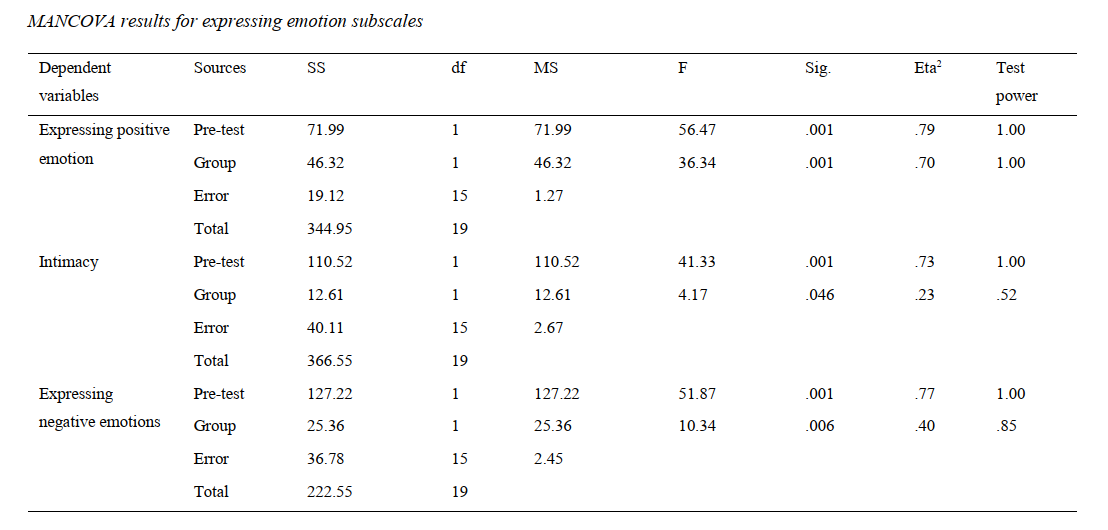
The ability of human relationships to continue healthily depends on individuals being aware of their emotions and being able to express them correctly. So, determining the variables that affect the emotional expression that are effective throughout individuals’ lives can contribute to the positive maintenance of human relationships. This research aimed to investigate the effectiveness of forgiveness therapy on emotional expression of mothers with visually impaired children. The present research was applied in terms of purpose and quasi-experimental in terms of method, it was a quasi-experiment with a pre-test and post-test design with a control group. The total number of the statistical population was 90 people, 20 of the mothers were selected by convenience sampling method from schools for the blind in Isfahan city and were randomly replaced in a control group and an experimental group of 10 people. forgiveness therapy was provided to the experimental group in 12 sessions, while the control group did not receive any training until the end of the post-test phase. Participants were assessed using the Measure of Emotional expression questionnaire King and Emmons (1990). The obtained data were analyzed by analysis of covariance using SPSS 26 software. The findings indicated that forgiveness therapy approach had a positive and significant effect on emotional expression and on the expressing emotion subscales (expressing positive emotion, intimacy, and expressing negative emotion) of mothers with visually impaired children. Therefore, it can be concluded that the forgiveness therapy reduces expressing negative emotion and improves expressing positive emotion and intimacy of these mothers.
Downloads
References
Aisyah, H., & Agung, I. M. (2020). Correlation Between Forgiveness and Adolescence Friendship Intimacy Moderated By Gender. Jurnal Psikologi, 19(3), 211-218. https://doi.org/10.14710/jp.19.3.211-218
Akhtar, S., & Barlow, J. (2018). Forgiveness therapy for the promotion of mental well-being: A systematic review and meta-analysis. Trauma, Violence & Abuse, 19(1), 107-122. https://doi.org/10.1177/1524838016637079
Arığ, S. (2019). Emotional intelligence and emotional expression as predictors of depression in university students Biruni University: İstanbul]. https://tijseg.org/index.php/tijseg/article/view/20
Avanti, F. T., & Setiawan, J. L. (2022). The role of trust and forgiveness in marital Intimacy on husbands or wives of dual-earner couples in Surabaya. Jurnal Ilmu Keluarga & Konsumen, 15(2), 117-126. https://doi.org/10.24156/jikk.2022.15.2.117
Bahramimashoof, R., Ahmadi, S., & Rasouli, M. (2022). Mediating role of emotional expressiveness in the relationship between cognitive emotion regulation strategies and marital satisfaction. Journal of Woman and Family Studies, 10(3), 32-52. https://doi.org/10.22051/jwfs.2022.30614.2374
Barker, E. (2009). Forgiveness workbook: A step by step guide. Dialog Press.
Broek, E. G. C., vanden Eijden, A. J. P. M., van Overbeek, M. M., Kef, S., Sterkenburg, P. S., & Schuengel, C. (2017). A Systematic Review of the Literature on Parenting of Young Children with Visual Impairments and the Adaptions for Video-Feedback Intervention to Promote Positive Parenting. Journal of Development on Physical Disabilities, 29, 503-545. https://doi.org/10.1007/s10882-016-9529-6
Calam, R., & Peters, S. (2006). Assessing expressed emotion: comparing Camberwell Family Interview and Five-minute Speech Sample ratings form others of children with behaviour problems. International Journal of Methods in Psychiatric Research, 15(3), 107-115. https://doi.org/10.1002/mpr.187
Cameron, L. D., & Overall, N. C. (2018). Suppression and expression as distinct emotion regulation processes in daily interactions: Longitudinal and meta-analyses. Emotion, 18(4), 465-480. https://doi.org/10.1037/emo0000334
Coleman, J. M. (2010). The expressed emotion of mothers of children with fragile X syndrome Electronic Theses and Dissertations]. https://digitalcommons.du.edu/etd/132/
Corapci, F., Friedlmeier, W., Benga, O., Strauss, C., Pitica, I., & Susa, G. (2018). Cultural socialization of toddlers in emotionally charged situations. Social Development, 27(2), 262-278. https://doi.org/10.1111/sode.12272
Diana, R. R., Nashori, F., Pihasniwati, P., Indranata, A. D., & Fitri, R. K. (2023). Forgiveness Therapy to Improve Subjective Well-Being Among Families of Patients with Chronic Illness. International Journal of Islamic Educational Psychology, 4(1), 122-135. https://doi.org/10.18196/ijiep.v4i1.17965
Ede, M. O., Anyanwu, J. I., Onuigbo, L. N., Ifelunni, C. O., Alabi-Oparaocha, F. C., Okenyi, E. C., Agu, M. A., Ugwuanyi, L. T., Ugwuanyi, C., Eseadi, C., Awoke, N. N., Nweze, T., & Victor-Aigbodion, V. (2020). Rational emotive family health therapy for reducing parenting stress in families of children with autism spectrum disorders: A group randomized control study. Journal of Rational-Emotive & Cognitive-Behavior Therapy, 38, 243-271. https://doi.org/10.1007/s10942-020-00342-7
Ede, M. O., Omeje, C. J., Ncheke, D. C., Agah, J. J., Chinweuba, N. H., & Amoke, C. V. (2020). Assessment of the effectiveness of group cognitive behavioural therapy in reducing pathological gambling. Journal of Gambling Studies, 36, 1325-1339. https://doi.org/10.1007/s10899-020-09981-y
Fathizadeh, N., Takfallah, L., Badrali, N., Shiran, E., Esfahani, M. S., & Akhavan, H. (2012). Experiences of blind children caregivers. Iranian Journal of Nursing and Midwifery Research, 17, S143-S149. https://journals.lww.com/jnmr/fulltext/2012/17021/Experiences_of_blind_children_caregivers.15.aspx
Fosco, G. M., & Grych, J. H. (2007). Emotional expression in the family as a context for children's appraisals of interparental conflict. Journal of Family Psychology, 21(2), 248-258. https://doi.org/10.1037/0893-3200.21.2.248
Fredrickson, B. L. (2004). The broaden-and-build theory of positive emotions. Philosophical Transactions of the Royal Society of London. Series B: Biological Sciences, 359(1449), 1367-1377. https://doi.org/10.1098/rstb.2004.1512
Gao, F., Li, Y., & Bai, X. (2022). Forgiveness and subjective well-being: A meta-analysis review. Personality and Individual Differences, 186, 111350. https://doi.org/10.1016/j.paid.2021.111350
Hikmat, R., Yosep, I., Aisyah, P. S., & Utomo, S. F. P. (2025). Forgiveness Therapy to Reduce Violent Behavior in Individuals with Schizophrenia: A Case Study. OBM Neurobiology, 9(1), 1-10. https://doi.org/10.21926/obm.neurobiol.2501281
Işık-Uslu, A. E., & Turan, F. (2021). Mothers' emotional conversations with their children: their relationship with mothers' beliefs about emotions and their child's emotion regulation skills. Turkish Psychology Journal, 36(87), 39-62. https://doi.org/10.31828/tpd1300443320190916m000027
Jafari, E., RashediAsl, A., Pourmohseni Koluri, F., & Esmaeili, A. (2023). The Effectiveness of Forgiveness Therapy on The Mental Health and Marital Intimacy of Couples Seeking Divorce. Journal of Family Relations Studies, 3(11), 4-12. https://doi.org/10.22098/jfrs.2023.13484.1139
Kaleta, K., & Mróz, J. (2018). Forgiveness and life satisfaction across different age groups in adults. Personality and Individual Differences, 120, 17-23. https://doi.org/10.1016/j.paid.2017.08.008
King, L. A., & Emmons, R. A. (1990). Conflict over emotional expression: psychological and physical correlates. Journal of Personality and Social Psychology, 58(5), 864. https://doi.org/10.1037/0022-3514.58.5.864
Kucharczyk, I. (2024). Parental Competencies of Mothers of Visually Impaired Children Receiving Early Development Support. Lubelski Rocznik Pedagogiczny, 43(2), 173-190. https://doi.org/10.17951/lrp.2024.43.2.173-190
Lee, Y. R., & Enright, R. D. (2014). A forgiveness intervention for women with fibromyalgia who were abused in childhood: A pilot study. Spirituality in Clinical Practice, 1(3), 203. https://doi.org/10.1037/scp0000025
McCarty, C. A., & Weisz, J. R. (2002). Correlates of expressed emotion in mothers of clinically-referred youth: An examination of the five-minute speech sample. Journal of Child Psychology and Psychiatry, 43(6), 759-768. https://doi.org/10.1111/1469-7610.00090
Mikolajczak, M., & Roskam, I. (2018). A theoretical and clinical framework for parental burnout: The balance between risks and resources. Frontiers in Psychology, 9, 886. https://doi.org/10.3389/fpsyg.2018.00886
Montes, G., & Halterman, J. S. (2007). Psychological functioning and coping among mothers of children with autism: a population-based study. Pediatrics, 119(5), e1040-e1046. https://doi.org/10.1542/peds.2006-2819
Mullen, L. M., Bistany, B. R., Kim, J. J., Joseph, R. A., Akers, S. W., Harvey, J. R., & Houghton, A. (2023). Facilitation of forgiveness: Impact on health and well-being. Holistic Nursing Practice, 37(1), 15-23. https://doi.org/10.1097/HNP.0000000000000559
Nur, H., Siswanti, D. N., & Rahim, R. (2020). The Supporting Activity for Mother Who Has Specially Needs Children. 3rd International Conference on Education, Science, and Technology,
Öngören, S. (2024). The Emotional expressions of mothers with children in the 5-6 age group: Emotional expressions. Erken Çocukluk Çalışmaları Dergisi, 8(1), 52-69. https://doi.org/10.24130/eccdjecs.1967202481493
Onyemaechi, C., Maduekwe, C., Philip, P., Okpaleke, U., & Agu, R. (2022). Moderating Role of Marital Satisfaction on the Relationship between Self Compassion, Forgiveness and Depression among Married Persons. Nigerian Journal of Psychology, 22(2), 60-71.
Parveen, U., & Pal, R. (2024). The Impact of Forgiveness in Emotional Regulation and Resilience in the Face of Adversity Among Young Adults. International Journal for Multidisciplinary Research, 6(2), 1-11. https://doi.org/10.36948/ijfmr.2024.v06i02.19263
Peterson, C., & Seligman, M. E. (2004). Character strengths and virtues: A handbook and classification. Oxford University Press. https://books.google.com/books?hl=en&lr=&id=vKzmCwAAQBAJ&oi=fnd&pg=PR9&dq=Peterson,+C.+and+M.+E.+Seligman+(2004).+Character+strengths+and+virtues:+A+handbook+and+classification,+Oxford+University+Press.+%09&ots=sTjgeEocHV&sig=y4yHLPwyQ-vaIOhDZlAn7wSB0o4
Raj, P., Elizabeth, C. S., & Padmakumari, P. (2016). Mental health through forgiveness: Exploring the roots and benefits. Cogent Psychology, 3(1), 1153817. https://doi.org/10.1080/23311908.2016.1153817
Rubab, Z. E., Tahir, M., Zafar, U., & Rehman, N. U. (2025). Assessment of Quality of Life in Mothers of Visually Impaired Children. Journal of the College of Physicians and Surgeons--Pakistan: JCPSP, 35(1), 116-121. https://doi.org/10.29271/jcpsp.2025.01.116
Sanders, M. R. (2012). Development, Evaluation, and Multinational Dissemination of the Triple P-Positive Parenting Program. Annual Review of Clinical Psychology, 8, 345-379. https://doi.org/10.1146/annurev-clinpsy-032511-143104
Singh, G., & Singh, S. (2023). Effect of Forgiveness on Happiness and Well-being. Indian Journal of Positive Psychology, 14(3), 360-363. https://search.ebscohost.com/login.aspx?direct=true&profile=ehost&scope=site&authtype=crawler&jrnl=22294937&AN=172996902&h=n%2FJPgEIKs0DqYX3cXJbrR2KN7P5EMSbQfVu5MxfPOLsVsUwQB2dPyNLr7taNL6vSL%2Bs8kEMBvbKKTJztd%2BbC2w%3D%3D&crl=c
Tekinalp, B. E., & Terzi, Ş. (2012). Terapötik bir araç olarak bağışlama: Iyileştirici etkenolarak bağışlama olgusunun psikolojik danışma sürecinde kullanımı. Eğitim ve Bilim, 37(166), 14-24. https://doi.org/10.15390/EB.2012.1778
Tronick, E. Z. (2018). Emotions and emotional communication in infants. In Parent-infant psychodynamics (pp. 35-53). https://doi.org/10.4324/9780429478154-5
Wijaya, Y. D., & Widiyastuti, M. (2019). Forgiveness Therapy to Improve Subjective Well-being of Woman Victims of Sexual Harassment. Proceedings of the 1st International Conference on Health,
Wulandari, I., & Megawati, F. E. (2020). The role of forgiveness on psychological well-being in adolescents: A review. 5th ASEAN Conference on Psychology, Counselling, and Humanities (ACPCH 2019),
Xie, X., Tang, X., Rapp, H., Tong, D., & Wang, P. (2020). Does forgiveness alleviate depression after being phubbed for emerging adults? The mediating role of self-esteem. Computers in Human Behavior, 109, 106362. https://doi.org/10.1016/j.chb.2020.106362
Downloads
Additional Files
Publication Timeline
- Submitted
- Revised
- Accepted
Issue
Section
License
Copyright (c) 2025 Maede Hosseini (Author); Mohammad Ashori (Corresponding Author)

This work is licensed under a Creative Commons Attribution-NonCommercial 4.0 International License.