Examining the Psychological and Emotional Adjustment of Parents of Children with Intellectual Disabilities
DOI:
https://doi.org/10.61838/kman.prien.3.1.2Keywords:
Intellectual disability, parental adjustment, coping strategies, psychological well-being, social support, emotional resilience, disability advocacyAbstract
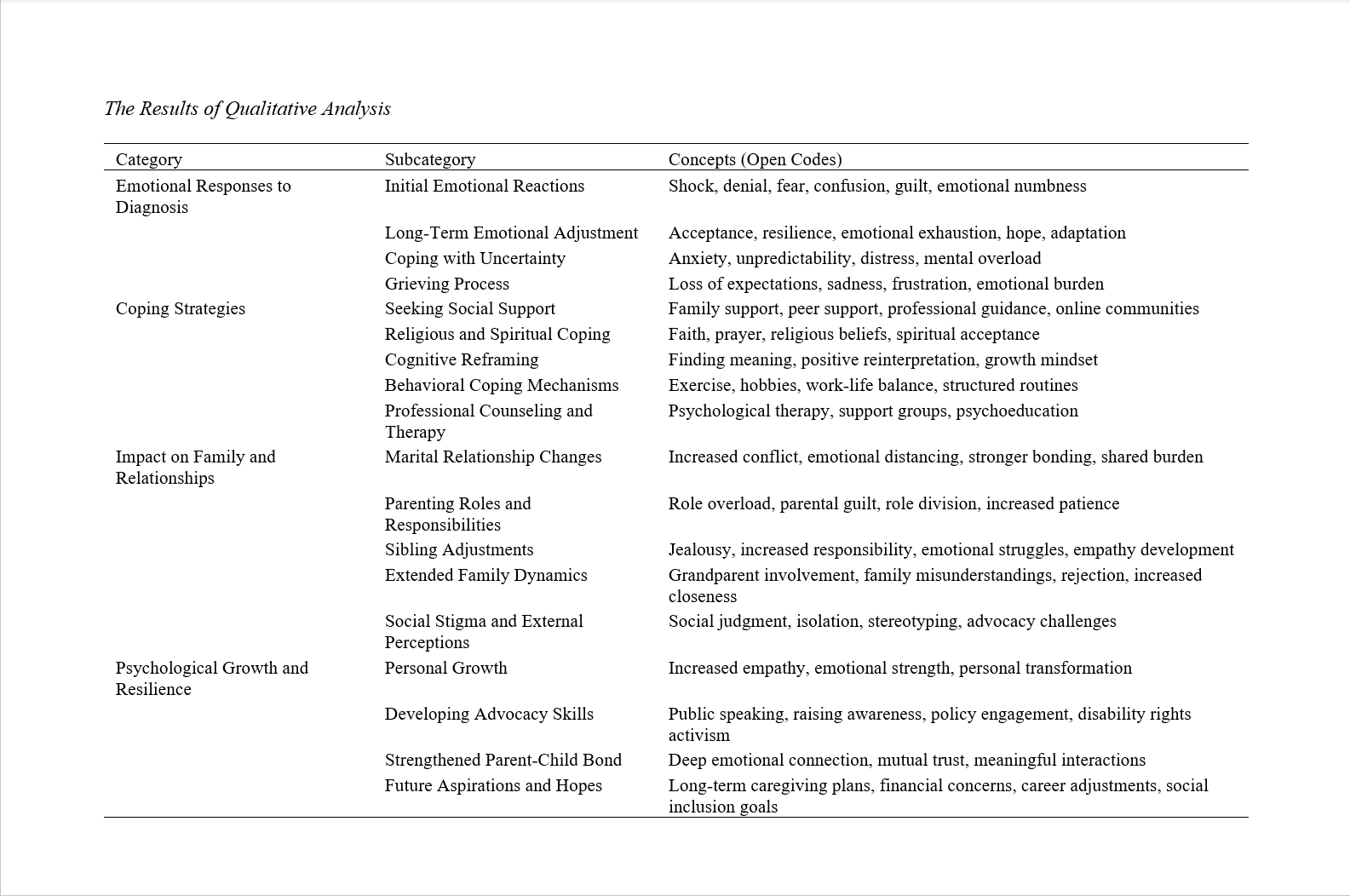
This study aims to explore the psychological and emotional adjustment of parents raising children with intellectual disabilities. This qualitative study utilized semi-structured interviews with 26 parents recruited through online platforms. Participants were selected through purposive sampling, ensuring diversity in caregiving experiences. Data collection continued until theoretical saturation was reached, and all interviews were transcribed verbatim. Thematic analysis was conducted using NVivo software to identify key themes related to parental psychological adjustment, coping mechanisms, and social interactions. The results revealed that parents experienced significant emotional distress upon receiving their child’s diagnosis, including grief, denial, and prolonged sadness. Chronic stress was a recurring theme, with concerns over financial burdens, caregiving demands, and uncertainty about their child’s future contributing to heightened anxiety. Coping strategies varied, with some parents relying on social support networks, religious beliefs, and cognitive reframing, while others struggled with emotional exhaustion and isolation. Family relationships were deeply affected, with some parents reporting marital strain and sibling adjustments, whereas others experienced strengthened familial bonds. Social stigma and external judgment further complicated parental adjustment, with many parents becoming active advocates for disability rights and inclusion. Despite the challenges, many parents reported significant personal growth, emotional resilience, and increased psychological strength over time. The psychological and emotional adjustment of parents raising children with intellectual disabilities is a complex process influenced by stress, coping mechanisms, family dynamics, and social factors. While many parents experience significant distress, those with strong support systems and adaptive strategies demonstrate greater resilience. This study highlights the need for targeted support programs, advocacy efforts, and policy interventions to enhance parental well-being and social inclusion.
Downloads
References
Al-Oraini, B. S. (2024). Motherhood, Disability, and Employment: Understanding the Workplace Experiences of Mothers of Children With Intellectual Disabilities. International Journal of Business Administration, 15(3), 63.https://doi.org/10.5430/ijba.v15n3p63
Ashraf, M., Khan, M. A., Saeed, B., Aziz, S., Masood, F., Ahmed, M., & Chugtai, A. S. (2022). Perspective of Parental Satisfaction With Academia of Children With Down Syndrome and Intellectual Disability. PJMHS, 16(8), 518-520.https://doi.org/10.53350/pjmhs22168518
Buthelezi, S., & Mawila, D. (2024). There Is Always Sorrow: Risk Factors Faced by Parents of Children Presenting With Severe Intellectual Disabilities. Journal of Intellectual Disability - Diagnosis and Treatment, 12(1), 12-21.https://doi.org/10.6000/2292-2598.2024.12.01.2
Gogoi, P. P., & Jha, M. (2025). Impact of COVID‐19 Pandemic on Children With Intellectual Disabilities and Their Parents: The Perspective of Parents in India. British Journal of Learning Disabilities. https://doi.org/10.1111/bld.12647
H., A., & Kotian, S. (2022). A Systematic Review and Research Agenda on Mental Wellbeing of the Caregivers of Intellectually Disabled Children. International Journal of Management Technology and Social Sciences, 335-353.https://doi.org/10.47992/ijmts.2581.6012.0194
H., A., & SuphalaKotian. (2023). Exploring Leisure and Quality of Life in Parents of Children With Intellectual Disability: An Analytical Review. International Journal for Multidisciplinary Research, 5(5).https://doi.org/10.36948/ijfmr.2023.v05i05.7260
Haider, S. I., Awan, W. A., & Syeda, U. B. (2020). Caregiver Burden Among Parents of Hearing Impaired and Intellectually Disabled Children in Pakistan. Iranian Journal of Public Health.https://doi.org/10.18502/ijph.v49i2.3087
Ivić-Hofman, K. Š. (2022). Awareness of Parents of Children With Disabilities About Early Support Services. Research in Education and Rehabilitation, 5(2), 72-79.https://doi.org/10.51558/2744-1555.2022.5.2.72
Lefakane, L., & Maseko, N. (2023). Emotional Trauma in Parental Involvement in Transitioning Learners With Intellectual Disabilities From Mainstream to Special Schools. Trauma Care, 3(3), 126-145.https://doi.org/10.3390/traumacare3030013
Lestari, A., Nurani, D. A., Khodijah, K., Zaina, S. I., Dahlan, S. Z., & Hamidah, S. (2024). Mengatasi Tantangan Pembelajaran Online Bagi Anak Tunagrahita Selama Pandemi: Peran Orang Tua Dan Strategi Efektif. Simpati, 2(3), 140-147.https://doi.org/10.59024/simpati.v2i3.826
Mandal, J., Biswas, D. S., & Kumari, M. S. D. (2023). Exploring the Prevalence of Psychological Distress and Burden Among Parents of Children of Mentally Retarded Children. International Journal of Humanities Engineering Science and Management, 4(2), 42-52.https://doi.org/10.59364/ijhesm.v4i2.258
Manuel, N. M., Thomas, I. O., James, V. E., & Eke, V. U. (2023).Socio-Economic Challenges of Parents of Children With Intellectual Disability: A Community-Based Study in Lagos, Nigeria. Journal of Intellectual Disability - Diagnosis and Treatment, 11(1), 21-26.https://doi.org/10.6000/2292-2598.2023.11.01.3
Munir, Z., Sholehah, B., & Hasanah, N. H. (2024). Studi Fenomenologi: Pengalaman Ibu Dengan Anak Tunagrahita Di Sekolah Luar Biasa Negeri Tompokersan, Lumajang. Trilogi Jurnal Ilmu Teknologi Kesehatan Dan Humaniora, 5(3).https://doi.org/10.33650/trilogi.v5i3.8748
Nanda, A. (2024). Parental Involvement in Educating Children With Intellectual Disabilities in India During the COVID-19 Pandemic: A Comprehensive Review. Asian Journal of Education and Social Studies, 50(7), 154-164.https://doi.org/10.9734/ajess/2024/v50i71453
Naz, S., & Noor, F. (2024). Family Quality of Life and Psychological Health Factors Among Parents With Intellectually Disable Children; The Influence of Parenting Self-Efficacy. Review of Applied Management and Social Sciences, 7(4), 513-531.https://doi.org/10.47067/ramss.v7i4.396
Nižić, M., Penava, T., & Mutabdžić, M. (2020). Iskustva Roditelja Djece S Intelektualnim Teškoćama U Komorbiditetu S AdhdOm. Hum(22), 215-241. https://doi.org/10.47960/2303-7431.22.2020.215
Pandia, W. S. S. (2024). The Reproductive Health Education to Adolescents With Intellectual Disabilities: Perspectives of Parents, Teachers, and Caregivers. Scientia, 4(1), 17-24.https://doi.org/10.51773/ajeb.v4i1.328
Paz, C. V., Anislag, R. T., Budiongan, G. L., Cagape, W. E., & Abain, M. S. (2023). The Parents' Acceptance of Their Children With Intellectual Disability: A Phenomenological Study. International Journal of Research Publications,126(1).https://doi.org/10.47119/ijrp1001261620225000
Rajan, S. K. (2022). Role of Stress and Age in Resilience Among Parents of the Children With Intellectual Disability. 1428-1438.https://doi.org/10.4018/978-1-6684-3542-7.ch075
Salinas, Q. E. G., & Tiamzon, B. I. (2022). BEYOND ABILITIES: UNDERSTANDING the LIVED – EXPERIENCES of PARENTS of LEARNERS With INTELLECTUAL DISABILITY. Cognizance Journal of Multidisciplinary Studies, 2(10), 14-87.https://doi.org/10.47760/cognizance.2022.v02i10.003
Shaaban, T. S. (2024). Empowering Language: Parents Insights on Enhancing English Learning for Children With Mild Intellectual Disabilities in Remote Enclaves. Educational Sciences and Humanities(39), 711-738.https://doi.org/10.55074/hesj.vi39.1076
Staunton, E., Kehoe, C., & Sharkey, L. (2020). Families Under Pressure: Stress and Quality of Life in Parents of Children With an Intellectual Disability. Irish Journal of Psychological Medicine, 40(2), 192-199.https://doi.org/10.1017/ipm.2020.4
Vaghela, M. N., & Bodla, S. K. (2024). Challenges Faced by Parents of Intellectually Disabled Children of Rural and Urban Areas. Eatp. https://doi.org/10.53555/kuey.v30i5.4958
Wardani, E. T., Siregar, I., Susanto, A., & Hamzah, N. H. (2024). Strategies and Role of Parents on Language Acquisition of Children With Special Needs. Jurnal Onoma Pendidikan Bahasa Dan Sastra, 10(3), 3431-3440.https://doi.org/10.30605/onoma.v10i3.4130
Каракулова, О. В., Loktionova, E. I., & Ivasenko, G. A. (2024). Regarding the Necessity of Supporting Parents of Children With Intellectual Disabilities (Intellectual Impairments). Pedagogical Image, 347-363.https://doi.org/10.32343/2409-5052-2024-18-3-347-363
Downloads
Additional Files
Publication Timeline
Issue
Section
License

This work is licensed under a Creative Commons Attribution-NonCommercial 4.0 International License.