









Preliminary Evidence on Moral Underpinnings of Rape Victim Blaming in Iran: Replication and Extensions of Milesi et al. (2020)
Objective: According to Moral Foundation Theory, people rely on five intuitive-based foundations in their moral decisions. These foundations are divided into Individualizing foundations (Care and Fairness) and Binding foundations (Loyalty, Authority, and Sanctity).
Methods and Materials: In an attempt to replicate Milesi at al’s (2020) findings in a non-WEIRD and honored context, across three studies, we explored the relationship between Moral Foundation and Acceptance of Modern Myths About Sexual Aggression (AMMSA) with rape victim-blaming.
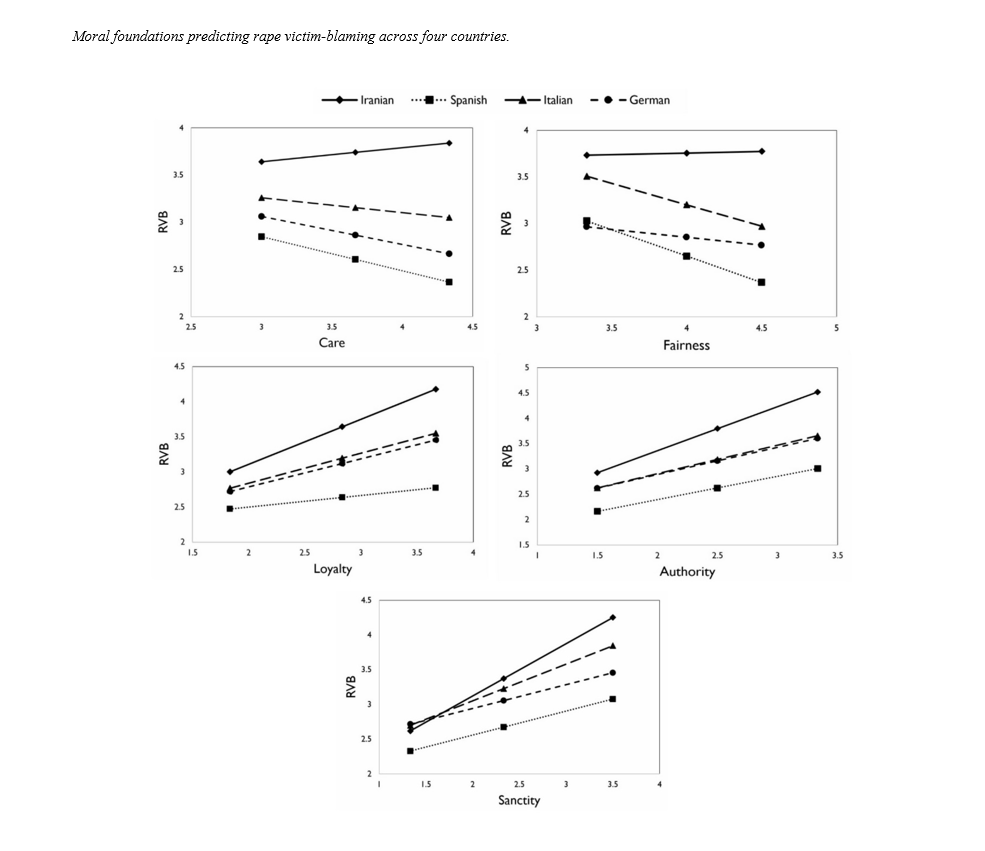
Findings: Study 1 showed that Fairness, Authority, and Sanctity foundations were predictive of rape victim-blaming. Study 2 showed that binding foundations predict rape victim-blaming in a preregistered analysis. Our cross-country analyses (Iran, Germany, Spain, and Italy) showed that the effects of binding moral foundations were stronger among Iranian participants than those with less-honored cultures (i.e., Italy, Spain, and Germany). Exploratory analyses revealed no differences in rape victim-blaming among men and women. However, men had higher levels of endorsement of AMMSA than women. Religious individuals had higher levels of rape victim-blaming and AMMSA. Findings are discussed concerning the honored context of Iran’s society.
Conclusion: The findings indicate that rape victim-blaming in Iran is strongly associated with acceptance of modern myths about sexual aggression and binding moral foundations, particularly Authority and Sanctity. These relationships appear especially salient within honor-based cultural contexts, highlighting the importance of culturally sensitive approaches to understanding and reducing victim-blaming attitudes.