Objective: In the 21st century, students face unprecedented challenges, highlighting the need for innovative educational approaches that promote holistic development and quality of life (QoL). Cooperative learning (CL), with its emphasis on positive interdependence and social interaction, presents a promising alternative to traditional, competitive physical education (PE) methods. However, the specific effects of structured CL-based physical activity on the multi-dimensional QoL of elementary students, particularly from both child and parent perspectives, remain underexplored .To the best of our knowledge, this study is the first to examine the effect of a cooperative learning-based physical activity program on the multidimensional quality of life of elementary school students using a dual informant (child and parent) perspective. This study aimed to investigate and compare the effects of a structured CL-based physical activity program versus a traditional PE approach on the QoL of elementary school male students.
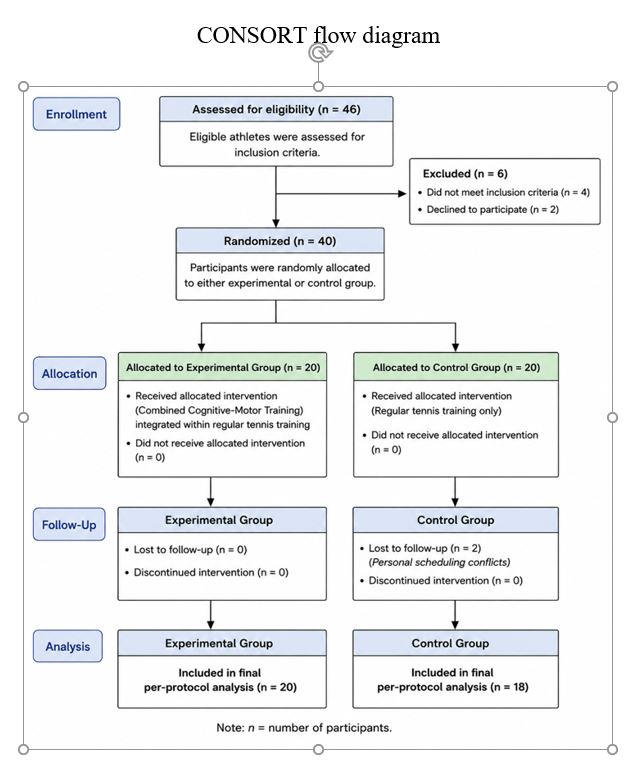
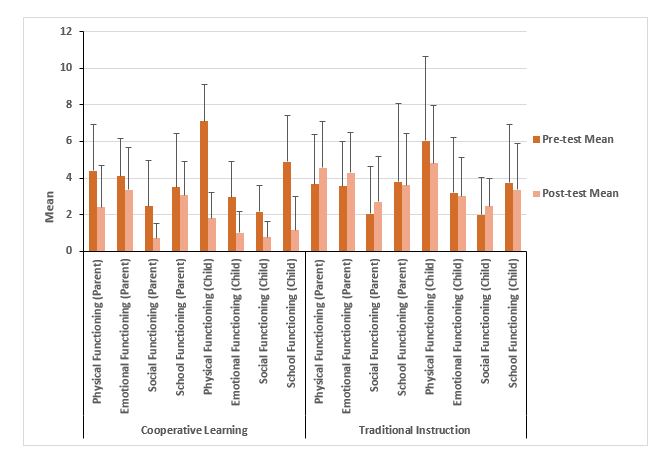
Methods and Materials: A quasi-experimental design with a pre-test/post-test control group was employed. Forty 5th-grade male students (Mean age = 10.4 years) from Kermanshah, Iran, were selected through stratified random sampling and randomly assigned to either a CL intervention group (n=20) or a traditional instruction (TI) control group (n=20). Both groups participated in 14 sessions (45 minutes each, twice a week) of their respective programs. The Pediatric Quality of Life Inventory (PedsQL) was used to assess QoL dimensions (physical, emotional, social, and school functioning) from both student and parent perspectives before and after the intervention. Data were analyzed using Analysis of Covariance (ANCOVA) after confirming its statistical assumptions in SPSS version 27
Findings: The CL intervention resulted in statistically significant improvements in all QoL domains from the students' perspective (physical, emotional, social, and school functioning; p<0.05) compared to the TI group. Furthermore, from the parents' perspective, significant improvements were observed in the physical and social domains of their children's QOL (p<0.05).
Conclusion: A structured cooperative learning approach in physical education is significantly more effective than traditional methods in enhancing the multidimensional quality of life of elementary school students. Integrating CL into school PE curricula is recommended as a sustainable strategy to foster students' physical, psychosocial, and educational well-being, aligning with the holistic goals of 21st-century education.