Effectiveness of Existential Group Therapy on Perceived Inadequacy in Adolescents with Neglectful or No Guardians in the Welfare Center of Zanjan City
DOI:
https://doi.org/10.61838/kman.jayps.4487Keywords:
existential group therapy, perceived inadequacy, adolescents with neglectful guardians, adolescents with no guardians, welfare center.Abstract
Objective: The present study aimed to investigate the effectiveness of a group intervention based on the existential approach in reducing feelings of inadequacy in this vulnerable group.
Methods and Materials: This study employed a quasi-experimental design with a pretest–posttest control group. The statistical population included all adolescents aged 13 to 18 years with neglectful or no guardians under the supervision of welfare centers in Zanjan City in 2023. Among them, 30 participants who met the inclusion criteria were purposefully selected and randomly assigned to experimental and control groups. The experimental group participated in 10 ninety-minute sessions of existential group therapy, conducted once a week under the supervision of the researcher. During this period, the control group did not receive any therapeutic intervention. Data were collected using Self-Criticizing/Attacking & Self-Reassuring Scale (FSCRS) developed by Gilbert et al. (2004) administered in two stages: pretest and posttest. Data analysis was conducted using analysis of covariance (ANCOVA) via SPSS-26.
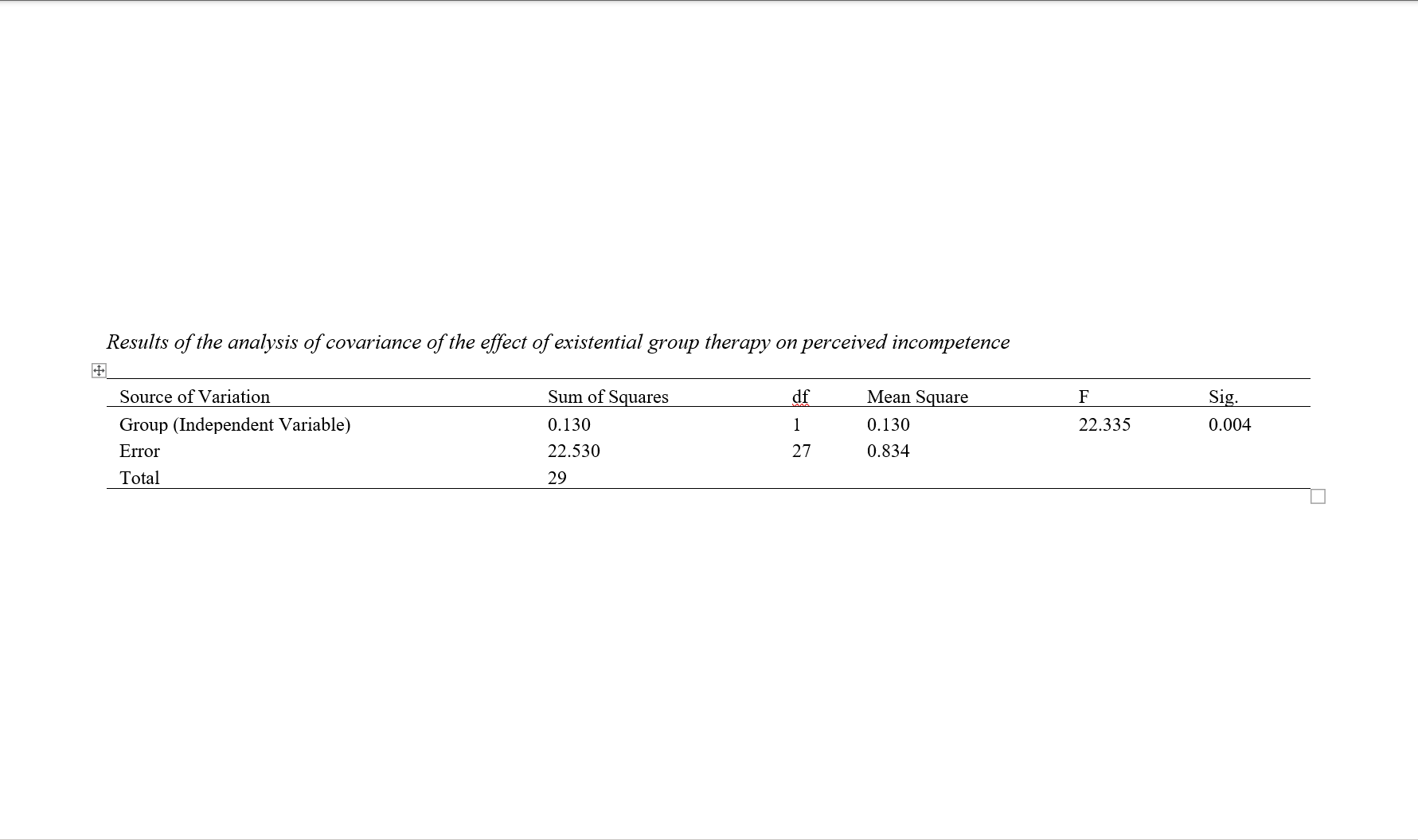
Findings: Pretest scores were controlled as a covariate. The results indicated a significant difference between the two groups in posttest scores of perceived inadequacy (F(1, 27) = 22.335, p = .004). In the experimental group, the mean score of perceived inadequacy decreased from 3.52 in the pretest to 2.99 in the posttest, while in the control group no considerable reduction was observed (from 4.22 to 3.60). The obtained effect size (0.452) indicated a large impact of the intervention.
Conclusion: By providing a context for discovering meaning, accepting responsibility for choices, and confronting existential anxieties, this therapeutic approach fosters the enhancement of self-worth and competence among adolescents.
Downloads
References
Carroll, H. (2020). The lingering legacy of being neglected in childhood: a hermeneutic phenomenological study of adults' lived experiences of neglect as children Dublin City University]. https://doras.dcu.ie/24944/
Garmezy, N., & Masten, A. S. (2014). The protective role of competence indicators in children at risk. In Life-span developmental psychology (pp. 151-174). Psychology Press. https://www.taylorfrancis.com/chapters/edit/10.4324/9781315807867-11/protective-role-competence-indicators-children-risk-norman-garmezy-ann-masten
Gilbert, P., Clarke, M., Hempel, S., Miles, J. N., & Irons, C. (2004). Criticizing and reassuring oneself: An exploration of forms, styles and reasons in female students. British Journal of Clinical Psychology, 43(1), 31-50. https://doi.org/10.1348/014466504772812959
Hatami, A., & Tabatabaeinejad, F. (2023). Effectiveness of Existential Therapy on Emotional Capital, Cognitive Emotion Regulation, and Mental Well-Being of Undergraduate Female Students with Social Anxiety: A Quasi-Experimental Study. JRUMS, 22(2), 129-146. https://doi.org/10.52547/jrums.22.2.129
Hatami Arad, T. N. F. S. (2023). The Effectiveness of Existential Therapy on Emotional Capital, Emotion Regulation, and Mental Well-Being of Female Undergraduate Students with Social Anxiety: A Semi-Experimental Study. Rafsanjan University of Medical Sciences Journal, 22(2), 129-146. https://doi.org/10.52547/jrums.22.2.129
Khanipour Hamid, H., Hakim Shoushtari, M., Borjali, A., Golzari, M., & Falsafinejad, M. R. (2015). The relationship between impulse control deficits and non-suicidal self-injury in adolescents with a history of childhood maltreatment: The mediating effect of self-efficacy. https://www.sid.ir/fa/VEWSSID/J_pdf/52813930406.pdf
Khodadadi, E., Etemadi, A., Alavi Kamusi, E., & Ezzeddin, E. (2015). The effectiveness of existential group therapy on improving students' mental health. Cognitive and Behavioral Sciences Research, 4(2), 119-130. https://cbs.ui.ac.ir/article_17340.html?lang=en
Khodadadi Sangdeh, J., Etemadi, A., & Alavi Kamoos, E. (2015). The Effectiveness of Existential Group Psychotherapy on Student's mental health. Research in cognitive and behavioral sciences, 4(2), 119-130. https://cbs.ui.ac.ir/article_17340_en.html?lang=fa
Lotfi Azimi, A. (2022). The effectiveness of acceptance and commitment group therapy on students' cognitive flexibility and emotional self-regulation. Biquarterly Journal of Cognitive Strategies in Learning, 10(18), 249-269. https://asj.basu.ac.ir/article_4504_en.html
Mata, S. F. (2022). Existential Theory: A Review of Meaning-Making in Therapy with Clients Experiencing Traumatic Bereavement. https://search.proquest.com/openview/6ff210e5374310d0c86b832b374e87c9/1?pq-origsite=gscholar&cbl=18750&diss=y
Ratanashevorn R, B. E. C. (2021). "Alone in the Rain (bow)": Existential Therapy for Loneliness in LGBTQ+ Clients. Journal of LGBTQ Issues in Counseling, 15(1), 110-127. https://doi.org/10.1080/15538605.2021.1868375
Roozbehaneh, M. (2021). Frankl's existential therapy in alignment with the thoughts of Molavi. National Conference on Professional Research in Psychology and Counseling from the Teacher's Perspective, Minab.
Rouhani Farqani, S. (2023). The Effectiveness of Existential Therapy on Flourishing and Organizational Loyalty of Employees in Tehran's Education Department
Ryle, A., & Kerr, I. B. (2020). Introducing cognitive analytic therapy: Principles and practice of a relational approach to mental health. John Wiley & Sons. https://doi.org/10.1002/9781119375210
Sharif, Z., Marati, A., & Yousefvand, M. (2024). Comparing the Effectiveness of Acceptance and Commitment Therapy and Existential Therapy on Resilience in Female Students with Generalized Anxiety Disorder. Ruyesh Psychology, 13(6), 170-159. https://frooyesh.ir/article-1-5271-fa.html
Shoaa Kazemi, M., Mahamid, F., & Hamamra, B. (2025). The lived experiences of women overcoming addiction and self-harming behaviors. Journal of Ethnicity in Substance Abuse, 1-16. https://doi.org/10.1080/15332640.2025.2479608
Vos, J., Craig, M., & Cooper, M. (2023). Integrative existential therapy for cancer patients: Combining cognitive and spiritual approaches. J Psychosoc Oncol, 41(1), 1-18. https://doi.org/10.1080/07347332.2022.2124567
Westman, J. C., & Westman. (2019). Dealing with child abuse and neglect as public health problems. Springer International Publishing. https://doi.org/10.1007/978-3-030-05897-5
Zadafshar, B., Sharifi, T., Ahmadi, R., & Chorami, M. (2022). Comparison of the effectiveness of emotion-focused and existential group therapy on the dimension of adjustment of child sexual abuse victims in Isfahan [Original]. EBNESINA, 24(3), 44-55. https://doi.org/10.22034/24.3.44
Downloads
Additional Files
Publication Timeline
- Submitted
- Revised
- Accepted
Issue
Section
License
Copyright (c) 2025 Zahra Deljouyi Sarkash (Author); Mohammad Ali Fardin (Corresponding Author); Sana Nouri Moghadam (Author)

This work is licensed under a Creative Commons Attribution-NonCommercial 4.0 International License.