Analyzing the Social Mechanisms Regulating the Use of Dietary Supplements and Performance Enhancers Among Young Iraqi Weightlifters
DOI:
https://doi.org/10.61838/kman.jayps.6.4.11Keywords:
Social-Cognitive Theory, Moral Disengagement, Self-Efficacy, Dietary Supplements, Performance Enhancers, Attitudes, WeightliftingAbstract
Objective: The aim of this study was to analyze the social mechanisms associated with the use of dietary supplements and performance enhancers among young Iraqi weightlifters.
Materials and Methods: This research utilized a descriptive-correlational design conducted through a survey method. The statistical population consisted of 376 active weightlifters from 17 cities in Iraq during 2023–2024, out of which 324 participants were selected using proportional stratified random sampling. To measure the variables under investigation, a researcher-designed questionnaire based on Bandura’s Social-Cognitive Theory was used. Data were analyzed using SPSS version 25 and Smart PLS software.
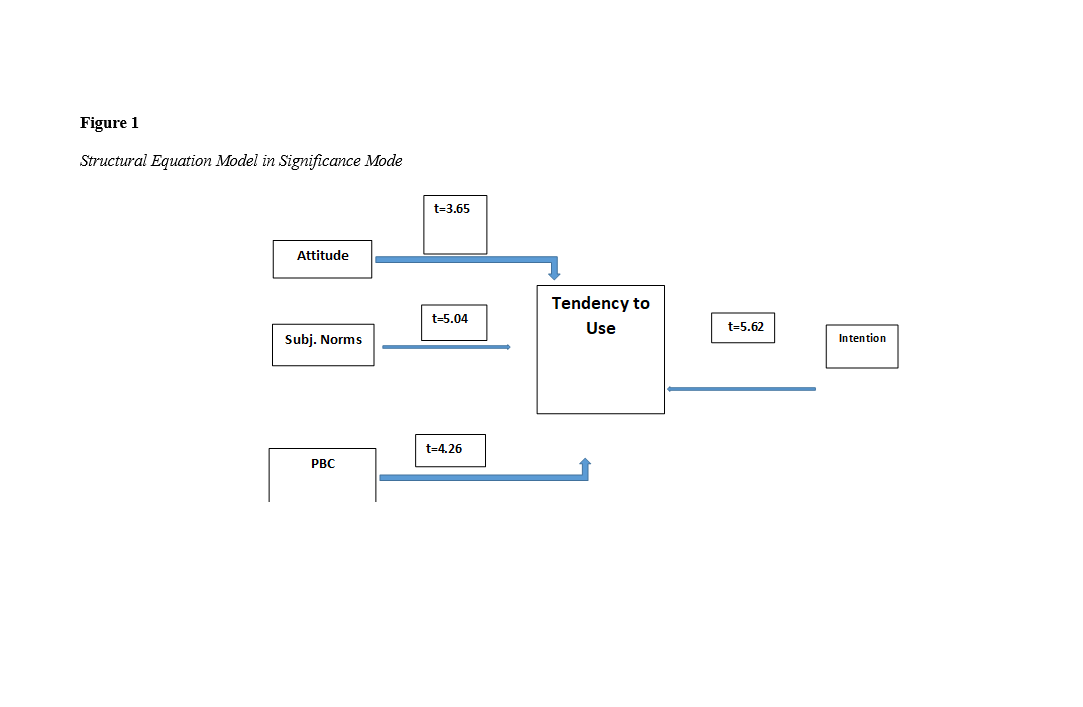
Findings: The results indicated significant positive relationships between self-efficacy (β = 0.413, p = 0.001), moral disengagement (β = 0.596, p = 0.001), and attitudes (β = 0.653, p = 0.001) with the use of dietary supplements and performance enhancers among young Iraqi weightlifters.
Conclusion: These athletes are influenced by a complex set of social-cognitive factors, including individual beliefs, social pressures, and misperceptions regarding the consequences of using dietary supplements and performance enhancers. Organizing educational and awareness programs focusing on the negative consequences of performance enhancers, ethical dimensions of their use, and healthier methods to enhance athletic performance appears to be essential.
Downloads
References
Alemi, A., Rezaian Kochi, M. H., & Mishki, M. (2014). The application of the theory of planned behavior in predicting the intention and behavior of tobacco use prevention among students of Gonabad University of Medical Sciences. Scientific Research Quarterly of Health Education and Health Promotion, 28(4), 340-348.
Ali, M. A., & Ali, N. (2018). Prevalence and Attitudes of Supplement Use among Bodybuilders and Weightlifters in Iraq. Journal of Sports Sciences, 36(8), 1234-1241.
Backhouse, S., Whitaker, L., Patterson, L., Erickson, K., & McKenna, J. (2016). Social Psychology of Doping in Sports: A Mixed Studies Narrative Synthesis.
Bagheri Sheikhan Gafsheh, F., Shabahang, K., Seddigian, S. F., & Alizadeh. (2021). The role of the dark triad of personality and mental toughness in predicting body builders' attitude towards doping. Journal of Sports Psychology, 13(2), 1-13.
Barati, M., Elahwardipour, H., Moini, B., Farhadi Nasab, A., Mahjoub, H., & Jalilian, F. (2013). The effectiveness of teaching assertiveness skills in reducing abstract norms encouraging drug use among students. Scientific Journal of the University of Science Hamedan Medicine and Healthcare Services, 18(3), 40-49.
Ben-Zur, H., & Zeidner, M. (2009). Threat to life and risk-taking behaviors: A review of empirical findings and explanatory models. Personality and Social Psychology Review, 13, 109-128. https://doi.org/10.1177/1088868308330104
Benjamin, L., & Flynn, F. (2012). Leadership style and regulatory mode. Organizational Behavior and Human Decision Processes, 216-230. https://doi.org/10.1016/j.obhdp.2006.01.008
Campbell, A., Carins, J., Rundle-Thiele, S., Deshpande, S., & Baker, B. (2021). Motivators of indiscriminate and unsafe supplement use among young Australians. International journal of environmental research and public health, 18(9974). https://doi.org/10.3390/ijerph18199974
Chein, J., Albert, D., O'Brien, L., Uckert, K., & Steinberg, L. (2010). Peers increase adolescent risk taking by enhancing activity in the brain's reward circuitry. Developmental science, 14. https://doi.org/10.1111/j.1467-7687.2010.01035.x
Espeño, P. R., Ong, A. K. S., German, J. D., Gumasing, M. J. J., & Casas, E. S. (2024). Analysis of Actual Fitness Supplement Consumption among Health and Fitness Enthusiasts. Foods, 13(9), 1424. https://doi.org/10.3390/foods13091424
Garey, J. B., & DiPasquale, D. (2016). Attitudes and Social Norms Predicting the Use of Supplements among Strength Athletes. Journal of Strength and Conditioning Research, 30(10), 2840-2846.
Ghahrmani, L., & Nazari, M. (2013). Comparison of how to predict sports intentions and behaviors based on the theory of self-efficacy and the theory of planned behavior. Jihad University Health Sciences Research Quarterly, 12(1), 99-107.
Grist, P. (2023). The Relationship between the World Anti-doping Agency's Spirit of Sport Values & Anti-doping Beliefs among Elite US Athletes: Direct-Based Measures Using the Theory of Planned Behavior The University of North Carolina at Greensboro].
Habeeb, M. B., Kasim, W. J., Khamees, L. A., Hawi, M. M., & Khashoom, Q. N. A. (2012). Athletes' perceptions toward substance use in Baghdad City. American Journal of Men's Health, 6(6), 462-471. https://doi.org/10.1177/1557988312446508
Hurst, P. (2023). Are dietary supplements a gateway to doping? A retrospective survey of athletes' substance use. Substance Use and Misuse, 1-6. https://doi.org/10.1080/10826084.2022.2161320
Hurst, P., Ring, C., & Kavussanu, M. (2021a). Athletes using ergogenic and medical sport supplements report more favorable attitudes to doping than non-users. Journal of Science and Medicine in Sports. https://doi.org/10.1016/j.jsams.2020.09.012
Hurst, P., Ring, C., & Kavussanu, M. (2021b). Ego orientation is related to doping likelihood via sport supplement use and sport supplement beliefs. European Journal of Sport Science, 1-19. https://doi.org/10.1080/17461391.2021.1995509
Kavussanu, M., & Ntoumanis, N. (2003). Participation in sport and moral functioning: Does ego orientation mediate their relationship? Journal of Sport and Exercise Psychology, 25, 1-18. https://doi.org/10.1123/jsep.25.4.501
Knapik, J. J., Steelman, R. A., Hoedebecke, S. S., Austin, K. G., Farina, E. K., & Lieberman, H. R. (2016). Prevalence of dietary supplement use by athletes: Systematic review and meta-analysis. Sports medicine, 46(1), 103-123. https://doi.org/10.1007/s40279-015-0387-7
Lazuras, L., Barkoukis, V., Rodafinos, A., & Tzorbatzoudis, H. (2010). Predictors of doping intentions in elite-level athletes: A social cognition approach. Journal of Sport & Exercise Psychology, 32, 694-710. https://doi.org/10.1123/jsep.32.5.694
Lucidi, F., Grano, C., Leone, L., Lombardo, C., & Pesce, C. (2004). Determinants of the intention to use doping substances: An empirical contribution in a sample of Italian adolescents. International Journal of Sport Psychology, 35, 133-148.
Lucidi, F., Zelli, A., Mallia, L., Grano, C., Russo, P. M., & Violani, C. (2008). The social-cognitive mechanisms regulating adolescents' use of doping substances. Journal of Sports Sciences, 26(5), 447-456. https://doi.org/10.1080/02640410701579370
Mallick, M., Camacho, C. B., Daher, J., & El Khoury, D. (2023). Dietary supplements: A gateway to doping? Nutrients, 15(4), 881. https://doi.org/10.3390/nu15040881
Mettler, S., Lehner, G., & Morgan, G. (2021). Widespread supplement intake and use of poor quality information in elite adolescent Swiss athletes. International Journal of Sport Nutrition and Exercise Metabolism, 1-8. https://doi.org/10.1123/ijsnem.2021-0043
Nakhai, M. R., & Pakrovan, M. (2014). Studying the frequency and causes of nutritional supplements consumption among athletes in Kerman city gyms, 2013. Scientific Journal of Rafsanjan University of Medical Sciences, 12(11), 873-880.
Nelson, K., Skwerer, D. P., Goldman, S., Henseler, S., Presler, N., & Walkenfeld, F. F. (2003). Entering a community of minds: an experiential approach to "theory of mind". Human development, 46, 24-46. https://doi.org/10.1159/000067779
Peterson, C. C., Wellman, H. M., & Liu, D. (2005). Steps in theory-of-mind development for children with deafness or autism. Child development, 76, 502-517. https://doi.org/10.1111/j.1467-8624.2005.00859.x
Petróczi, A. (2007). Attitudes and doping: a structural equation analysis of the relationship between athletes' attitudes, sport orientation and doping behavior. Substance Abuse Treatment, Prevention, and Policy, 2, 34. https://doi.org/10.1186/1747-597X-2-34
Petróczi, A. (2013). The doping mindset-Part I: Implications of the functional use theory on mental representations of doping. Performance Enhancement & Health, 2(4), 153-163. https://doi.org/10.1016/j.peh.2014.06.001
Petroczi, A., & Aidman, E. (2009). Measuring explicit attitude toward doping: Review of the psychometric properties of the performance enhancement attitude scale. Psychology of Sport and Exercise, 10, 390-396. https://doi.org/10.1016/j.psychsport.2008.11.001
Petróczi, A., Backhouse, S. H., Boardley, I. D., Saugy, M., & Johnson, M. B. (2012). A systemic social-cognitive perspective on doping. Psychology of Sport and Exercise, 13(3), 317-323. https://doi.org/10.1016/j.psychsport.2011.12.007
Pickett, W., Dostaler, S., Craig, W., Janssen, I., Simpson, K., Shelley, S. D., & et al. (2006). Associations between risk behavior and injury and the protective roles of social environments: an analysis of 7235 Canadian school children. Injury prevention, 12, 87-92. https://doi.org/10.1136/ip.2005.011106
Saxe, R., Carey, S., & Kanwisher, N. (2004). People thinking about thinking people: the role of the temporo-parietal junction in "theory of mind". NeuroImage, 19, 1835-1842. https://doi.org/10.1016/S1053-8119(03)00230-1
Thompson, R. A. (2006). Conversation and developing understanding: introduction to the special issue. Merrill-Palmer Quarterly, 52, 1-16. https://doi.org/10.1353/mpq.2006.0008
Vafaeenajar, A., Masihabadi, M., Moshki, M., Ebrahimipour, H., Tehrani, H., & Esmaily, H. (2015). Determining the Theory of Planned Behavior's Predictive Power on Adolescents' Dependence on Computer Games. Iran J Health Educ Health Promot, 2(4), 303-311.
Vinden, P. G., & Astington, J. W. (2000). Culture and understanding other minds. In S. Baron-Cohen, H. Tager-Flusberg, D. J. Cohen, & nd (Eds.), Understanding other minds: Perspectives from developmental cognitive neuroscience. Oxford University Press. https://doi.org/10.1093/oso/9780198524465.003.0021
Westmattelmann, D., Sprenger, M., Hokamp, S., & Schewe, G. (2020). Money matters: The impact of prize money on doping behaviour. Sport Management Review, 23(4), 688-703. https://doi.org/10.1016/j.smr.2019.09.005
Woods, C. B., & Moynihan, A. (2009). General practitioners' knowledge, practice and training requirements in relation to doping in sport. Irish Medical Journal, 102.
Downloads
Additional Files
Publication Timeline
- Submitted
- Revised
- Accepted
Issue
Section
License
Copyright (c) 2025 Salih Mahdi Mukheef Fatlawi (Author); Hamid Zahedi (Corresponding Author); Ali Shaboot Ibrahim, Rokhsareh Badami (Author)

This work is licensed under a Creative Commons Attribution-NonCommercial 4.0 International License.