Concepts and Patterns of Destination Leadership and Their Application in Sports Tourism: A Scoping Review
DOI:
https://doi.org/10.61838/kman.ijimob.3626Keywords:
destination leadership, sports tourism, stakeholders, scoping reviewAbstract
Objective: This study aims to conduct a scoping review of research related to the concepts, models, and capabilities of leadership in tourism destinations, particularly in the context of sports tourism, and to address questions that can contribute to leadership development in these destinations.
Methodology: The research method was designed based on the five-step framework by Arksey and O’Malley (2005), with data extracted from three credible databases, including Web of Science, Scopus, and Google Scholar, and reviewed following PRISMA guidelines. After eliminating duplicates and applying inclusion and exclusion criteria, 48 articles were selected for final analysis.
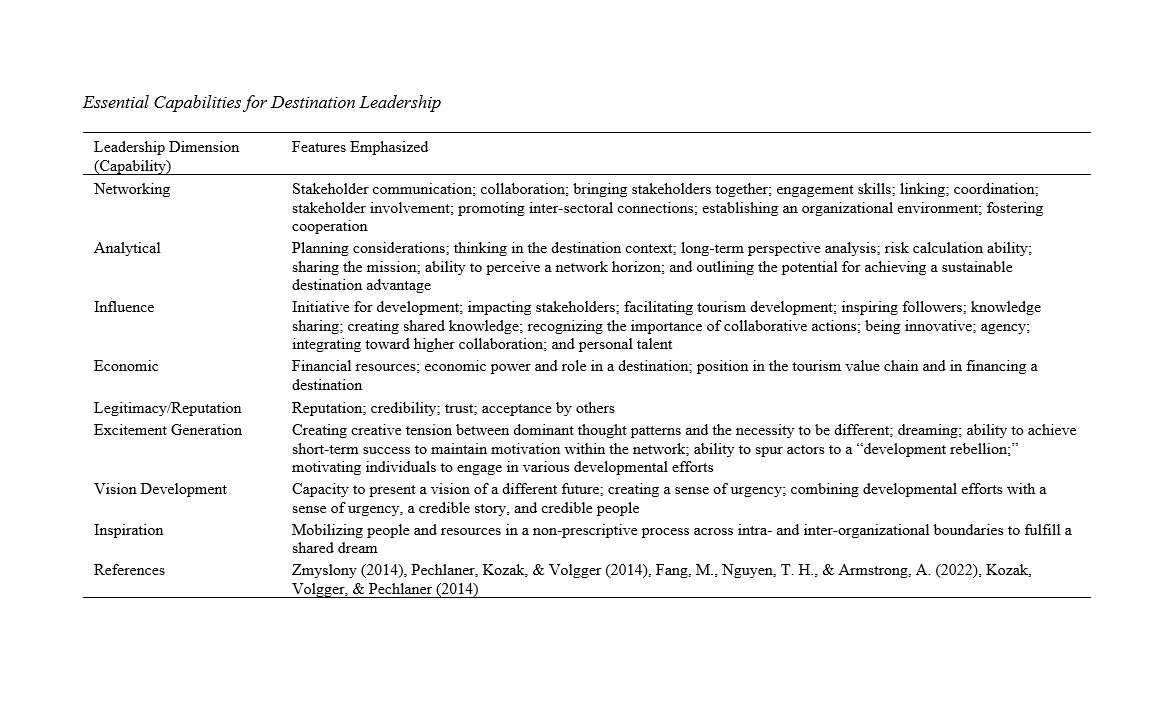
Findings: Results indicate that researchers are increasingly focused on a novel paradigm emphasizing network leadership over individualistic and hierarchical models. However, no unified or shared definition of leadership in tourism destinations has emerged. Leadership models proposed for success in tourism destinations include systemic, distributed, collective, and shared leadership. Additionally, essential capabilities for destination leadership include networking, analytical skills, influence, economic acumen, vision development, strategic planning, and generating enthusiasm. Finally, the relationship between sports and tourism destinations can be analyzed through three dimensions: "destination as a product" (active sports tourism), "venue for product delivery" (sporting events), and "part of the product package" (sports as a destination attraction).
Conclusion: Within the framework of the network relationship paradigm, three leadership models—inter-organizational, inter-sectoral, and intra-sectoral—can be proposed.
Downloads
References
Arksey, H., & O'Malley, L. (2005). Scoping studies: Towards a methodological framework. International Journal of Social Research Methodology, 8(1), 19-32. https://doi.org/10.1080/1364557032000119616
Backer, E., & Hing, N. (2023). Whole tourism systems: An academic portrait of Neil Leiper. In Early Framers of Tourism Knowledge, Volume III (pp. 121-126). Routledge. https://doi.org/10.4324/9781003393214-18
Bazzanella, F., Schnitzer, M., Peters, M., & Bichler, B. F. (2023). The role of sports events in developing tourism destinations: A systematized review and future research agenda. Journal of Sport & Tourism, 27(2), 77-109. https://doi.org/10.1080/14775085.2023.2186925
Beritelli, P., & Bieger, T. (2014). From destination governance to destination leadership—defining and exploring the significance with the help of a systemic perspective. Tourism Review, 69(1), 25-46. https://doi.org/10.1108/TR-07-2013-0043
Beritelli, P., Bieger, T., & Laesser, C. (2007). Destination governance: Using corporate governance theories as a foundation for effective destination management. Journal of Travel Research, 46(1), 96-107. https://doi.org/10.1177/0047287507302385
Chalip, L., & Costa, C. A. (2005). Sport event tourism and the destination brand: Towards a general theory. Sport in Society, 8(2), 218-237. https://doi.org/10.1080/17430430500108579
Chen, Z., Li, S., Wu, Q., Wu, Z., & Xin, S. (2023). The decision-making determinants of sport tourists: A meta-analysis. Current Issues in Tourism, 26(12), 1894-1914. https://doi.org/10.1080/13683500.2022.2077175
Cheng, M., Zhang, L., & Li, D. (2023). Analysis of the coupled and coordinated development of sports and tourism industries and the driving factors. Scientific reports, 13(1), 16725. https://doi.org/10.1038/s41598-023-44025-6
Cronjé, D. F., & du Plessis, E. (2020). A review on tourism destination competitiveness. Journal of Hospitality and Tourism Management, 45, 256-265. https://doi.org/10.1016/j.jhtm.2020.06.012
Fyall, A., & Garrod, B. (2020). Destination management: A perspective article. Tourism Review, 75(1), 165-169. https://doi.org/10.1108/TR-07-2019-0311
Gammon, S., & Robinson, T. (1997). Sport and tourism: A conceptual framework. Journal of sport tourism, 4(3), 11-18. https://doi.org/10.1080/10295399708718632
Getz, D., & Page, S. J. (2016). Progress and prospects for event tourism research. Tourism Management, 52, 593-631. https://doi.org/10.1016/j.tourman.2015.03.007
Gibson, H. J., Kaplanidou, K., & Kang, S. J. (2012). Small-scale event sport tourism: A case study in sustainable tourism. Sport Management Review, 15(2), 160-170. https://doi.org/10.1016/j.smr.2011.08.013
Gibson, H. J., Lamont, M., Kennelly, M., & Buning, R. J. (2018). Introduction to the special issue active sport tourism. Journal of Sport & Tourism, 22(2), 83-91. https://doi.org/10.1080/14775085.2018.1466350
Happ, E. (2021). Tourism destination competitiveness with a particular focus on sport: The current state and a glance into the future—a systematic literature analysis. Journal of Sport & Tourism, 25(1), 66-82. https://doi.org/10.1080/14775085.2021.1888775
Harrison-Hill, T., & Chalip, L. (2013). Marketing sport tourism: Creating synergy between sport and destination. In Sport Tourism (pp. 170-188). Routledge. https://www.researchgate.net/publication/45377430
Hjalager, A. M. (2000). Tourism destinations and the concept of industrial districts. Tourism and Hospitality Research, 2(3), 199-213. https://doi.org/10.1177/146735840000200302
Hristov, D., Minocha, S., & Ramkissoon, H. (2018). Transformation of destination leadership networks. Tourism Management Perspectives, 28, 239-250. https://doi.org/10.1016/j.tmp.2018.09.004
Hristov, D., & Ramkissoon, H. (2016). Leadership in destination management organisations. Annals of Tourism Research, 61, 230-234. https://doi.org/10.1016/j.annals.2016.08.005
Hristov, D., & Zehrer, A. (2015). The destination paradigm continuum revisited: DMOs serving as leadership networks. Tourism Review, 70(2), 116-131. https://doi.org/10.1108/TR-08-2014-0050
Huang, G. I., Karl, M., Wong, I. A., & Law, R. (2023). Tourism destination research from 2000 to 2020: A systematic narrative review in conjunction with bibliographic mapping analysis. Tourism Management, 95, 104686. https://doi.org/10.1016/j.tourman.2022.104686
Hungenberg, E., Gray, D., Gould, J., & Stotlar, D. (2016). An examination of motives underlying active sport tourist behavior: A market segmentation approach. Journal of Sport & Tourism, 20(2), 81-101. https://doi.org/10.1080/14775085.2016.1189845
Ito, E., & Higham, J. (2020). Supplemental tourism activities: A conceptual framework to maximise sport tourism benefits and opportunities. Journal of Sport & Tourism, 24(4), 269-284. https://doi.org/10.1080/14775085.2020.1850322
Jovicic, D. Z. (2016). Key issues in the conceptualization of tourism destinations. Tourism Geographies, 18(4), 445-457. https://doi.org/10.1080/14616688.2016.1183144
Kennelly, M., & Toohey, K. (2014). Strategic alliances in sport tourism: National sport organisations and sport tour operators. Sport Management Review, 17(4), 407-418. https://doi.org/10.1016/j.smr.2014.01.001
Lee, S. W., & Xue, K. (2020). A model of destination loyalty: Integrating destination image and sustainable tourism. Asia Pacific Journal of Tourism Research, 25(4), 393-408. https://doi.org/10.1080/10941665.2020.1713185
Mackellar, J., & Nisbet, S. (2017). Sport events and integrated destination development. Current Issues in Tourism, 20(13), 1320-1335. https://doi.org/10.1080/13683500.2014.959903
Mandić, A., Mrnjavac, Ž., & Kordić, L. (2018). Tourism infrastructure, recreational facilities and tourism development. Tourism and Hospitality Management, 24(1), 41-62. https://doi.org/10.20867/thm.24.1.12
Moradi, E., Ehsani, M., Saffari, M., & Hosseini, R. N. S. (2022). Developing an integrated model for the competitiveness of sports tourism destinations. Journal of Destination Marketing & Management, 26, 100743. https://doi.org/10.1016/j.jdmm.2022.100743
Morfoulaki, M., Myrovali, G., Kotoula, K. M., Karagiorgos, T., & Alexandris, K. (2023). Sport tourism as driving force for destinations' sustainability. Sustainability, 15(3), 2445. https://doi.org/10.3390/su15032445
Munn, Z., Peters, M. D., Stern, C., Tufanaru, C., McArthur, A., & Aromataris, E. (2018). Systematic review or scoping review? Guidance for authors when choosing between a systematic or scoping review approach. BMC medical research methodology, 18, 1-7. https://doi.org/10.1186/s12874-018-0611-x
Murphy, P., Pritchard, M. P., & Smith, B. (2000). The destination product and its impact on traveller perceptions. Tourism Management, 21(1), 43-52. https://doi.org/10.1016/S0261-5177(99)00080-1
Newland, B. L., & Aicher, T. J. (2020). Exploring sport participants' event and destination choices. In Active Sport Tourism (pp. 48-66). Routledge. https://doi.org/10.4324/9780429199578-4
O'Flaherty, J., & Phillips, C. (2015). The use of flipped classrooms in higher education: A scoping review. The Internet and Higher Education, 25, 85-95. https://doi.org/10.1016/j.iheduc.2015.02.002
Parent, M. M. (2008). Evolution and issue patterns for major-sport-event organizing committees and their stakeholders. Journal of Sport Management, 22(2), 135-164. https://doi.org/10.1123/jsm.22.2.135
Parent, M. M., & Séguin, B. (2008). Toward a model of brand creation for international large-scale sporting events: The impact of leadership, context, and nature of the event. Journal of Sport Management, 22(5), 526-549. https://doi.org/10.1123/jsm.22.5.526
Pearce, C. L., Conger, J. A., & Locke, E. A. (2008). Shared leadership theory. The Leadership Quarterly, 19(5), 622-628. https://doi.org/10.1016/j.leaqua.2008.07.005
Pearce, D. G. (1992). Alternative tourism: Concepts, classifications, and questions. In Tourism Alternatives: Potentials and Problems in the Development of Tourism (pp. 15-30). University of Pennsylvania Press. https://doi.org/10.9783/9781512807462-005
Pechlaner, H., Kozak, M., & Volgger, M. (2014). Destination leadership: A new paradigm for tourist destinations? Tourism Review, 69(1), 1-9. https://doi.org/10.1108/TR-09-2013-0053
Reinhold, S., Beritelli, P., Fyall, A., Choi, H. S. C., Laesser, C., & Joppe, M. (2023). State-of-the-art review on destination marketing and destination management. Tourism and Hospitality, 4(4), 584-603. https://doi.org/10.3390/tourhosp4040036
Richelieu, A. (2018). A sport-oriented place branding strategy for cities, regions and countries. Sport, Business and Management: An International Journal, 8(4), 354-374. https://doi.org/10.1108/SBM-02-2018-0010
Robinson, T., & Gammon, S. (2004). A question of primary and secondary motives: Revisiting and applying the sport tourism framework. Journal of Sport & Tourism, 9(3), 221-233. https://doi.org/10.1080/1477508042000320223
Ronaghi, S. S., Semnani, A. S. H., & Saffari, L. (2024). Workforce Planning for the Future of Sports Tourism. Int J Sport Stud Health, 7(4), 26-39. https://doi.org/10.61838/kman.intjssh.7.4.4
Russo, A. P., & Segre, G. (2009). Destination models and property regimes: An exploration. Annals of Tourism Research, 36(4), 587-606. https://doi.org/10.1016/j.annals.2009.04.002
Sallent, O., Palau, R., & Guia, J. (2011). Exploring the legacy of sport events on sport tourism networks. European Sport Management Quarterly, 11(4), 397-421. https://doi.org/10.1080/16184742.2011.599208
Saraniemi, S., & Komppula, R. (2019). The development of a destination brand identity: A story of stakeholder collaboration. Current Issues in Tourism, 22(9), 1116-1132. https://doi.org/10.1080/13683500.2017.1369496
Sato, S., Gipson, C., Todd, S., & Harada, M. (2018). The relationship between sport tourists' perceived value and destination loyalty: An experience-use history segmentation approach. Journal of Sport & Tourism, 22(2), 173-186. https://doi.org/10.1080/14775085.2017.1348967
Sotarauta, M. (2016). Shared leadership and dynamic capabilities in regional development. In Regionalism Contested (pp. 63-82). Routledge. https://www.researchgate.net/publication/236162664
Stilling Blichfeldt, B., Hird, J., & Kvistgaard, P. (2014). Destination leadership and the issue of power. Tourism Review, 69(1), 74-86. https://doi.org/10.1108/TR-06-2013-0025
Taherkhani, A., Biniaz, S. A., & Sarhadi, M. (2024). Identifying Key Drivers in the Development of Sport Tourism in Aquatic and Beach Sports: A Future Study. Jsied, 18-36. https://doi.org/10.61838/jsied.4.4.2
Terzić, A., Demirović, D., Petrevska, B., & Limbert, W. (2021). Active sport tourism in Europe: Applying market segmentation model based on human values. Journal of Hospitality & Tourism Research, 45(7), 1214-1236. https://doi.org/10.1177/1096348020926546
Vanhove, N. (2005). Globalisation of tourism demand, global distribution systems and marketing. In Tourism in the Age of Globalisation (pp. 137-170). Routledge. https://doi.org/10.4324/9780203995853-13
Wäsche, H., & Woll, A. (2013). Managing regional sports tourism networks: A network perspective. European Sport Management Quarterly, 13(4), 404-427. https://doi.org/10.1080/16184742.2013.811608
Weed, M. (2003). Why the two won't tango! Explaining the lack of integrated policies for sport and tourism in the UK. Journal of Sport Management, 17(3), 258-283. https://doi.org/10.1123/jsm.17.3.258
Zmyslony, P. (2014). Identification of leadership in emerging tourist destinations. Tourism Review, 69(3), 173-186. https://doi.org/10.1108/TR-06-2013-0031
Downloads
Additional Files
Publication Timeline
- Submitted
- Revised
- Accepted
Issue
Section
License
Copyright (c) 2025 Hayder Mansoor Hassoon (Author); Bahram Yousefi (Corresponding Author); Zohreh Hasani, Erfan Moradi, Rasool Norouzi Seyed Hosseini (Author)

This work is licensed under a Creative Commons Attribution-NonCommercial 4.0 International License.