































Emotion Processing in Child Bereavement: Development and Validation of a Counseling Model Based on Resilience and Self-Compassion
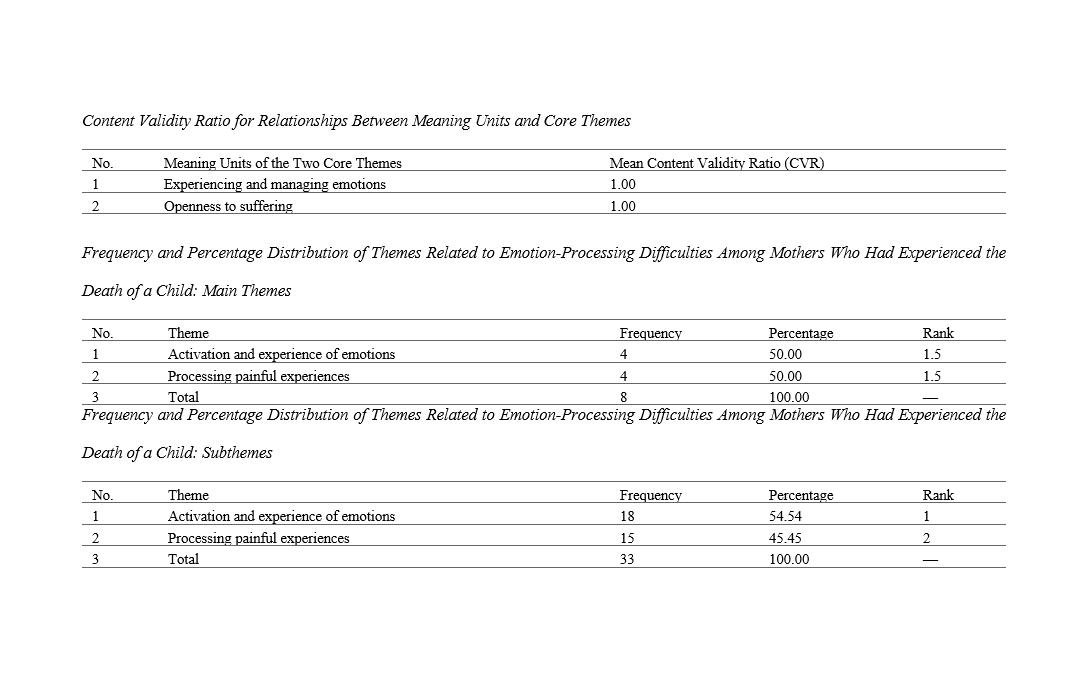
The present study aimed to develop and validate a counseling model for processing emotions associated with resilience and self-compassion among mothers who had experienced the death of a child. The model was designed on the basis of a qualitative analysis of the lived experiences of 30 bereaved mothers in Isfahan and was organized into nine weekly 90-minute sessions comprising an interconnected set of components addressing the emotional, cognitive, somatic, meaning-related, identity-related, and interpersonal dimensions of grief. The model is structured around four stages—activation, symbolization, meaning-making, and integration—and incorporates 11 key components, including establishing emotional safety, controlled emotional activation, working with trauma-related experiences, identity reconstruction, strengthening the continuing bond with the deceased child, social support, and planning for exposure to future triggers. The Delphi method was used to evaluate the validity of the model, and experts confirmed the necessity, appropriateness, and coherence of its components across three consecutive rounds. The findings indicated that the model had satisfactory content validity and was consistent with the lived experiences of bereaved mothers as well as with theoretical and therapeutic principles in the field of grief. Accordingly, the developed counseling model may be used as a valid, structured, and feasible intervention to assist mothers who have experienced the death of a child in processing emotions, reconstructing meaning, and strengthening resilience.