















A Network‑Informed Machine Learning Model of How Trait Negative Affectivity and Pain Catastrophizing Predict Somatic Symptom Intensity
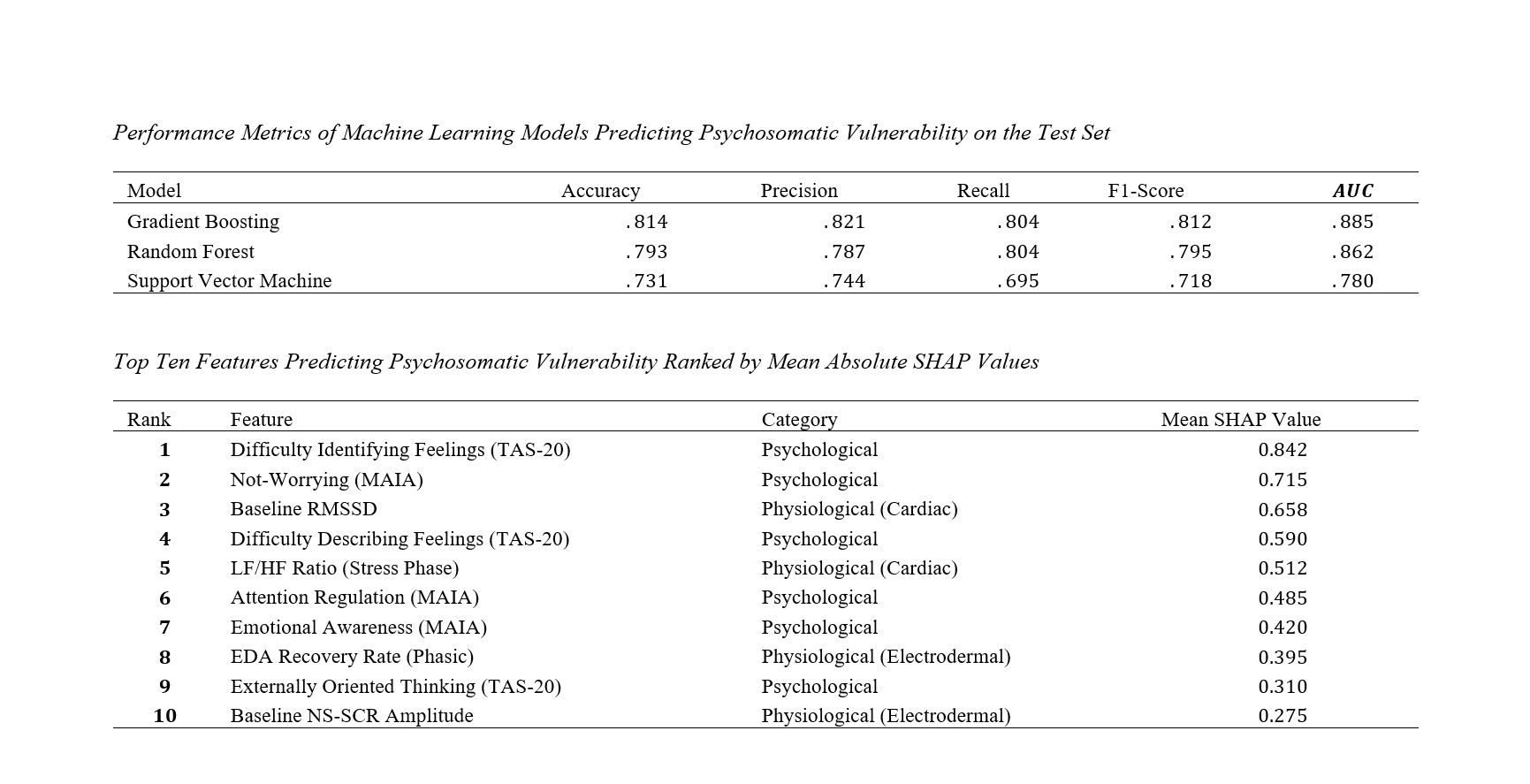
The objective of this study was to estimate a psychological network of trait negative affectivity and pain catastrophizing to identify critical bridge nodes, and subsequently utilize these specific structural bridges as features in a machine learning model to predict the continuous intensity of somatic symptoms. This cross-sectional study recruited a community sample of adults from Georgia who completed standardized online self-report questionnaires, including the Positive and Negative Affect Schedule (PANAS-NA), the Pain Catastrophizing Scale (PCS), and the Patient Health Questionnaire (PHQ-15). Data analysis utilized a two-phase methodology: first, a regularized partial correlation network analysis was conducted to map item-level interactions and compute bridge expected influence; second, machine learning algorithms (Random Forest, Support Vector Regression, Elastic Net) were trained using the identified bridge nodes as input features to predict somatic symptom intensity. Macroscopic analyses demonstrated robust positive correlations between negative affectivity, catastrophizing, and somatic burden. Network analysis revealed that the emotional state of feeling “afraid” and the cognitive appraisal of “helplessness” served as the paramount structural bridge nodes connecting the two psychological constructs. The network-informed Random Forest model demonstrated strong predictive performance on unseen test data ( ), with feature importance metrics confirming that “helplessness” was the most critical individual predictor, independently accounting for of the model’s out-of-sample predictive accuracy. Targeted clinical interventions that specifically dismantle the catastrophic cognition of helplessness may prove more efficacious in reducing somatic symptom severity than broad treatments aimed at generalized negative affect.