Comparing the Effectiveness of Well-Being Therapy and Positive Therapy on Affective Capital in Adolescents Residing in Foster Care Centers
DOI:
https://doi.org/10.61838/kman.jayps.6.4.3Keywords:
well-being therapy, positive therapy, affective capital, adolescents, foster care centersAbstract
Objective: This study aimed to compare the effectiveness of well-being therapy and positive therapy on affective capital in adolescents aged 12 to 18 years residing in foster care centers in Isfahan Province.
Methods and Materials: The research employed a quasi-experimental design using a pretest-posttest format with a control group and a three-month follow-up. A total of 45 adolescent girls aged 12 to 18 years were randomly selected and assigned to two experimental groups and one control group (15 participants per group). The experimental groups underwent eight sessions of well-being therapy and positive therapy, respectively, while the control group received no intervention. All three groups were assessed using affective capital questionnaires before the intervention, immediately after, and three months post-intervention.
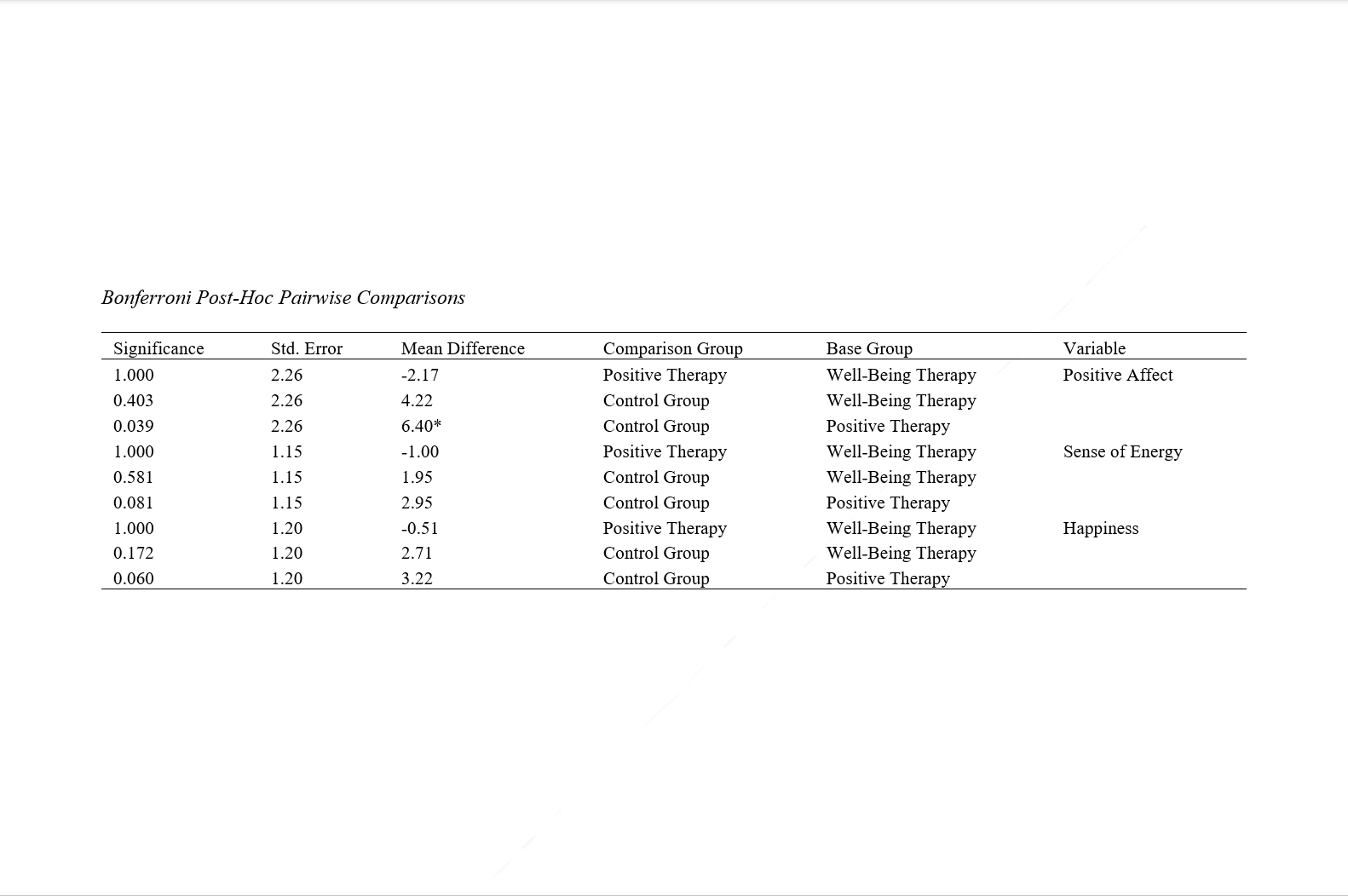
Findings: The results indicated that the mean affective capital significantly increased in both the well-being therapy and positive therapy groups during the post-test and follow-up phases compared to the pretest phase.
Conclusion: Based on the findings, it was concluded that well-being therapy and positive therapy are effective in enhancing the affective capital of adolescents residing in foster care centers, with a significant difference observed between the two interventions.
Downloads
References
Abdoli, F., Golparvar, M., & Aghaie, A. (2021). Effectiveness of Early Childhood Care and Education Package on the Intelligence of Children Aged 2 to 24 Months and the Emotional Capital and Parenting Stress of Their Mothers. Scientific Journal of Pezhvak, 19(4), 33-42. https://doi.org/10.61186/psj.19.4.33
Aghili, M., Majidi, F., & Asghari, A. (2023). Comparing the Effectiveness of Compassion-Based Therapy and Positive Therapy on Optimism and Life Satisfaction of Women Involved in Conflict in the First Years of Life Together. The Women and Families Cultural-Educational, 18(62), 195-215. https://cwfs.ihu.ac.ir/article_207845.html
Arshi, M., Sayad, M., & Farmani, A. (2014). Comparative Study of Emotional Intelligence Among Teenage Girls in Families and Semi-Family Centers in Tehran. Quarterly Journal of Social Work, 3(3), 39-47. https://socialworkmag.ir/article-1-41-en.html
Bagholi Kermani, M., Golparvar, M., Atashpour, H., & Sadeghi, M. (2021). Comparison of the Impact of Unified Behavioral Couples Therapy and Narrative Couples Therapy on Emotional Capital and Depression in Individuals with Coronary Artery Disease and Their Spouses. Journal of Cardiovascular Nursing, 10(1), 188-200. https://journal.icns.org.ir/browse.php?a_id=737&sid=1&slc_lang=en
Chamzadeh Ghanavati, M., Aghaie, A., & Golparvar, M. (2015). Effectiveness of Positive Thinking Skills Training on the Pessimistic Attribution Styles of Male Elementary School Students. Research in Curriculum Planning, 47(12), 43-50. https://sanad.iau.ir/en/Journal/jsre/Article/534399?jid=534399
Elham, A., Golparvar, M., & Sajadian, E. (2022). Comparison of the Effectiveness of Cognitive Behavioral Therapy Focused on Sleep Improvement with Mindfulness-Based Cognitive Therapy and Fordyce's Happiness Training on the Emotional Capital of Women Suffering from Migraines. Research Journal of Feyz, 26(4), 446-456. https://feyz.kaums.ac.ir/browse.php?a_id=4645&sid=1&slc_lang=en
Esteki Azad, N., Golparvar, M., & Sajjadian, I. (2022). The Effectiveness of Play Therapy based on Child-Parent Relationships and Cognitive-Behavioral Art-Play Therapy on Mother’s Affective Capital of Single Parents’ Children [Quantitative-Research]. 2 Journal of Nursing Education, 10(6), 53-64. http://jne.ir/article-1-1287-en.html
Fava, G. A. (2016). Well-being therapy: Current indications and emerging perspectives. Psychotherapy and psychosomatics, 85(3), 136-145. https://doi.org/10.1159/000321575
Fayyaz, I. D., & Kiani, Z. (2011). Assessment of the Mental Health of Adolescents in Shahid Dastgheib Namazi Orphanage, Shiraz. Journal of Exceptional Individuals' Psychology, 1(2), 19-48. https://jpe.atu.ac.ir/article_2031.html
Ghasemi Kaleh Masihi, J., Golparvar, M., & Khayatan, F. (2020). Comparing the effectiveness of using signature strengths in new way and affective capital promotion training on burnout of nurses. Iranian Journal of Rehabilitation Research, 6(3), 74-83. https://ijrn.ir/browse.php?a_id=501&sid=1&slc_lang=en
Ghassami Kale Masihi, J., Golparvar, M., & Khayatan, F. (2020). Comparing the Effectiveness of Using Natural Strengths in a Novel Way and Emotional Capital Promotion Training on Job Burnout in Nurses. Journal of Rehabilitation Research in Nursing, 6(3), 75-83. https://ijrn.ir/article-1-501-en.html
Golparvar, M., & Akbari, M. (2019). Effectiveness of Integrative Acceptance and Commitment Therapy (ACT) and Parent Management Training (PMT) on the Emotional Capital of Male Adolescents Suffering from Sexual Abuse. Quarterly Journal of Counseling and Psychotherapy Culture, 10(39), 71-98. https://qccpc.atu.ac.ir/article_10128.html?lang=en
Guidi, J., & Fava, G. A. (2021). Conceptual and clinical innovations of well-being therapy. International Journal of Cognitive Therapy, 14(1), 196-208. https://doi.org/10.1007/s41811-021-00101-1
Hoksbergen, R. A. C., Ter Laak, J., Van Dijkum, C., Rijk, S., Rijk, K., & Stoutjesdijk, F. (2003). Posttraumatic stress disorder in adopted children from Romania. American Journal of Orthopsychiatry, 73(3), 255-265. https://doi.org/10.1037/0002-9432.73.3.255
Kazemi, A., Golparvar, M., & Atashpour, H. (2020). Comparison of the Impact of Mindful Acceptance Therapy and Positive Psychotherapy on the Emotional Capital of Female Students with Depression. Scientific-Research Journal of Feyz, 2(24), 198-208. http://feyz.kaums.ac.ir/browse.php?a_id=4106&sid=1&slc_lang=en&ftxt=0
Khalid, A., Morawska, A., & Turner, K. M. T. (2024). Caregivers' perspectives on the impact of the Group Triple P-Positive Parenting Program in Pakistani orphanages. Child & Family Social Work, 29(1), 78-89. https://doi.org/10.1111/cfs.13052
Lyubomirsky, S., & Layous, K. (2013). How do simple positive activities increase wellbeing? Current Directions in Psychological Science, 22(1), 57-62. https://doi.org/10.1177/0963721412469809
Madadi Zavareh, S., Golparvar, M., & Aghaie, A. (2019). Comparison of the Impact of Existential Positive Thinking Therapy and Iranian-Islamic Positive Therapy on the Emotional Capital of Female Students with Social Anxiety. Quarterly Journal of Child Mental Health, 6(3), 112-125. https://doi.org/10.29252/jcmh.6.3.11
Mohammadi, Z., Atashpour, H., & Golparvar, M. (2022). Comparison of the Impact of Group Therapy Based on Existential Acceptance and Commitment and Compassion-Focused Therapy on the Emotional Capital of Depressed Teenage Girls. Journal of Nursing Psychology, 10(3), 67-77. https://ijpn.ir/browse.php?a_id=2008&sid=1&slc_lang=en
Nasiri Takami, G., Najafi, M., & Talebpasand, S. (2020). Comparison of the Effectiveness of Positive Psychotherapy and Group Cognitive Behavioral Therapy on the Psychological Capital of Adolescents with Depression Symptoms. Journal of Positive Psychology Research, 6(2), 79-98. https://ppls.ui.ac.ir/article_25322.html?lang=en
Nouferesti, A., Roshan, R., Fata, L., Hassan Abadi, H. R., Pasandideh, A., & Shaeiri, M. R. (2015). Effectiveness of Positive Psychotherapy on Happiness and Psychological Well-being of Individuals with Depression Symptoms: A Single-Subject Study with Multiple Baselines. Journal of Positive Psychology Research, 1(1), 1-18. https://www.magiran.com/paper/1580236/the-effectiveness-of-positive-psychotherapy-in-increasing-happiness-and-psychological-well-being-in-people-with-depression-symptoms-a-multiple-baseline-study?lang=en
Nourian, L., Golparvar, M., & Aghaie, A. (2021). Comparison of the Effectiveness of Acceptance and Commitment Therapy and Positive Psychotherapy on Depression and Emotional Capital of Depressed Women. Journal of Nursing Psychology, 9(4), 12-23. https://ijpn.ir/browse.php?a_id=1645&sid=1&slc_lang=en
Orri, S., Gudmundur, S., & Eric, A. S. (2024). Cognitive Behavioral Therapy for Anxiety and Depression in Children and Adolescents. Review article, 47(2), 311-323. https://doi.org/10.1016/j.psc.2024.02.002
Pazhuheshgar, M., Ranjayi, A., Khoy Nezhad, G., & Beyzai, M. H. (2019). Investigating the Impact of Wellness Therapy on Depression, Self-management, and Blood Sugar Control in Women with Type 2 Diabetes. Scientific Research Journal of Diabetes Nursing, Zabol, 7(4), 943-957. https://jdn.zbmu.ac.ir/article-1-382-en.html
Pirnia, B., Mansour, S., Najafi, E., & Reyhani, R. (2017). Effectiveness of Wellness Therapy on Anxiety, Stress, and Depression Symptoms in Men Under Community-Based Treatment. Community Health Research Article, 10(4), 47-56. https://chj.rums.ac.ir/article_50762.html?lang=en
Rajabi Vandechali, A., Hadanzadeh, R., & Abbasi, G. (2022). Effect of positive therapy on self-harm thoughts and psychological well-being in students’ dissolution of romantic relationships. Razavi International Journal of Medicine, 10(2), 102-108. https://journal.razavihospital.ir/article_118471.html
Rashid, T., & Seligman, M. E. P. (2013). Positive Psychotherapy. In R. J. Corsini & D. Wedding (Eds.), Current Psychotherapies, (10th Edition). Belmont, CA: Cengage.
Rasouli, M., & Yaghmai, F. (2008). Review of Factors Related to Spiritual Adjustment in Adolescents Living in Residential Centers Based on the Theory of Reasoned Action. Journal of Iran's Psychiatry and Clinical Psychology, 16(80), 50-57.
Ruini, C., & Fava, G. A. (2012). Role of well‐being therapy in achieving a balanced and individualized path to optimal functioning. Clinical Psychology & Psychotherapy, 19(4), 291-304. https://doi.org/10.1002/cpp.1796
Sadri, I., Moradi, Z., Keshavarz Afshar, H., & Pour Seyed, S. R. (2022). Comparing the effectiveness of emotion-focused therapy and positive therapy on marital satisfaction and loneliness in married women without parental consent. Journal of Applied Psychological Research, 13(3), 181-204. https://japr.ut.ac.ir/article_89973.html?lang=en
Salehi, H. R., Rezayi, F., & Bagheri Motlagh, N. (2020). The Role of the Welfare Organization in the Guardianship Process of Orphaned or Neglected Children and Adolescents. Jurisprudence and Family Law (Voice of Sadiq), 25(72), 73-91. https://www.sid.ir/paper/524486/fa
Seligman, M. E., Rashid, T., & Parks, A. C. (2006). Positive psychotherapy. American psychologist, 61(8), 774. https://doi.org/10.1037/0003-066X.61.8.774
Shabannezhad, A. (2024). Comparison of Cognitive Behavioral Therapy and Mindfulness on Anxiety, and Positive and Negative Affect in Female Students. Journal of Adolescent and Youth Psychological Studies (JAYPS), 5(1), 133-141. https://doi.org/10.61838/kman.jayps.5.1.16
Shojaei Kalateh Bali, N., Samari, A. A., & Akbarzadeh, M. (2021). Impact of Couples Therapy Using Wellness Therapy Approach on Depression, Quality of Marital Life, Optimism, and Social Well-being in Individuals with Cardiovascular Disease. Journal of Cardiovascular Nursing, 10(1), 90-101. https://www.sid.ir/paper/1004256/fa
Shojeyan, S., Khajevand Khoshli, A., Azizi, L. S., & Asadi, J. (2024). Comparison of the Effectiveness of Mindfulness-Based Cognitive-Behavioral Therapy with Emotion-Focused Therapy on Sensation Seeking in Adolescents with Internet Addiction. Journal of Adolescent and Youth Psychological Studies (JAYPS), 5(4), 65-74. https://doi.org/10.61838/kman.jayps.5.4.8
Tarakçıoğlu, M. C. (2024). Can Cognitive Behavioral Therapy Be Effective for Social Anxiety Disorder With Dissociative and Self-Harm Behaviors in a 15-Year-Old Adolescent? Medical Research Reports, 7(2), 114-119. https://doi.org/10.55517/mrr.1419278
Downloads
Additional Files
Publication Timeline
- Submitted
- Revised
- Accepted
Issue
Section
License
Copyright (c) 2025 Raana Shavaran (Author); Seyed Hamid Atashpour (Corresponding Author); Hadi Farhadi (Author)

This work is licensed under a Creative Commons Attribution-NonCommercial 4.0 International License.