A Hybrid Model of a Merit-Based Compensation System Based on Organizational Structure in the Banking Sector
DOI:
https://doi.org/10.61838/kman.ijimob.5.5.12Keywords:
Merit-Based Compensation, Banking Sector, Organizational Structure, Hybrid ModelAbstract
Objective: The aim of the present study was to examine a merit-based compensation system based on organizational structure within the banking sector.
Methodology: This research was conducted using a mixed-methods approach. Participants in the qualitative section included academic experts and banking industry specialists, selected through purposive sampling. After 24 semi-structured interviews, theoretical saturation was achieved. In the quantitative section, all employees working at branches of Bank Keshavarzi participated. Sample size calculations were conducted using the G*Power software, and after accounting for response error, 386 responses were collected. Data analysis in the qualitative section employed open, axial, and selective coding methods within MAXQDA 2020 software. For the quantitative data, SPSS 26 and Smart PLS 3 software were used, and structural equation modeling was applied.
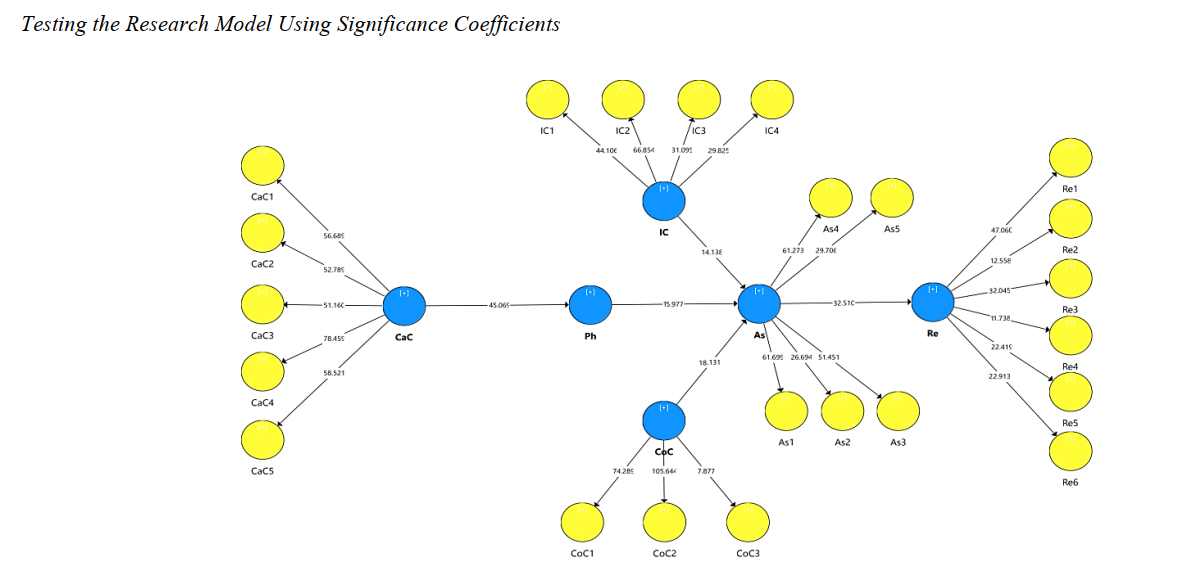
Findings: The qualitative findings, using a paradigmatic approach, indicated that 26 categories were classified into six groupings: causal conditions, central phenomenon, intervening conditions, contextual conditions, solutions, and outcomes. On the other hand, the analysis of the conceptual model in the quantitative section revealed a significant positive relationship between all main factors.
Conclusion: It can be concluded that focusing on each of the central and selective categories in the design of a merit-based compensation system based on organizational structure could result in positive outcomes for Bank Keshavarzi.
Downloads
References
Abbaspour, A. (2018). Advanced Human Resource Management: Approaches, Processes, and Functions. SAMT Publications.
Ahadzadeh, S., Daneshfard, K., & Memarzadeh Tehran, G. (2021). Designing a Model for Employee Compensation in Government and Comparative Analysis in Various Governmental Organizations. Human Resource Management Research, 13(3), 167-115. https://hrmj.ihu.ac.ir/article_206618.html?lang=en
Ali, Z., & Mehreen, A. (2019). Understanding succession planning as a combating strategy for turnover intentions. Journal of Advances in Management Research, 16(2), 216-233. https://doi.org/10.1108/JAMR-09-2018-0076
Alidoust Ghahfarokhi, E., Haji Hasani, M., & Eivazi, H. (2021). Analysis and Modeling of the Compensation System for Retaining Employees in the Zanjan Province Department of Sports and Youth. Organizational Behavior Management Studies in Sports, 8(3), 24-11. https://fmss.journals.pnu.ac.ir/article_8418.html?lang=en
Andriani, N. Y. (2023). The Effect of Compensation on Employee Loyalty. JURNAL EMA, 1(1), 33-40. https://ip2i.org/jip/index.php/ema/article/view/32
Azkiya, S. N., Rodiyah, R., & Rahayu, S. A. P. (2025). Construction of an Ideal Bureaucratic Meritocracy System Based on Good Governance in Civil Servant Recruitment. International Journal of Research and Innovation in Social Science, VIII(XII), 4239-4253. https://doi.org/10.47772/ijriss.2024.8120354
Bobeica, E., Ciccarelli, M., & Vansteenkiste, I. (2021). The changing link between labor cost and price inflation in the United States.
Burke, J., Hecht, G., & Stern, M. (2017). The effects of anticipation and recognition source in employee recognition programs. AAA,
Chalutz Ben-Gal, H., Forma, I., & Singer, G. (2021). A flexible employee recruitment and compensation model: A bi-level optimization approach. Computers & Industrial Engineering, 107916. https://doi.org/10.1016/j.cie.2021.107916
Cragun, O. R., Nyberg, A. J., & Wright, P. M. (2016). CEO succession: what we know and where to go? Journal of Organizational Effectiveness: People and Performance, 3(3), 222-264. https://doi.org/10.1108/JOEPP-02-2016-0015
Fadeyi, O., Oladele, K., Imhonopi, D., & Nwachukwu, C. (2019). Analyzing succession management practise in the context of organizational survival: A qualitative approach. International Journal for Quality Research, 13(2), 413. https://doi.org/10.24874/IJQR13.02-11
Fatemi Ghomshe, N.-A. (2019). Reforming and Strengthening the Banking System. Modern Banking Studies, 4. https://en.civilica.com/doc/1005245/
Giooki, E., Manzari Tavakkoli, A., Salajegheh, S., & Sheikhy, A. (2019). Explaining Organizational Strategy Through Meritocracy and Servant Leadership. Strategic Management Studies Quarterly, 10(37), 201-222. https://www.smsjournal.ir/article_87956.html?lang=en
Hidayati, L., & Zulher, Z. (2022). The The Effect of Leadership and Compensation on Employee Performance with Motivation as Moderating Variables at the Pangeran Hotel Pekanbaru. IJEBD International Journal Of Entrepreneurship And Business Development, 5(1), 82-91. https://doi.org/10.29138/ijebd.v5i1.1601
Jackson, N. C., & Dunn-Jensen, L. M. (2021). Leadership succession planning for today's digital transformation economy: Key factors to build for competency and innovation. Business Horizons, 64(2), 273-284. https://doi.org/10.1016/j.bushor.2020.11.008
Jeha, H., Knio, M., & Bellos, G. (2022). The Impact of Compensation Practices on Employees' Engagement and Motivation in Times of COVID-19. COVID-19: Tackling Global Pandemics through Scientific and Social Tools, 131-149. https://doi.org/10.1016/B978-0-323-85844-1.00004-0
Kheiran, H., Bahmani, M., & Aghighi, M. (2021). Investigating the Impact of Compensation Strategies on Job Satisfaction Among Employees of a Private Company. Biannual Journal of Psychological Research in Management, 7(2), 64-45. https://jom.hmu.ac.ir/article_251202.html?lang=en
Maleki, M., Faghihi, A., & Mirsepasi, N. (2021). Designing a Compensation Model for Employees in the Iranian Public Sector. Majles and Rahbord, 28(106), 283-247. https://nashr.majles.ir/article_450.html
Maleki, M., Nazemi, H., & Zamani, R. (2016). Notes on the Salary and Benefits System for Managers in the Public Sector (14993). https://rc.majlis.ir/fa/report/show/986677
Mehreen, A., & Ali, Z. (2022). The interplay between employee development factors and succession planning in predicting employee performance: evidence from retail banks. Industrial and Commercial Training, 54(3), 528-543. https://doi.org/10.1108/ICT-10-2021-0072
Mostafapour, M. A., Samiei, R., & Mostaghimi, M. (2021). Identifying and Ranking the Indicators Affecting Administrative System Health Using a Fuzzy Delphi Approach (Case Study: Judiciary in Northern Provinces). Scientific Quarterly of Modern Administrative Law Research, 3(8), 217-243. https://www.malr.ir/article_246396.html?lang=en
Omotehinse, A. O., & De Tomi, G. (2020). Managing the challenges of obtaining a social license to operate in the pre-mining phase: A focus on the oil sands communities in Ondo State, Nigeria. World Development Perspectives, 18, 100200. https://doi.org/10.1016/j.wdp.2020.100200
Pan, A., Wu, Q., & Li, J. (2022). External fairness of executive compensation, institutional investor and M&A premium. Nankai Business Review International, 13(1), 79-99. https://doi.org/10.1108/NBRI-05-2021-0035
Ployhart, R. E. (2021). Resources for what? Understanding performance in the resource-based view and strategic human capital resource literatures. Journal of Management, 47(7), 1771-1786. https://doi.org/10.1177/01492063211003137
Purwanto, A. (2020). Does Quality, Safety, Environment and Food Safety Management System Influence Business Performance? Answers from Indonesian Packaging Industries. International Journal of Control and Automation, 13(1), 22-35. https://papers.ssrn.com/sol3/papers.cfm?abstract_id=3983646
Putra, A. R. (2022). Improving Employee Performance through the Implementation of Total Quality Management and the Effectiveness of the Remuneration System. International Journal of Service Science, Management, Engineering, and Technology, 2(2), 1-5. https://ejournalisse.com/index.php/isse/article/view/31
Robbins, S. P., & DeCenzo, D. A. (1996). Human resource management. John Wiley & Sons, Limited. https://books.google.de/books/about/Human_Resource_Management.html?id=jdaGWEod9lAC&redir_esc=y
Saadat, E. (2012). Human Resource Management, 7th Edition. SAMT Publications.
Sarwar, S., & Abugre, J. B. (2013). An assessment of Islamic work ethics of employees in organizations: insights from the united arab emirates. Problems of Management in the 21st Century, 6, 60. https://doi.org/10.33225/pmc/13.06.60
Seniwoliba, J. A. (2015). Succession planning: Preparing the next generation workforce for the University for Development Studies. http://pearlresearchjournals.org/journals/rjesr/archive/2015/April/Abstract/Seniwoliba.html
Swailes, S. (2020). Responsible talent management: towards guiding principles. Journal of Organizational Effectiveness: People and Performance, 7(2), 221-236. https://doi.org/10.1108/JOEPP-04-2020-0068
Tang, A. D., Chang, M. L., Wang, T. H., & Lai, C. H. (2020). How to create genuine happiness for flight attendants: Effects of internal marketing and work-family interface. Journal of Air Transport Management, 87, 101860. https://doi.org/10.1016/j.jairtraman.2020.101860
Tarigan, S. A., Assaly, A., Gunawan, E., & Harnjo, E. (2022). The Impact Of Work Environment And Compensation Toward Employee Performance. Jurnal Mantik, 6(1), 89-97. https://iocscience.org/ejournal/index.php/mantik/article/view/1960
Wilkes, L., Cross, W., Jackson, D., & Daly, J. (2015). A repertoire of leadership attributes: An international study of deans of nursing. Journal of nursing management, 23(3), 279-286. https://doi.org/10.1111/jonm.12144
Downloads
Additional Files
Publication Timeline
- Submitted
- Revised
- Accepted
Issue
Section
License
Copyright (c) 2025 Mahsa Shokohsaljighi , Sanjar Salajeghe, Zahra Anjomshoaa (Author)

This work is licensed under a Creative Commons Attribution-NonCommercial 4.0 International License.