Presenting the Management Model of Public Libraries in Line with Social Justice Development
DOI:
https://doi.org/10.61838/kman.ijimob.3257Keywords:
Public Libraries, Social Justice Development, Model, IranAbstract
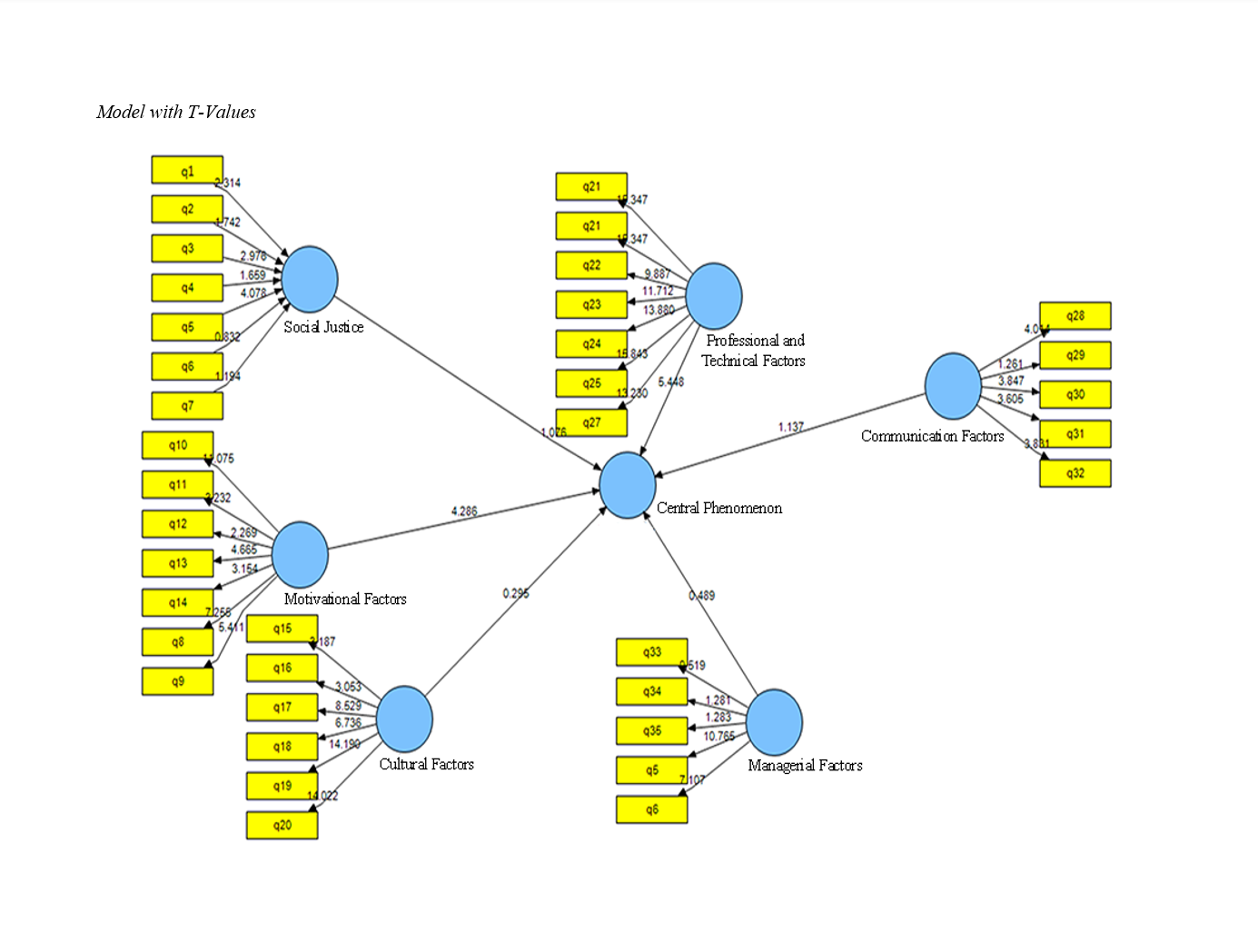
Objective: The concept of social justice and its relevant components in public libraries have created a new strategy beyond the libraries' perspective. In this lieu, libraries can enter these scopes and take unique measures to find the real needs of users and associated fields, and eliminate cultural deprivations. The research aim is to present a model for achieving social justice from the perspective of journalists and librarians.
Methodology: This study was applied in terms of objective and cross-sectional research in terms of type. Regarding the objective and nature of this paper, a mixed method (qualitative-quantitative) was used. For this purpose, the qualitative data were collected through the Delphi method then quantitative data were gathered. The quantitative approach examined the current situation; hence, it used the descriptive method with correlational type out of 479 librarians the by using cluster sampling based on the sample size. The data obtained from the questionnaire were analyzed through statistical SPSS software. The content validity of the questionnaire was greater than 0.79; hence, the validity index was confirmed.
Finding: Research findings, using the Pearson correlation and regression analysis, demonstrated that the model is significant. In other words, there is a relationship between public libraries and the reduction of social inequalities (with a decrease of 34.9 percent), relationship development (with an increase of 36.2 percent), social needs (with a 19.8 percent increase in attention), and democracy creation (with a 23.1 percent increase). The decrease and increase of these factors have been predicted.
Conclusion: This research examines the relationship between social justice and public libraries for the first time in Iran.
Downloads
Downloads
Additional Files
Publication Timeline
- Submitted
- Revised
- Accepted
Issue
Section
License
Copyright (c) 2024 Rabab Azizkhani (Author); Fereshteh Sepehr (Corresponding Author); Zohreh Mirhosseini, Saeed Ghaffari (Author)

This work is licensed under a Creative Commons Attribution-NonCommercial 4.0 International License.