Presentation of Administrative Standards Model for Educational Leaders in Third Millennium Schools
DOI:
https://doi.org/10.61838/kman.ijimob.5.2.2Keywords:
Administrative standards, Educational leaders, Third millennium schools, Grounded theory, Educational managementAbstract
Objective: The present article aims to propose a model of administrative standards for educational leaders in third millennium schools.
Methodology: This research employs a qualitative research methodology utilizing grounded theory. The statistical population consisted of educational leaders and experts from schools in Iraq, with purposive and snowball sampling methods applied until theoretical saturation was achieved. Data were collected through in-depth and exploratory interviews and analyzed using open, axial, and selective coding.
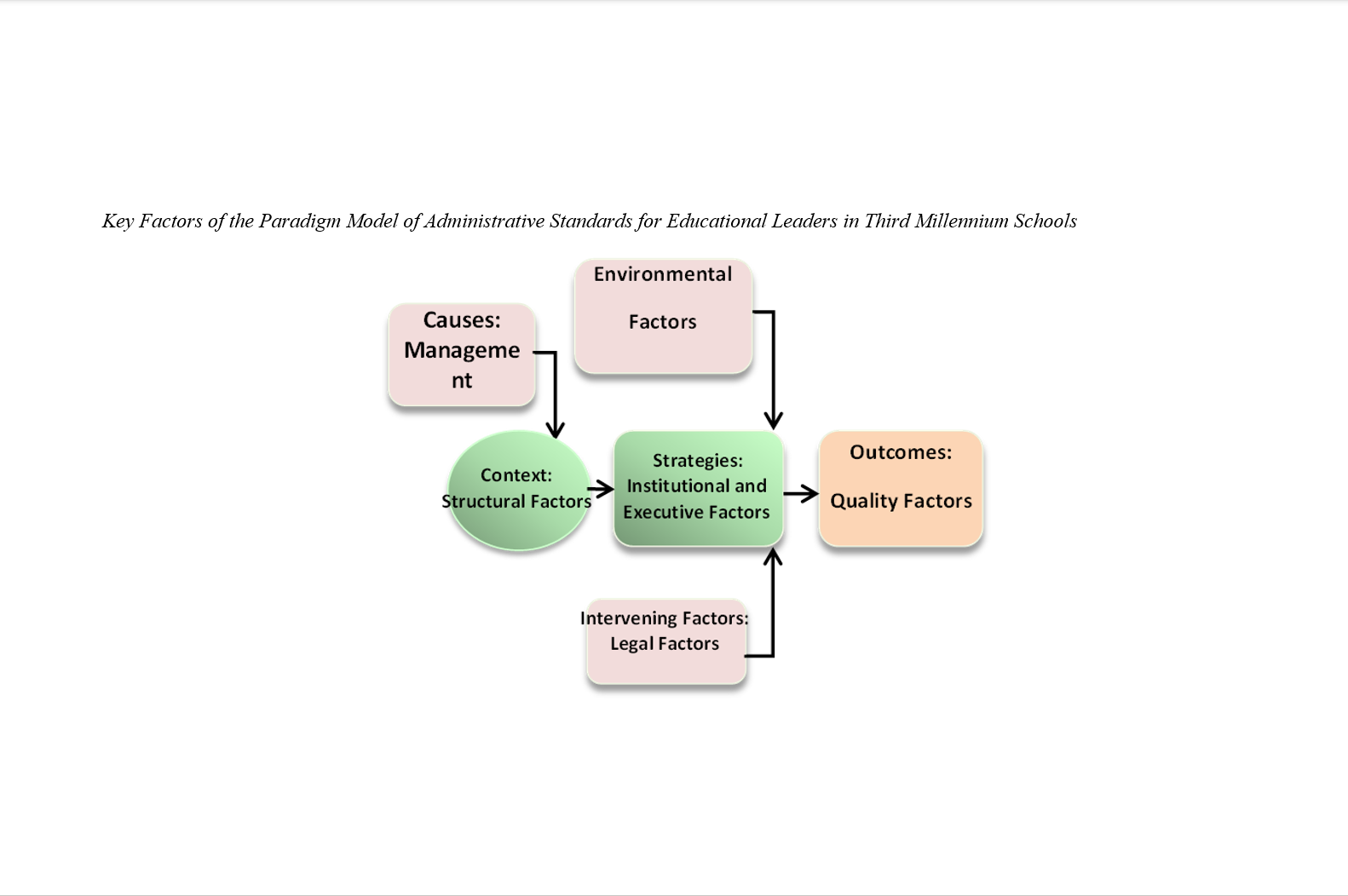
Findings: The findings revealed that 133 different factors influence the development of administrative standards, which are categorized into five groups: causal, core, contextual, intervening, and consequences. The results indicated that causal, core, and intervening factors have a direct impact on the strategies and outcomes of standard development. These standards play a significant role in improving the quality of educational management, increasing staff and student satisfaction, and enhancing teaching-learning processes.
Conclusion: This study emphasizes that educational leadership, as an independent domain, must align with the goals of education and play a key role in improving the quality and efficiency of the educational system. Additionally, the development of specific and efficient administrative standards for educational leaders is essential for effectively contributing to educational quality improvement. It is recommended that policymakers and educational planners consider these findings and take action to improve standards.
Downloads
Downloads
Additional Files
Publication Timeline
- Submitted
- Revised
- Accepted
Issue
Section
License
Copyright (c) 2024 Kadhim Ajrash Jarullah Al-nasaar (Author); Faranak Mosavi (Corresponding Author); Ismael Abd Zaid Ashour Alkareemawi, Nasrolah Ghashghaeizadeh (Author)

This work is licensed under a Creative Commons Attribution-NonCommercial 4.0 International License.