The Effectiveness of Self-Compassion Therapy on Reducing Parenting Stress and Improving Parent-Child Relationship Quality
DOI:
https://doi.org/10.61838/kman.pwj.6.1.3Keywords:
Parenting stress, Parent-child relationship, Self-compassion therapy, Relationship qualityAbstract
Objective: The aim of this study was to investigate the effectiveness of self-compassion therapy in reducing parenting stress and improving the quality of parent-child relationships.
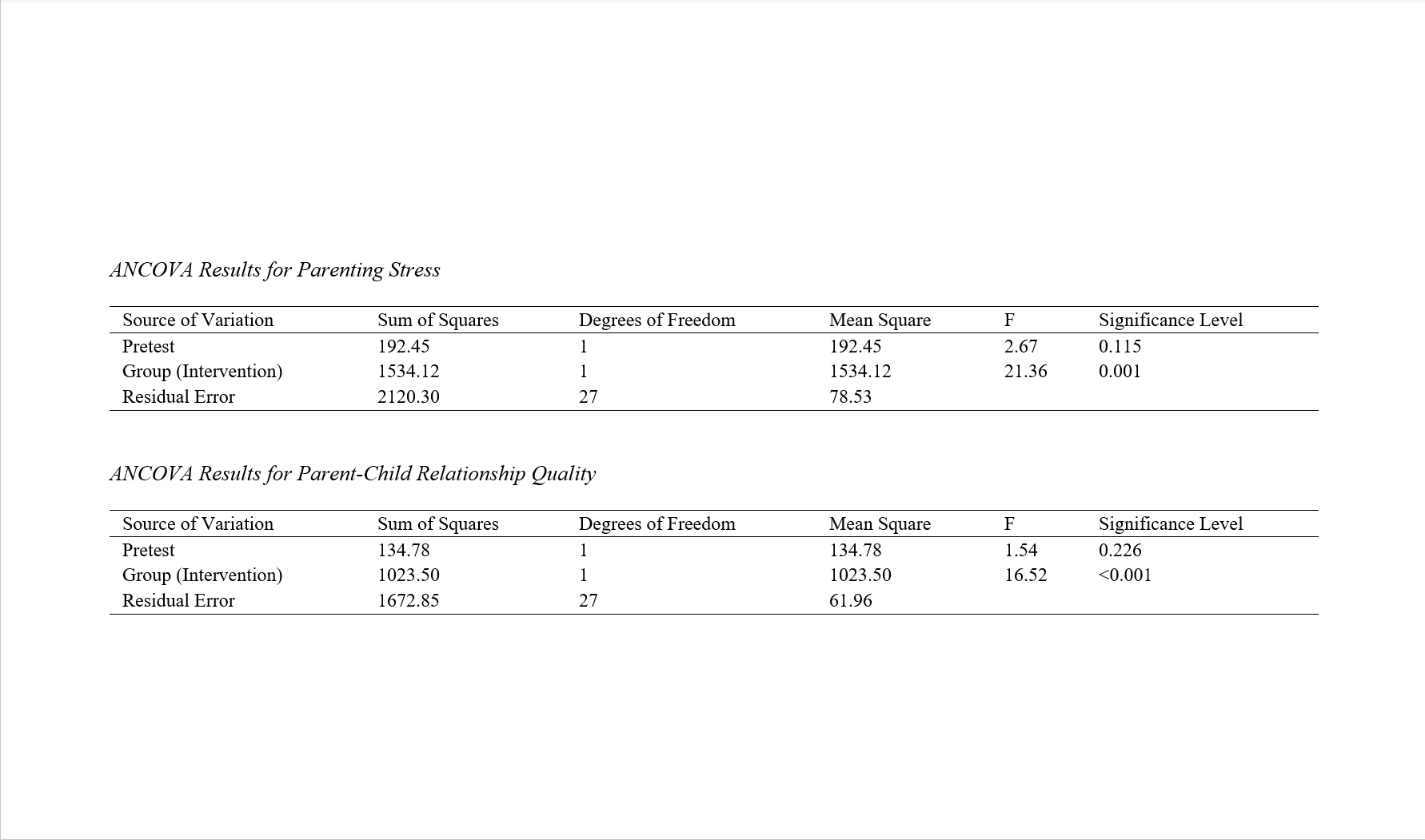
Methods and Materials: This research was conducted using a quasi-experimental design with a pretest-posttest control group. The study population included mothers who were experiencing parenting stress and difficulties in their relationships with their children. A total of 30 parents were randomly assigned to either the experimental or control group. The research instruments included the Parenting Stress Index-Short Form (PSI-SF) and the Parent-Child Relationship Quality Questionnaire (PCRQ). The experimental group underwent 8 sessions of self-compassion therapy. Data were analyzed using analysis of covariance (ANCOVA).
Findings: The results showed that self-compassion therapy significantly reduced parenting stress and improved the quality of parent-child relationships in the experimental group compared to the control group (p < 0.05). Parents who practiced this approach demonstrated greater ability to manage parenting stress and improve their interactions with their children.
Conclusion: Overall, this study demonstrated that self-compassion therapy can be used as an effective intervention for reducing parental stress and improving the quality of relationships with children.
Downloads
Downloads
Additional Files
Publication Timeline
- Submitted
- Revised
- Accepted
Issue
Section
License
Copyright (c) 2024 Fatemesadat Mirshafiei (Corresponding Author)

This work is licensed under a Creative Commons Attribution-NonCommercial 4.0 International License.