Probing into the Effects of Multiple Intelligence-based Activities (MIBAs): Iranian EFL Students’ Writing Performance in Focus
DOI:
https://doi.org/10.61838/kman.ec.psynexus.3.9Keywords:
Multiple Intelligence; Multiple Intelligence-based Activities (MIBAs); Multiple Intelligences Theory (MIT); Writing ImprovementAbstract
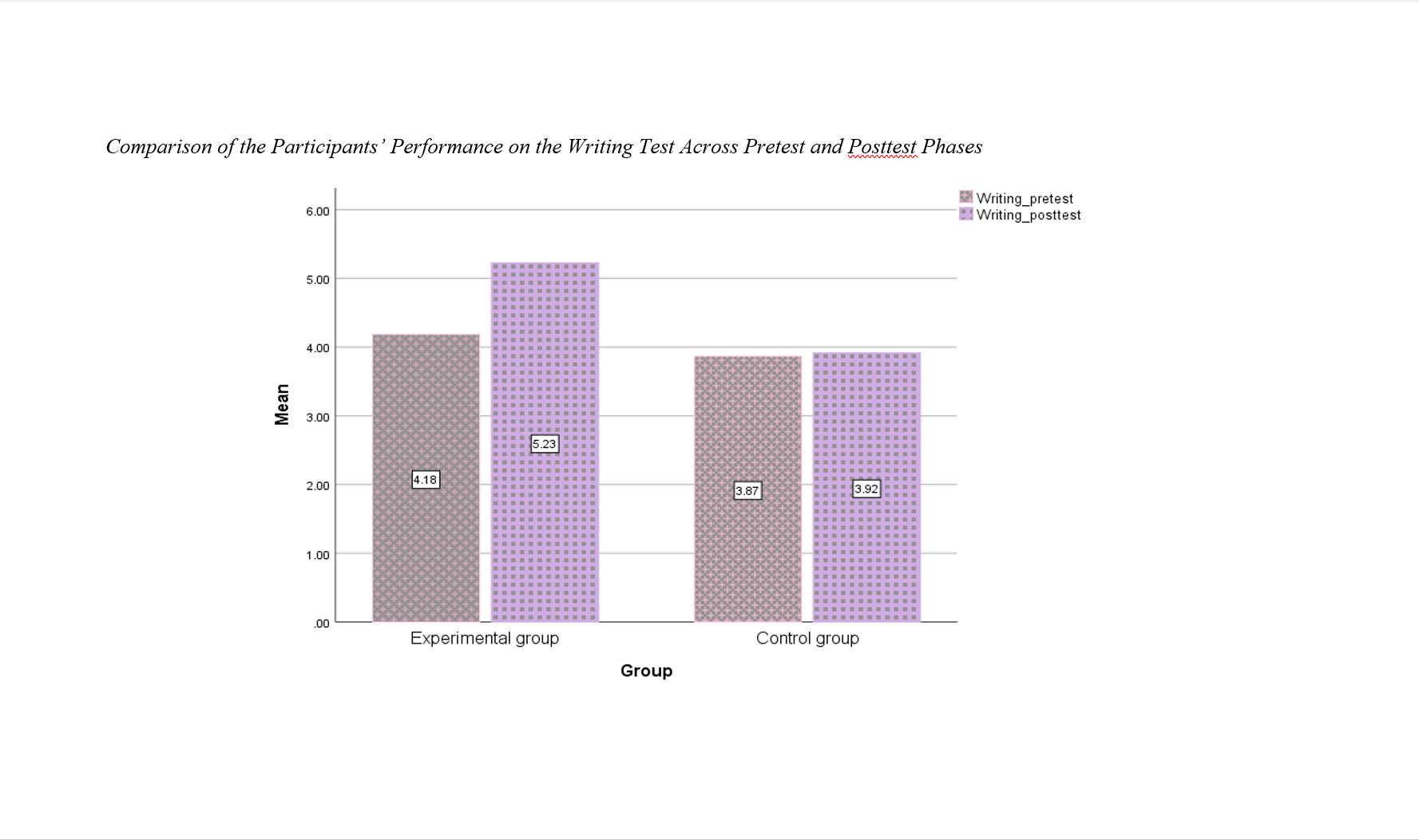
The present inquiry examined the impact of Multiple Intelligence-based Activities (MIBAs) on male and female EFL students’ writing improvement. For this purpose, a quantitative quasi-experimental pretest/posttest design, with the independent variable (use of MIBAs) and the dependent variable (writing) was used. Sixty (37 females, 23 males) undergraduate Persian-speaking EFL students, who were taking classes in Jahad Daneshgahi of Isfahan University of Technology were selected from 100 volunteer students, and they were made homogeneous in terms of their proficiency level, through Oxford Quick Placement Test (OQPT) and they were divided into control and experimental groups in a non-random fashion. Moreover, IELTS writing test was administered as pretest and posttest to evaluate the participants’ writing improvement. They were taught in some courses based on logical-mathematical, bodily-kinesthetic, visual-spatial, verbal-linguistic, intrapersonal, interpersonal, naturalistic, and musical intelligence activities. Participants were asked to follow traditional writing learning methods in the control group. Findings showed the outperformance of students in experimental group concerning the effect of MIBAs on increasing written performance, but there was no significant gender difference.
Downloads
References
Akbari, R., & Hosseini, K. (2008). Multiple Intelligences and Language Learning Strategies: Investigating Possible Relations. System, 36(2), 141-155. https://doi.org/10.1016/j.system.2007.09.008
Alizadeh, H., Saeidi, M., & Tamjid, N. H. (2014). The relationship between Iranian EFL learners' multiple intelligences and their writing improvement across different genders. Journal of English Language Pedagogy and Practice, 7(14), 1-22. https://www.researchgate.net/publication/312044274_The_Relationship_between_Iranian_EFL_Learners%27_Multiple_Intelligences_and_their_Writing_Performance_across_Different_Genders
Barton, G., Khosronejad, M., Ryan, M., Kervin, L., & Myhill, D. (2024). Teaching creative writing in primary schools: a systematic review of the literature through the lens of reflexivity. The Australian Educational Researcher, 51(4), 1311-1330. https://doi.org/10.1007/s13384-023-00641-9
Biria, R., Mehrabi, A., & Nikbakht, E. (2014). The relationship between multiple intelligences and Iranian EFL learners' level of L2 lexical knowledge: the case of gender. Advances in Language and Literary Studies, 5(3), 9-17. https://doi.org/10.7575/aiac.alls.v.5n.3p.9
Eng, L., & Mustapha, G. (2010). Enhancing writing ability through multiple-intelligence. Pertanika J. Soc. Sci. & Hum., 18(S), 53-63. https://www.researchgate.net/publication/286692063_Enhancing_writing_ability_through_multiple-intelligence_strategies
Fahim, M., & Nejad Ansari, D. (2006). A multiple intelligence-based investigation into the effects of feedback conditions on EFL writing achievement. IJAL, 9(2). https://www.google.com/url?sa=t&source=web&rct=j&opi=89978449&url=https://www.sid.ir/FileServer/JE/87620060203&ved=2ahUKEwj5243kzI-NAxUZzwIHHYC3MDIQFnoECBwQAQ&usg=AOvVaw1YXK4nEHH1kYr_Whdenr6g
Hansen, C. (2014). Key Study Skills Tools to Achieve Academic Success. http://www.mycollegesuccessstory.com/academic-success-tools/successfulintelligence.html
Husain, D. (2015). Applying Multiple Intelligence-Based Activities (MIBA) to Promote Students' Writing Improvement. ETERNAL (English Teaching Journal), 6(1). https://doi.org/10.26877/eternal.v6i1.2296
Iyitoglu, O., & Aydin, H. (2015). The relationship between multiple intelligence profiles and reading strategy use of successful English as a Foreign Language (EFL) readers. South African Journal of Education, 35(2), 1-11. https://doi.org/10.15700/saje.v35n2a980
Khosravi, R., Mohammadi, E., Esmaeili, N., & Zandi, H. (2023). Perfectionism and Writing Anxiety as Predictors of Iranian EFL Learners’ Performance in IELTS Writing Module: A Multi-Dimensional Perspective. Frontiers in Education, 8. https://doi.org/10.3389/feduc.2023.1108542
Kusumawarti, E., Subiyantoro, S., & Rukayah. (2020). The Effectiveness of Visualization, Auditory, Kinesthetic (VAK) Model toward Writing Narrative: Linguistic Intelligence Perspective. International Journal of Instruction, 13(4), 677. https://doi.org/10.29333/iji.2020.13442a
Li, Y. (2023). The effect of online collaborative writing instruction on enhancing writing performance, writing motivation, and writing self-efficacy of Chinese EFL learners. Frontiers in psychology, 14, 1165221. https://doi.org/10.3389/fpsyg.2023.1165221
Liliawati, W., Utama, J. A., & Mursydah, L. S. (2017). Concept mastery in the perspective of gender of junior high school students on eclipse theme in multiple intelligences-based of integrated earth and space science learning. IOP Conference Series: Materials Science and Engineering, 180(1), 012039. https://doi.org/10.1088/1757-899X/180/1/012039
Marefat, F. (2007). Multiple Intelligence: Voices from an EFL writing class. Pazhuhesh-e Zabanha-ye Khareji, 32, 145-162. https://www.google.com/url?sa=t&source=web&rct=j&opi=89978449&url=https://www.sid.ir/FileServer/JE/91920073209&ved=2ahUKEwig0bvpzY-NAxVO0wIHHcuFM5oQFnoECBYQAQ&usg=AOvVaw3CjmE3Ix3vV2v7XPWMllIV
Rafizade Tafti, M. R., Rahimi Esfahani, F., & Shafiee, S. (2023). The Impact of Audio Corrective Feedback on Iranian EFL Learners’ Writing Improvement at Micro and Macro levels: Static and Dynamic Assessment in Focus. iase-idje, 6(3), 204-215. https://doi.org/10.61186/ijes.6.3.204
Rahimi, A., & Qannadzadeh, J. A. (2010). Quantitative usage of logical connectors in Iranians' EFL essay writing and logical and linguistic intelligences. Procedia-Social and Behavioral Sciences, 5, 2012-2019. https://doi.org/10.1016/j.sbspro.2010.07.406
Salajegheh, N., & Hassani, S. (2023). The effect of technology and online learning on EFL learners' writing skills and self-concept. Journal of New Perspectives in English Language Learning, 65-76. https://journals.iau.ir/article_697772.html
Savojbolaghchilar, S., Seifoori, Z., & Ghafoori, N. (2020). The effect of multiple intelligence-oriented thematic clustering on advanced EFL learners' vocabulary learning. Journal of Teaching Language Skills, 39(2), 169-201. https://tesl.shirazu.ac.ir/article_5918.html
Shafiee, S., Mobini, M., Namaziandost, E., & Ghodoosi, S. (2020). Contribution of Multiple Intelligences to L2 Writing of EFL Learners. International Journal of Linguistics, Literature and Translation (IJLLT), 3(6), 59-69. https://doi.org/10.32996/ijllt.2020.3.6.7
Shirvan, M. E., Lou, N. M., & Taherian, T. (2021). Where do Language Mindsets Come from? An Ecological Perspective on EFL Students' Mindsets About L2 Writing. Journal of Psycholinguistic Research, 50, 1065-1086. https://doi.org/10.1007/s10936-021-09787-y
Sigha, K. (2020). A Comparative Study between the Effects of Intrapersonal and Linguistic Intelligences on the Narrative Paragraph Larbi Ben M'hidi University]. https://theses-algerie.com/1302523970090127/memoire-de-master/universite-larbi-ben-m-hidi---om-el-bouaghi/a-comparative-study-between-the-effects-of-intrapersonal-and-linguistic-intelligences-on-the-narrative-paragraph
Sun, J., Motevalli, S., & Chan, N. N. (2024). Exploring Writing Anxiety during Writing Process: An Analysis of Perceptions in Chinese English as a Foreign Language (EFL) Learners. Qualitative Research in Education, 1-16. https://doi.org/10.17583/qre.12938
Wahyuni, S., & Umam, M. (2022). An analysis on writing anxiety of Indonesian EFL college learners. Journal of English Education and Linguistics Studies (JEELS), 4(1), 105-128. https://doi.org/10.30762/jeels.v4i1.333
Yalmanci, S., & Gozum, A. (2013). Effects of multiple intelligence theory based teaching on students' achievement and retention of knowledge. International journal on new trends in education and their implications, 4(3), 27-33. https://www.researchgate.net/publication/306505575_THE_EFFECTS_OF_MULTIPLE_INTELLIGENCE_THEORY_BASED_TEACHING_ON_STUDENTS%27_ACHIEVEMENT_AND_RETENTION_OF_KNOWLEDGE_EXAMPLE_OF_THE_ENZYMES_SUBJECT
Yeganehfar, B. (2005). Investigating the Relationship between Proficiency in a Foreign Language and Multiple Intelligences University of Allameh Tabatabaei].
Zeraatpishe, M., Seifoori, Z., & Hadidi Tamjid, N. (2020). The impact of multiple intelligence-oriented writing tasks on the accuracy, fluency, and organization of ELT students' writing. The Journal of English Language Pedagogy and Practice, 12(25), 1-31. https://www.researchgate.net/publication/370018105_The_Impact_of_Multiple_Intelligence-Oriented_Writing_Tasks_on_the_Accuracy_Fluency_and_Organization_of_ELT_Students%27_Writing
Downloads
Additional Files
Publication Timeline
- Submitted
- Revised
- Accepted
Issue
Section
Categories
License
Copyright (c) 2025 Mozhgan Madhkhan (Author); Hadi Salehi (Corresponding Author); Omid Tabatabaei, Mohammad Reza Talebinejad (Author)

This work is licensed under a Creative Commons Attribution-NonCommercial 4.0 International License.