Identifying Work-Related Psychosomatic Stressors in Healthcare Workers: A Qualitative Exploration
DOI:
https://doi.org/10.61838/kman.jppr.3746Keywords:
psychosomatic stress, healthcare workers, qualitative study, occupational stress, burnoutAbstract
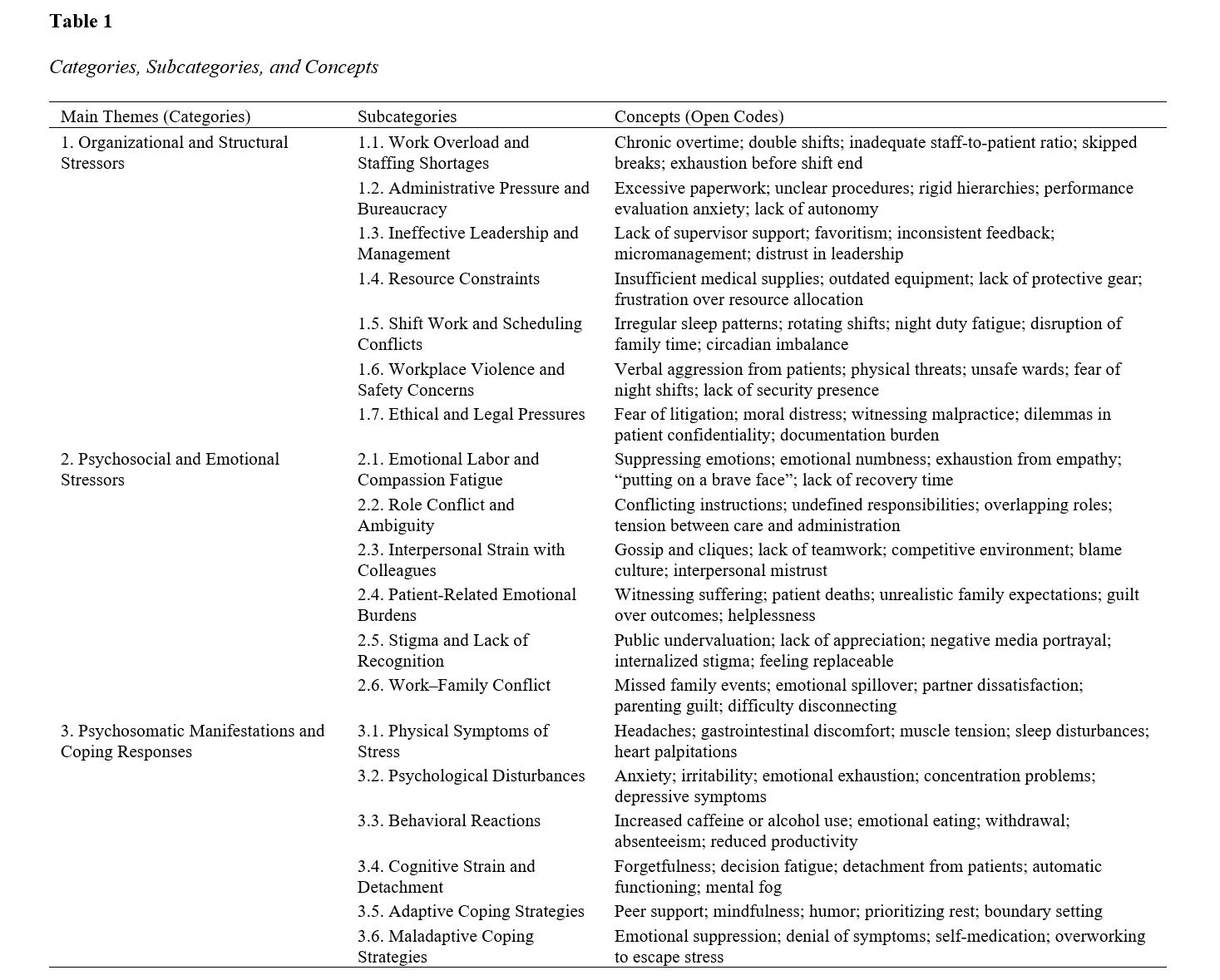
This study aimed to explore and identify the organizational, psychosocial, and behavioral factors contributing to psychosomatic stress among healthcare workers in the United States through an in-depth qualitative analysis of their lived experiences. A qualitative exploratory design was employed to capture healthcare workers’ subjective experiences of psychosomatic stress. Twenty-three participants, including nurses, physicians, technicians, and administrative staff, were purposively selected from hospitals and clinics across the United States. Data were collected through semi-structured interviews conducted face-to-face or via secure online platforms. Interviews were transcribed verbatim and analyzed thematically using NVivo 14 software. Thematic analysis followed the Braun and Clarke (2006) framework, allowing the identification of recurrent patterns and relationships among concepts. Data collection continued until theoretical saturation was reached. Three main themes emerged: (1) Organizational and structural stressors—including work overload, administrative pressure, resource scarcity, and unsafe working conditions—were linked to chronic fatigue, headaches, and sleep disturbances; (2) Psychosocial and emotional stressors—such as compassion fatigue, interpersonal strain, and work–family conflict—contributed to emotional exhaustion and physical symptoms; and (3) Psychosomatic manifestations and coping responses—showing how stress materialized as physical pain, anxiety, and maladaptive behaviors, while some workers adopted adaptive coping strategies like mindfulness and peer support. The findings suggest that psychosomatic stress in healthcare settings stems from systemic imbalance rather than individual vulnerability, confirming strong interdependence between emotional and physiological domains. The study highlights that healthcare workers’ psychosomatic distress is rooted in organizational dysfunction and emotional overload.
Downloads
Downloads
Additional Files
Publication Timeline
- Submitted
- Revised
- Accepted