Identifying the Antecedents and Consequences of Online Infidelity in Marital Relationships: A Meta-Synthesis Approach
Keywords:
Online infidelity, Marital relationships, Antecedents, Consequences, Meta-synthesisAbstract
Objective: This study aimed to identify and explain the antecedents and consequences of online infidelity in marital relationships.
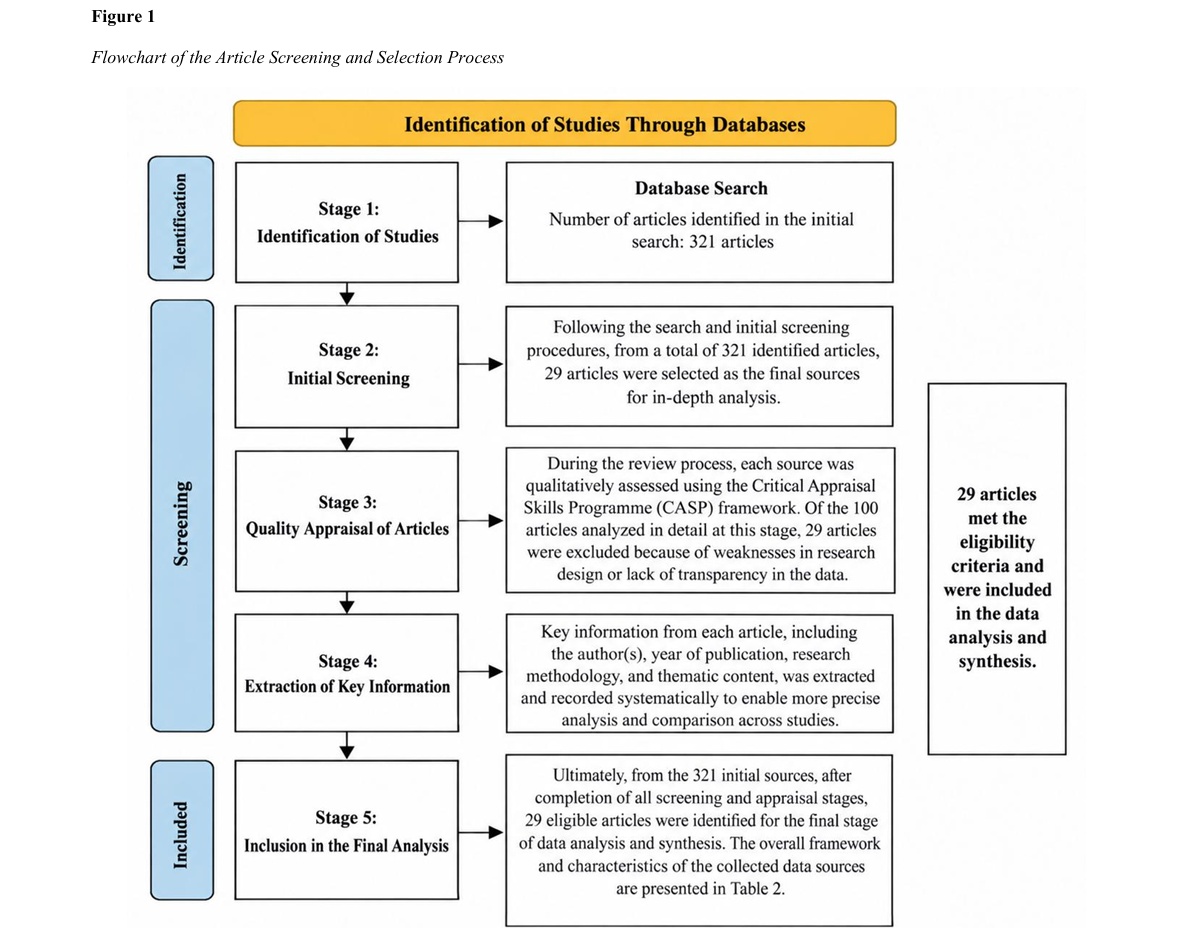
Methods and Materials: This applied qualitative study employed a systematic review and meta-synthesis approach. Relevant studies were systematically searched in reputable national and international databases in accordance with the PRISMA guidelines. Following screening and methodological quality assessment, 29 eligible studies were included in the final synthesis. The extracted evidence was analyzed through coding, categorization, and conceptual synthesis to identify recurring concepts and higher-order themes related to online infidelity. The reliability of the coding process was assessed using Cohen’s kappa coefficient, which yielded a value of 0.83, indicating a high level of inter-coder agreement.
Findings: The synthesis indicated that the antecedents of online infidelity can be conceptualized within five major domains: relationship dissatisfaction, individual and personality-related factors, characteristics of cyberspace and digital technologies, contextual and structural factors, and motivational and justificatory processes. The consequences were organized into six major domains: individual psychological and emotional consequences, relational and interpersonal consequences, cognitive and meaning-related consequences, social and familial consequences, consequences specifically associated with the online nature of infidelity, and adaptive and coping processes. The integrated findings further suggest that online infidelity does not result from a single determinant; rather, it emerges through the interaction of individual vulnerabilities, marital dynamics, social conditions, and technological affordances. Its effects similarly extend beyond the couple relationship and influence psychological well-being, family cohesion, trust, interpersonal functioning, and subsequent coping responses.
Conclusion: Online infidelity is a multidimensional phenomenon requiring integrated preventive and therapeutic approaches that simultaneously address individual, relational, social, and technological determinants. The proposed framework may inform couple interventions, media-literacy programs, communication-skills training, and family-health policies in the digital era.
Downloads
Downloads
Additional Files
Publication Timeline
- Submitted
- Revised
- Accepted