
Affective Attention-Based BILSTM Models for Personality Prediction
DOI:
https://doi.org/10.61838/kman.jarac.3305Keywords:
Personality prediction, MBTI, VAD analysis, Affective Attention mechanism, Ensemble, Bidirectional LSTMAbstract
Objective: This study aims to develop a novel, more accurate personality prediction model that integrates affective dimensions and reduces computational complexity.
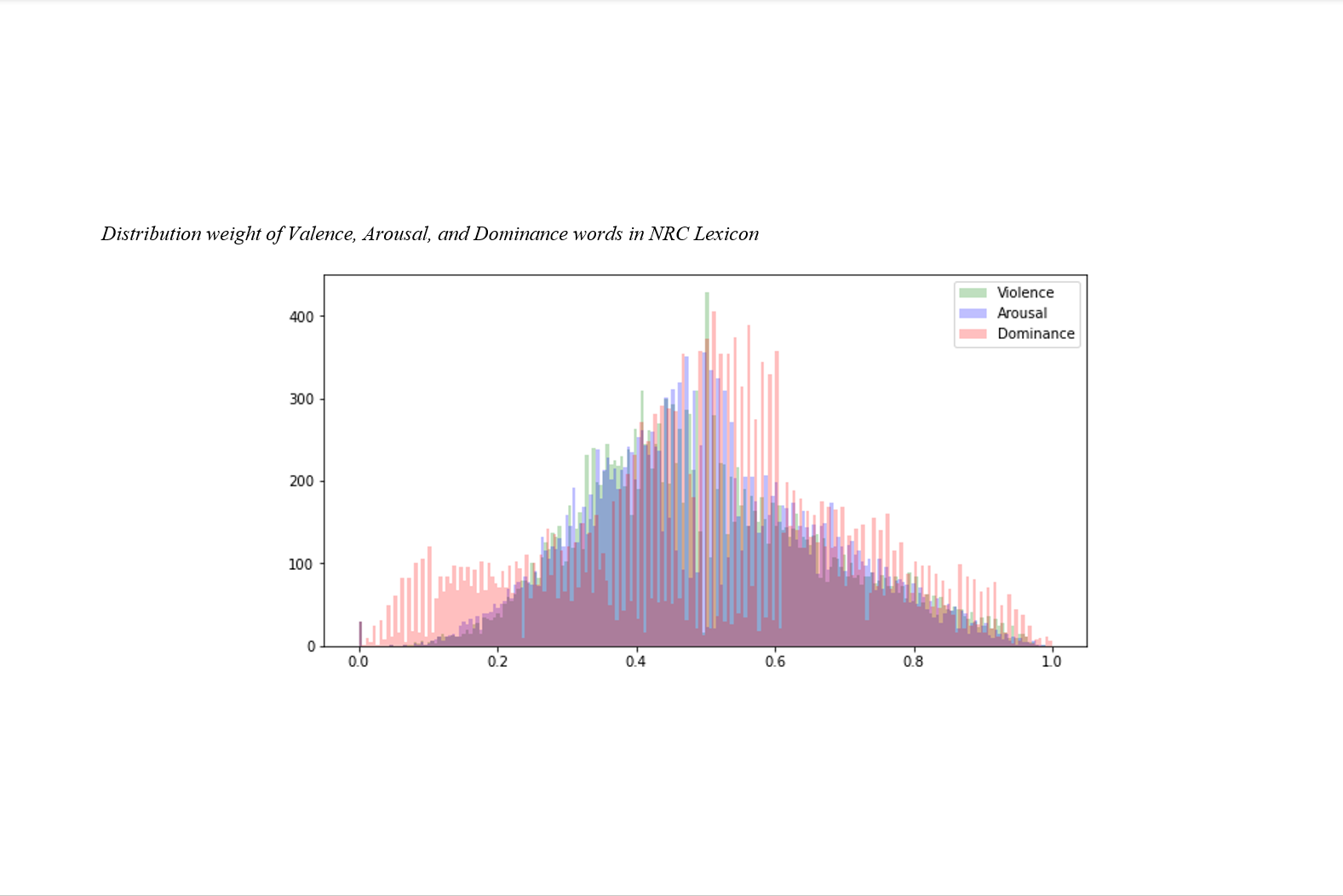
Methods and Materials: The proposed model preprocesses textual data using a novel method that removes noise and enriches semantic features with syntactic information. GloVe word embedding is utilized for semantic representation, and Bidirectional Long Short-Term Memory (BILSTM) networks extract contextual values. Affective dimensions (valence, arousal, and dominance) from the NRC Lexicon are used to create attention layers that focus on emotional aspects of words. The ensemble of these models improves prediction accuracy. The model was evaluated using the MBTI dataset from Kaggle, comprising 8675 users' Twitter data.
Findings: The proposed model achieved an average accuracy improvement of 3.35% to 6.23% compared to state-of-the-art models like BERT while reducing execution time significantly (by 1/24 of BERT’s time). Incorporating affective dimensions enhanced predictions, particularly in personality traits resistant to change, such as Thinking-Feeling and Judging-Perceiving.
Conclusion: The integration of affective attention mechanisms and enhanced preprocessing methods significantly improves personality prediction models. The proposed approach not only boosts accuracy but also reduces computational demands, making it highly applicable in practical scenarios like customer profiling and recommendation systems. Future work could explore additional personality-related dimensions and unsupervised learning techniques.
Downloads
References
Abidin, N. H. Z., & Remli, M. A. A. N. M. P. D. N. E. Y. N. A. H. K. B. A. H. (2020). Improving Intelligent Personality Prediction using Myers-Briggs Type Indicator and Random Forest Classifier. Int. J. Adv. Comput. Sci. Appl., 11(11). https://doi.org/10.14569/IJACSA.2020.0111125
Ahmad, H., Asghar, M. Z., Khan, A. S., & Habib, A. (2020). A systematic literature review of personality trait classification from textual content. Open Comput. Sci., 10(1). https://doi.org/10.1515/comp-2020-0188
Alsayat, A. (2022). Improving Sentiment Analysis for Social Media Applications Using an Ensemble Deep Learning Language Model. Arab. J. Sci. Eng., 47(2). https://doi.org/10.1007/s13369-021-06227-w
Artha Agastya, I. M. A., Handayani, D. O. D., & Mantoro, T. (2019). A Systematic Literature Review of Deep Learning Algorithms for Personality Trait Recognition. ICCED 2019,
Bauerhenne, C., Gammoudi, A., Moussaoui, M., Reichelt, J., & Wang, J. (2020). Emotional states and personality profiles in Conversational AI. https://www.mdsi.tum.de/en/di-lab/vergangene-projekte/horvath-emotional-states-and-personality-profiles-in-conversational-ai/
Blei, D. M., Ng, A. Y., & Jordan, M. I. (2003). Latent Dirichlet allocation. J. Mach. Learn. Res., 3(4-5). https://doi.org/10.1016/b978-0-12-411519-4.00006-9
Bradley, M. M., & Lang, P. J. (2008). Affective Norms for English Words (ANEW): Instruction Manual and Affective Ratings. https://pdodds.w3.uvm.edu/teaching/courses/2009-08UVM-300/docs/others/everything/bradley1999a.pdf
Darliansyah, A., Naeem, M. A., Mirza, F., & Pears, R. (2019). Sentipede: A smart system for sentiment-based personality detection from short texts. J. Univers. Comput. Sci., 25(10). https://www.researchgate.net/publication/354074066_SENTIPEDE_A_Smart_System_for_Sentiment-based_Personality_Detection_from_Short_Texts
Devlin, J., Chang, M. W., Lee, K., & Toutanova, K. (2019). BERT: Pre-training of deep bidirectional transformers for language understanding. NAACL HLT 2019 - 2019 Conference of the North American Chapter of the Association for Computational Linguistics: Human Language Technologies - Proceedings of the Conference, https://aclanthology.org/N19-1423/
El-Demerdash, K., El-Khoribi, R. A., Ismail Shoman, M. A., & Abdou, S. (2022). Deep learning based fusion strategies for personality prediction. Egyptian Informatics Journal, 23(1). https://doi.org/10.1016/j.eij.2021.05.004
Galitsky, B. (2021). Adjusting Chatbot Conversation to User Personality and Mood. 2021,
Graves, A., & Schmidhuber, J. (2005). Framewise Phoneme Classification with Bidirectional LSTM Networks.
Grgic, D., & Podobnik, V. (2021). Application of Data Science for Understanding Emotional Dimensional Behavior and Their Connection to Uncertainty and Risk Behavior. IEEE Access, 9. https://doi.org/10.1109/ACCESS.2021.3079877
Han, S., Huang, H., & Tang, Y. (2020). Knowledge of words: An interpretable approach for personality recognition from social media. Knowledge-Based Syst., 194. https://doi.org/10.1016/j.knosys.2020.105550
Hassanein, M., Hussein, W., Rady, S., & Gharib, T. F. (2019). Predicting Personality Traits from Social Media using Text Semantics.
Heikal, M., Torki, M., & El-Makky, N. (2018). Sentiment Analysis of Arabic Tweets using Deep Learning. Procedia Computer Science,
Hochreiter, S. (1998). The vanishing gradient problem during learning recurrent neural nets and problem solutions. Int. J. Uncertainty, Fuzziness Knowlege-Based Syst., 6(2). https://doi.org/10.1142/S0218488598000094
Hochreiter, S., & Schmidhuber, J. (1997). Long Short Term Memory. Neural Comput., 9(8). https://doi.org/10.1162/neco.1997.9.8.1735
Ioffe, S., & Szegedy, C. (2015). Batch normalization: Accelerating deep network training by reducing internal covariate shift. 32nd International Conference on Machine Learning, ICML 2015, https://dl.acm.org/doi/10.5555/3045118.3045167
Jacovi, A., Shalom, O. S., & Goldberg, Y. (2018). Understanding Convolutional Neural Networks for Text Classification.
Jeremy, N. H., & Suhartono, D. (2021). Automatic personality prediction from Indonesian user on twitter using word embedding and neural networks. Procedia Computer Science,
Kim, Y., Denton, C., Hoang, L., & Rush, A. M. (2017). Structured attention networks. https://www.semanticscholar.org/paper/Structured-Attention-Networks-Kim-Denton/13d9323a8716131911bfda048a40e2cde1a76a46
Lynn, V., Balasubramanian, N., & Schwartz, H. A. (2020). Hierarchical Modeling for User Personality Prediction: The Role of Message-Level Attention. Proceedings of the 58th Annual Meeting of the Association for Computational Linguistics,
Mairesse, F., Uk, M. A., Mehl, M. R., & Moore, R. K. (2007). Using Linguistic Cues for the Automatic Recognition of Personality in Conversation and Text.
Majumder, N., Poria, S., Gelbukh, A., & Cambria, E. (2017). Deep Learning-Based Document Modeling for Personality Detection from Text. IEEE Intell. Syst., 32(2). https://doi.org/10.1109/MIS.2017.23
Mehrabian, A. (1996a). Analysis of the big-five personality factors in terms of the PAD temperament model. Aust. J. Psychol., 48(2). https://doi.org/10.1080/00049539608259510
Mehrabian, A. (1996b). Pleasure-Arousal.Dominance: A General Framework for Describing and Measuring Individual Differences in Temperament. https://doi.org/10.1007/BF02686918
Mehta, Y., Majumder, N., Gelbukh, A., & Cambria, E. (2020). Recent trends in deep learning based personality detection. Artif. Intell. Rev., 53(4). https://doi.org/10.1007/s10462-019-09770-z
Mehu, M., & Scherer, K. R. (2015). Emotion categories and dimensions in the facial communication of affect: An integrated approach. Emotion, 15(6). https://doi.org/10.1037/a0039416
Mohammad, S. M. (2018). Obtaining reliable human ratings of valence, arousal, and dominance for 20,000 English words. ACL 2018 - 56th Annual Meeting of the Association for Computational Linguistics, Proceedings of the Conference (Long Papers),
Mohammadi, A., & Shaverizade, A. (2021). Ensemble deep learning for aspect-based sentiment analysis. Int. J. Nonlinear Anal. Appl., 12(Special Issue). https://doi.org/10.22075/IJNAA.2021.4769
Mohammed, A., & Kora, R. (2021). An effective ensemble deep learning framework for text classification. J. King Saud Univ. - Comput. Inf. Sci. https://doi.org/10.1016/j.jksuci.2021.11.001
Myers, I. B., & Myers, P. B. (1995). Gifts Differing: Understanding Personality Type. https://books.google.de/books/about/Gifts_Differing.html?id=WfR8DAAAQBAJ&redir_esc=y
Niu, Z., Zhong, G., & Yu, H. (2021). A review on the attention mechanism of deep learning. Neurocomputing, 452. https://doi.org/10.1016/j.neucom.2021.03.091
Ozer, D. J., & Benet-Martínez, V. (2006). Personality and the prediction of consequential outcomes. Annu. Rev. Psychol., 57. https://doi.org/10.1146/annurev.psych.57.102904.190127
Parkinson, B., & Manstead, A. S. R. (2015). Current Emotion Research in Social Psychology: Thinking About Emotions and Other People. Emot. Rev., 7(4). https://doi.org/10.1177/1754073915590624
Pennebaker, J. W., Booth, R. J., & Francis, M. E. (2007). Operator's Manual: Linguistic Inquiry and Word Count - LIWC2007. Depts.Ttu.Edu. http://www.gruberpeplab.com/teaching/psych231_fall2013/documents/231_Pennebaker2007.pdf
Pennington, J., Socher, R., & Manning, C. D. (2014). GloVe: Global vectors for word representation.
Remaida, A., Abdellaoui, B., Moumen, A., & El Idrissi, Y. E. B. (2020). Personality traits analysis using Artificial Neural Networks: A Literature Survey.
Ren, Z., Shen, Q., Diao, X., & Xu, H. (2021). A sentiment-aware deep learning approach for personality detection from text. Inf. Process. Manag., 58(3). https://doi.org/10.1016/j.ipm.2021.102532
Reuderink, B., Mühl, C., & Poel, M. (2013). Valence, arousal and dominance in the EEG during game play. Int. J. Auton. Adapt. Commun. Syst., 6(1). https://doi.org/10.1504/IJAACS.2013.050691
Rokach, L. (2019). Ensemble Learning: Pattern Classification Using Ensemble Methods. https://doi.org/10.1142/11325
Russell, J. A. (1980). A circumplex model of affect. J. Pers. Soc. Psychol., 39(6). https://doi.org/10.1037/h0077714
Russell, J. A. (2003). Core Affect and the Psychological Construction of Emotion. Psychol. Rev., 110(1). https://doi.org/10.1037/0033-295X.110.1.145
Štajner, S., & Yenikent, S. (2021). Why is MBTI personality detection from texts a difficult task?
Sun, X., Liu, B., Cao, J., Luo, J., & Shen, X. (2018). Who am I? Personality detection based on deep learning for texts. IEEE International Conference on Communications,
Teragawa, S., & Li, M. (2020). Text Classification based on Model of Feature Fusion and Voting Mechanism for Personality Recognition.
Vaswani, A., Shazeer, N., Parmar, N., Uszkoreit, J., Jones, L., Gomez, A. N., Kaiser, L., & Polosukhin, M. (2017). Attention is all you need. Advances in Neural Information Processing Systems, https://dl.acm.org/doi/10.5555/3295222.3295349
Wang, H., Zuo, Y., Li, H., & Wu, J. (2021). Cross-domain recommendation with user personality. Knowledge-Based Syst., 213. https://doi.org/10.1016/j.knosys.2020.106664
Wang, Z., Wu, C. H., Li, Q. B., Yan, B., & Zheng, K. F. (2020). Encoding Text Information with Graph Convolutional Networks for Personality Recognition. Appl. Sci., 10(12), 4081. https://doi.org/10.3390/app10124081
Warriner, A. B., Kuperman, V., & Brysbaert, M. (2013). Norms of valence, arousal, and dominance for 13,915 English lemmas. Behav. Res. Methods, 45(4). https://doi.org/10.3758/s13428-012-0314-x
Wen, Z., Cao, J., Yang, R., Liu, S., & Shen, J. (2021). Automatically Select Emotion for Response via Personality-affected Emotion Transition. Findings of the Association for Computational Linguistics: ACL
Winter, S., Maslowska, E., & Vos, A. L. (2021). The effects of trait-based personalization in social media advertising. Comput. Human Behav., 114. https://doi.org/10.1016/j.chb.2020.106525
Xiang, R., Long, Y., Wan, M., Gu, J., Lu, Q., & Huang, C. R. (2020). Affection driven neural networks for sentiment analysis. https://aclanthology.org/2020.lrec-1.14/
Xiang, R., Lu, Q., Zhang, Z., & Huang, C. R. (2021). Affective awareness in neural sentiment analysis. Knowledge-Based Syst., 226. https://doi.org/10.1016/j.knosys.2021.107137
Xue, D., L., W., Z., H., S., G., L., G., Z., W., X., Z., & J., S. (2018). Deep learning-based personality recognition from text posts of online social networks. Appl. Intell., 48(11). https://doi.org/10.1007/s10489-018-1212-4
Yang, H. C., & Huang, Z. R. (2019). Mining personality traits from social messages for game recommender systems. Knowledge-Based Syst., 165. https://doi.org/10.1016/j.knosys.2018.11.025
Yang, K., Lau, R. Y. K., & Abbasi, A. (2022). Getting Personal: A Deep Learning Artifact for Text-Based Measurement of Personality. Inf. Syst. Res. https://doi.org/10.1287/isre.2022.1111
Yuan, C., Wu, J., Li, H., & Wang, L. (2018). Personality Recognition Based on User Generated Content.
Zhao, J., Zeng, D., Xiao, Y., Che, L., & Wang, M. (2020). User personality prediction based on topic preference and sentiment analysis using LSTM model. Pattern Recognit. Lett., 138. https://doi.org/10.1016/j.patrec.2020.07.035
Downloads
Additional Files
Publication Timeline
- Submitted
- Revised
- Accepted
Issue
Section
License
Copyright (c) 2025 Zohreh Anisi Hemaseh (Author); Mohamad Ali Afshar Kazemi (Corresponding Author); Ehsan Mousavi Khanghah (Author)

This work is licensed under a Creative Commons Attribution-NonCommercial 4.0 International License.