Comparison of the Effectiveness of Acceptance and Commitment Therapy With and Without Compassion on the Psychological Pain Indicators of Patients With Chronic Tension Headaches
DOI:
https://doi.org/10.61838/kman.jarac.7.3.18Keywords:
Tension headache, Acceptance and Commitment Therapy, Self-compassion, PainAbstract
Objective: This study aimed to evaluate the effectiveness of Acceptance and Commitment Therapy (ACT) with and without compassion on the psychological pain indicators of patients.
Methods and Materials: This quasi-experimental study included a pretest-posttest design with a control group and a three-month follow-up. From the population of patients (chronic tension headaches) who visited the Senabad Neurology Center in Mashhad during the first quarter of 2023, 45 individuals meeting the inclusion criteria were selected through convenience sampling and randomly assigned to three groups (two experimental groups and one control group). All participants completed the research questionnaires before and after the group therapies. Additionally, the questionnaires were completed again by the participants after the three-month follow-up period.
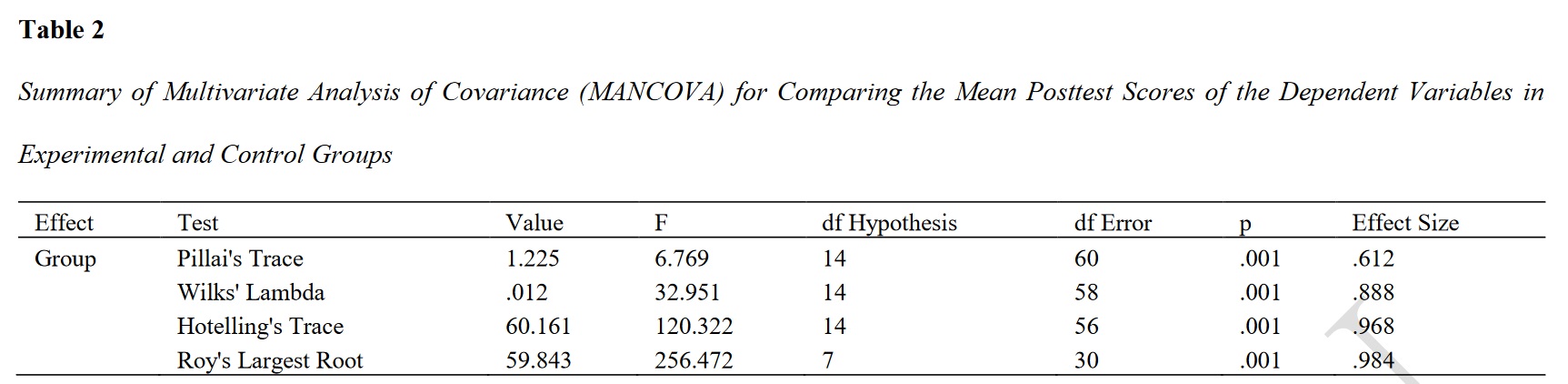
Findings: The results indicate that Acceptance and Commitment Therapy, both with and without compassion, had significantly different effects on psychological pain indicators. The effectiveness of ACT with compassion in improving psychological pain indicators was significantly greater than ACT without compassion.
Conclusion: Acceptance and Commitment Therapy, with or without compassion, can be used to manage and control certain symptoms and signs of chronic tension headaches, such as enhancing and restoring psychological pain indicators in affected individuals.
Downloads
References
A-Tjak, J. G. L., Davis, M. L., Morina, N., Powers, M. B., Smits, J. A. J., & Emmelkamp, P. M. G. (2014). A Meta-Analysis of the Efficacy of Acceptance and Commitment Therapy for Clinically Relevant Mental and Physical Health Problems. Psychotherapy and psychosomatics, 84(1), 30-36. https://doi.org/10.1159/000365764
Bendtsen, L., Evers, S., Linde, M., Mitsikostas, D. D., Sandrini, G., & Schoenen, J. (2018). EFNS guideline on the treatment of tension-type headache-report of an EFNS task force. European Journal of Neurology, 17(11), 1318-1325. https://doi.org/10.1111/j.1468-1331.2010.03070.x
Cojocaru, C. M., Popa, C. O., Schenk, A., Suciu, B. A., & Szasz, S. (2024). Cognitive-behavioral therapy and acceptance and commitment therapy for anxiety and depression in patients with fibromyalgia: a systematic review and meta-analysis. Medicine and Pharmacy Reports, 97(1), 26. https://doi.org/10.15386/mpr-2661
Finlay-Jones, A. L., Kane, R. T., & Rees, C. S. (2017). Self-compassion online: A pilot study of an internet-based self-compassion cultivation program for psychology trainees. Journal of Clinical Psychology, 73(7), 797-817. https://doi.org/10.1002/jclp.22375
Germer, C. K., & Neff, K. D. (2019). Teaching the mindful self-compassion program: A guide for professionals. Guilford Publications. https://self-compassion.org/wp-content/uploads/2019/09/Germer2019.pdf
Gilbert, P. (2020). Compassion: Concepts, research and applications. Routledge. https://www.routledge.com/Compassion-Concepts-Research-and-Applications/Gilbert/p/book/9781138957190?srsltid=AfmBOor0i4dq9IIlQWDPqu-EgxOksau3vErS9B_hOcXVoe2RVkAbR8wj
Harris, R. (2019). ACT made simple: An easy-to-read primer on acceptance and commitment therapy. New Harbinger Publications. https://psycnet.apa.org/record/2012-17248-000
Hayes, S. C., Strosahl, K. D., & Wilson, K. G. (2019). Acceptance and commitment therapy: The process and practice of mindful change. Guilford Press. https://www.guilford.com/books/Acceptance-and-Commitment-Therapy/Hayes-Strosahl-Wilson/9781462528943
Hooshmandi, R., Aljaberi, M. A., Hammadi, F., & Ma, J. (2024). The Impact of Interoceptive Awareness on Pain Catastrophizing and Illness Perception. Journal of Personality and Psychosomatic Research (JPPR), 2(2), 4-10. https://doi.org/10.61838/kman.jppr.2.2.2
Kashmari, A., Shahabizadeh, F., Ahi, G., & Mahmoudi Rad, A. (2024). Comparison of the Effectiveness of Cognitive-Behavioral Therapy Combined with Self-Compassion and Cognitive-Motor Activities Versus Cognitive-Motor Intervention Alone on Death Anxiety and Aging Perception in the Elderly. Journal of Psychological Dynamics in Mood Disorders (PDMD), 3(1), 86-99. https://doi.org/10.22034/pdmd.2024.453836.1083
Kelly, A. C., Zuroff, D. C., & Shapira, L. B. (2020). Soothing oneself and resisting self-attacks: The treatment of self-criticism with compassion-focused therapy. Journal of Clinical Psychology, 66(3), 374-392. https://www.researchgate.net/publication/226702214_Soothing_Oneself_and_Resisting_Self-Attacks_The_Treatment_of_Two_Intrapersonal_Deficits_in_Depression_Vulnerability
Kirby, J. N. (2017). Compassion-focused therapy: An introduction to theory, research, and practice. SAGE Publications. https://www.sciencedirect.com/science/article/pii/S0165032723000228
Levy, S. (2024). Psychological Distress in Women With Fibromyalgia: The Roles of Body Appreciation, Self-Compassion, and Self-Criticism. International Journal of Behavioral Medicine. https://doi.org/10.1007/s12529-024-10302-5
Moore, R. A., Derry, S., Aldington, D., Cole, P., & Wiffen, P. J. (2019). Amitriptyline for neuropathic pain and fibromyalgia in adults. Cochrane Database of Systematic Reviews(7). https://doi.org/10.1002/14651858.CD008242.pub3
Neff, K. D., Tóth-Király, I., & Colosimo, K. (2018). Self-compassion is a better predictor than mindfulness of symptom severity and quality of life in mixed anxiety and depression. Mindfulness, 9(5), 1328-1336. https://pubmed.ncbi.nlm.nih.gov/20832990/
Nicolescu, S., Secară, E.-C., Jiboc, N. M., & Băban, A. (2024). Oncovox: A randomised controlled trial of a web-based acceptance and commitment therapy for breast cancer patients. Journal of Contextual Behavioral Science, 32, 100729. https://doi.org/10.1016/j.jcbs.2024.100729
Roshandel, Z., Ghaffari, A., Kazemi, R., & Nadermohammadi, M. (2022). Effectiveness of Acceptance and Commitment based Therapy on Pain Severity, Fatigue, and Alexithymia in Female Patients with Rheumatic Diseases. Applied Family Therapy Journal (AFTJ), 3(5), 84-100. https://doi.org/10.61838/kman.aftj.3.5.6
Sadeghi Nisiani, S., Ghanifar, M. H., & Shahabizadeh, F. (2023). Comparing the effectiveness of Acceptance and Commitment Therapy (ACT) and Compassion Focused Therapy (CFT) on tension headaches and blood pressure in women with somatic symptom disorder. Journal of Applied Family Therapy, 3(5), 405-424. https://doi.org/10.22034/aftj.2022.333431.1465
Sayed Alitabar, S. H., & Goli, F. (2023). The Interplay of Neuroticism and Self-Efficacy in Pain Catastrophizing: A Quantitative Analysis. Journal of Personality and Psychosomatic Research (JPPR), 1(2), 19-24. https://journals.kmanpub.com/index.php/jppr/article/view/2197
Shahkaram, H., Yaztappeh, J. S., Sadeghi, A., Kianimoghadam, A. S., Soltanabadi, S., Bakhtiari, M., & Arani, A. M. (2024). Comparing the effectiveness of transdiagnostic treatment with acceptance and commitment therapy on emotional disorders, rumination, and life satisfaction in patients with irritable bowel syndrome: a randomized clinical trial. BMC Gastroenterology, 24(1), 1-12. https://doi.org/10.1186/s12876-024-03142-w
Zessin, U., Dickhäuser, O., & Garbade, S. (2017). The relationship between self-compassion and well-being: A meta-analysis. Applied Psychology: Health and Well-Being, 9(3), 388-402. https://pubmed.ncbi.nlm.nih.gov/26311196/
Downloads
Additional Files
Publication Timeline
- Submitted
- Revised
- Accepted
Issue
Section
License
Copyright (c) 2024 Mina Kavian (Author); Fatemeh Shahabizadeh (Corresponding Author); Samaneh Sada Jafar Tabatabaei (Author)

This work is licensed under a Creative Commons Attribution-NonCommercial 4.0 International License.