The Impact of Web-Based Cognitive-Behavioral Therapy on Pain Self-Efficacy in Patients with Rheumatoid Arthritis
DOI:
https://doi.org/10.61838/kman.jarac.6.2.18Keywords:
Web-Based Cognitive-Behavioral Therapy, Pain Self-Efficacy, Rheumatoid ArthritisAbstract
Objective: This study aims to assess the effectiveness of web-based cognitive-behavioral therapy (CBT) in enhancing pain self-efficacy among patients diagnosed with rheumatoid arthritis (RA), a chronic condition characterized by significant pain and functional limitations.
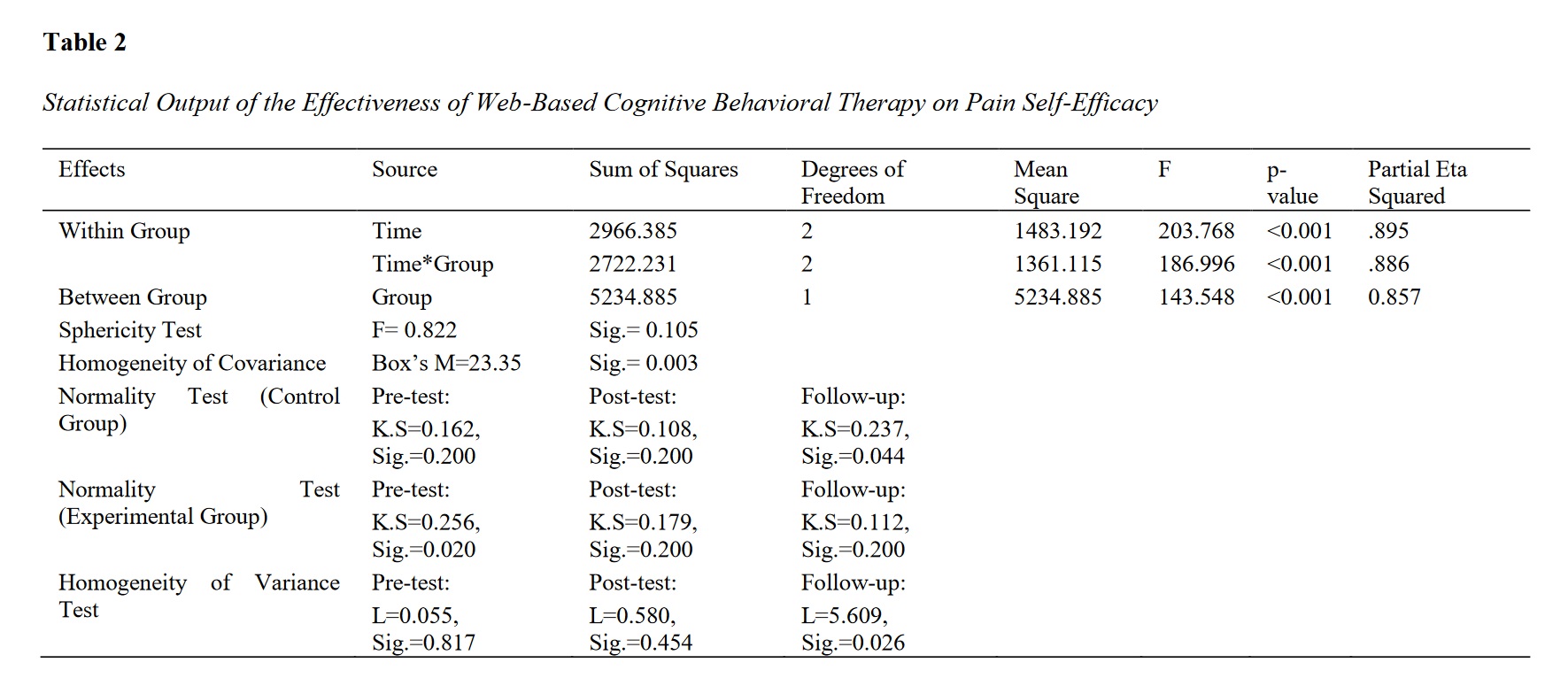
Methods and Materials: Employing a quasi-experimental design, the study recruited adult RA patients aged 30-60 years from specialized clinics in Mashhad, Iran. Participants were randomly assigned to either the intervention group, which received web-based CBT sessions focused on managing pain and improving self-efficacy, or the control group, which received no such intervention. The intervention consisted of eight sessions designed to educate patients on pain management, cognitive restructuring, and coping strategies. Data on pain self-efficacy were collected at three points: pre-intervention, immediately post-intervention, and at a follow-up session using the Pain Self-Efficacy Questionnaire (PSEQ). Data were analyzed with analysis of variance with repeated measurements and post-hoc tests using SPSS-22.
Findings: Statistical analysis revealed significant improvements in pain self-efficacy scores in the intervention group compared to the control group at post-test and follow-up stages (p<0.001).
Conclusion: Web-based cognitive-behavioral therapy significantly improves pain self-efficacy in patients with rheumatoid arthritis, providing a feasible and effective approach to managing chronic pain and enhancing patients' beliefs in their ability to control pain.
Downloads
Downloads
Additional Files
Publication Timeline
Issue
Section
License
Copyright (c) 2024 Rahil Omidvar (Author); Mahdi Nayyeri (Corresponding Author); Saeed Teimoori (Author)

This work is licensed under a Creative Commons Attribution-NonCommercial 4.0 International License.