Consequences of Implementing Artificial Intelligence in Human Resource Management of Iranian Government Organizations
DOI:
https://doi.org/10.61838/kman.aitech.3.1.4Keywords:
Human resources, Human resource management, Artificial intelligence, Electronic recruitmentAbstract
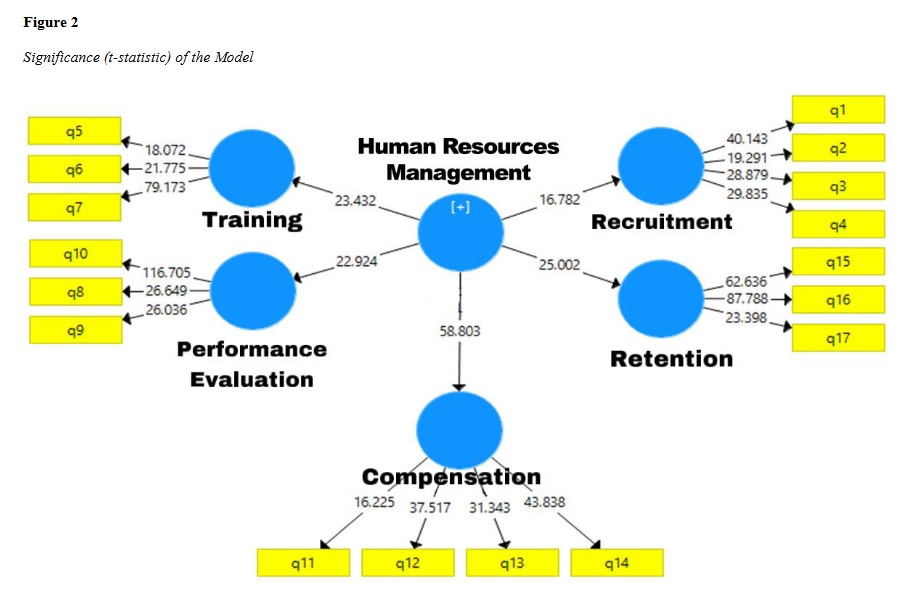
The present study aimed to examine the consequences of implementing artificial intelligence in human resource management within Iranian government organizations. The research method, in terms of data type, is mixed-method (qualitative-quantitative); in terms of the research environment, it is library-based; and in terms of data collection method, nature, and research method, it is descriptive-correlational. In this research, interviews were used to identify the consequences. The statistical population in the qualitative section consisted of 5 experts from Iranian government organizations, and in the quantitative section, 335 employees from these organizations. The data collection tool in the qualitative section was interviews, while in the quantitative section, a researcher-made questionnaire based on a five-point Likert scale was used. For data analysis in the quantitative section, Cronbach's alpha tests, Average Variance Extracted (AVE), the AVE square root matrix, and confirmatory factor analysis using smartPLS software were employed. The results showed that the consequences of implementing artificial intelligence in human resource management in Iranian government organizations span five areas: recruitment, training, performance evaluation, compensation, and retention. Moreover, the results indicated that among the components, the recruitment component requires further strengthening.
Downloads
References
results, particularly the need for strengthening the recruitment component. Together, the authors collaborated on the design, execution, and writing of the study.
References
Albrecht, S. L., Bakker, A. B., Gruman, J. A., Macey, W. H., & Saks, A. M. (2015). Employee engagement, human resource management practices and competitive advantage: An integrated approach. Journal of Organizational Effectiveness: People and Performance, 2(1), 7-35. https://doi.org/10.1108/JOEPP-08-2014-0042
Bloom, N., Garicano, L., Sadun, R., & Van Reenen, J. (2014). The distinct effects of information technology and communication technology on firm organization. Management Science, 60(12), 2859-2885. https://doi.org/10.1287/mnsc.2014.2013
Chilunjika, A., Intauno, K., & Chilunjika, S. R. (2022). Artificial Intelligence and Public Sector Human Resource Management in South Africa: Opportunities, Challenges and Prospects. Sa Journal of Human Resource Management. https://doi.org/10.4102/sajhrm.v20i0.1972
Dacko, S. G. (2017). Enabling smart retail settings via mobile augmented reality shopping apps. Technological Forecasting and Social Change, 124, 243-256. https://doi.org/10.1016/j.techfore.2016.09.032
Dwivedi, Y. K., Hughes, L., Ismagilova, E., Aarts, G., Coombs, C., Crick, T., & Williams, M. D. (2021). Artificial Intelligence (AI): Multidisciplinary perspectives on emerging challenges, opportunities, and agenda for research, practice and policy. International Journal of Information Management, 57. https://doi.org/10.1016/j.ijinfomgt.2019.08.002
Fügener, A., Grahl, J., Gupta, A., & Ketter, W. (2022). Cognitive challenges in human-artificial intelligence collaboration: Investigating the path toward productive delegation. Information Systems Research, 33(2), 678-696. https://doi.org/10.1287/isre.2021.1079
Guimaraes, A. D. A. (2020). Digital transformation in the insurance industry.
Islami, K., & Sopiah, D. (2022). Artificial Intelligence in Human Resources in the Era of Society 5.0. International Journal of Research and Innovation in Social Science. https://doi.org/10.47772/ijriss.2022.61131
Krishen, A. S., Dwivedi, Y. K., Bindu, N., & Kumar, K. S. (2021). A broad overview of interactive digital marketing: A bibliometric network analysis. Journal of Business Research, 131, 183-195. https://doi.org/10.1016/j.jbusres.2021.03.061
Lichtenthaler, U. (2020). Building blocks of successful digital transformation: Complementing technology and market issues. International Journal of Innovation Technology Management, 17. https://doi.org/10.1142/S0219877020500042
Steiber, A., Alänge, S., Ghosh, S., & Goncalves, D. (2020). Digital transformation of industrial firms: an innovation diffusion perspective. European Journal of Innovation Management. https://doi.org/10.1108/EJIM-01-2020-0018
Tewari, I., & Pant, M. (2020). Artificial intelligence reshaping human resource management: A review https://doi.org/10.1109/ICATMRI51801.2020.9398420
Downloads
Additional Files
Publication Timeline
Issue
Section
License
Copyright (c) 2024 AI and Tech in Behavioral and Social Sciences

This work is licensed under a Creative Commons Attribution-NonCommercial 4.0 International License.