



















Providing Solutions to Improve the Level of Participation of Facebook users in Iraq in the Field of Tourism
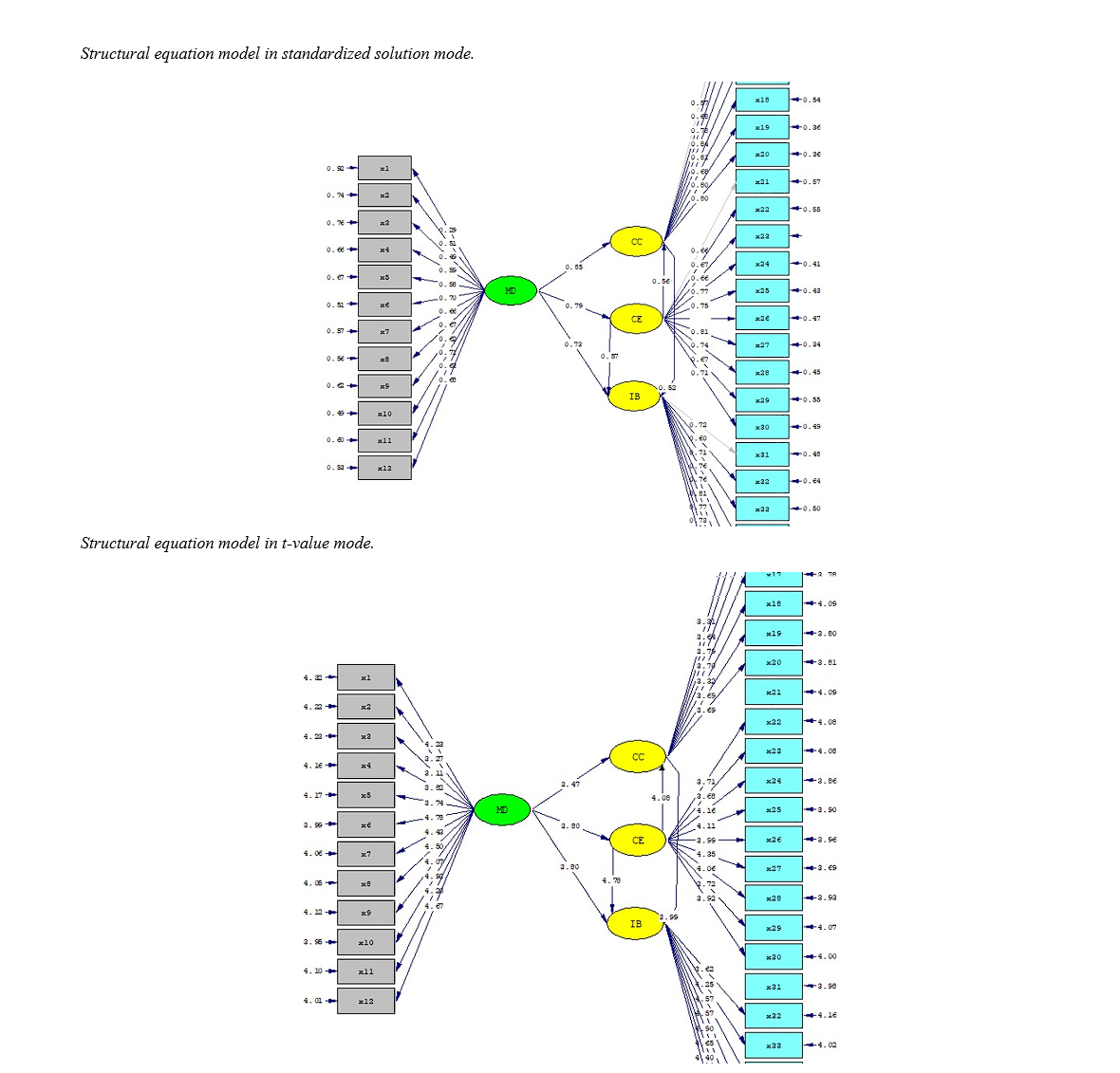
This study was conducted with the aim of providing strategies to increase the level of participation of Facebook social network users in Iraq’s tourism sector. The research employed a descriptive–survey method, and the statistical population included 4,000 Facebook participants engaged in discussions related to Iraqi tourism. Using Morgan’s sampling table, a sample size of 382 individuals was determined. Data were collected through library sources, scholarly articles, qualitative interviews, and questionnaire distribution in the quantitative phase. The reliability of the questionnaire components was examined using Cronbach’s alpha, and the results indicated that the coefficients exceeded 0.7. The findings of the study identified 17 types of consumers along with strategies corresponding to each group, including: ordinary consumers (providing entertaining and interactive content), passive consumers (focusing on improving content quality and visual information), enthusiasts (investing in appealing and interactive content), fans (emphasizing attractive and user-generated content), and devotees (offering quick-access resources and intellectual challenges). Additional categories included secondary producers, active participants, critics, digital explorers, digital innovators, analysts, UX/UI specialists, digital marketers, content managers, thought leaders, cybersecurity experts, video content specialists, and social media managers. Furthermore, the study proposed several strategies for enhancing Facebook users’ participation levels in the tourism domain.
Personalized Learning through Machine Teaching and Machine Learning: Enhancing Adaptive Educational Systems
Machine teaching, as a new approach to artificial intelligence, focuses on the purposeful design and selection of educational data to optimize the learning process. When it comes to human education, the quality of educational data plays a fundamental role in identifying and enhancing those individual characteristics of students that have the greatest impact on their learning path. This article demonstrate the role of machine teaching in personalize learning and highlights the importance of selecting data that can reveal students’ strengths and weaknesses in various skills. The results show that, in addition to accelerating his learning process, a strategic and optimal data design can provide personalized educational paths and help teachers make more effective educational decisions.
A New Model for Qualitative Research: Connecting Triangulation, Crystallization, and Artificial Intelligence
This study examines the methodological transition from triangulation to crystallization and investigates the emerging role of artificial intelligence (AI) in qualitative research. The central research question addressed whether traditional approaches, such as triangulation and crystallization, are sufficient to capture the complexity of meaning-making in the digital era. Findings suggest that, while triangulation enhances data validity, it tends to favor convergence and may overlook the polyphony of data. Crystallization embraces diversity and contradictions, providing a richer portrayal of phenomena, yet faces challenges when confronted with the vast volume of digital data. To address these limitations, this research proposes an innovative model that incorporates AI as an “algorithmic co-analyst” within the qualitative research process. The model creatively integrates triangulation, crystallization, and algorithmic analysis, enabling the detection of hidden patterns, amplification of contradictions, and improved scalability of qualitative inquiry. The primary contribution of this study lies in presenting a multi-paradigmatic framework that preserves methodological rigor, deepens interpretive richness, and leverages technological capacities to grasp the complexity of the digital world better. This approach opens a new horizon for the future of qualitative research, demonstrating that the integration of humans, data, and algorithms provides an effective pathway for studying multilayered and dynamic social phenomena.
.
Sports Communication Using Transformative Engagement Theory: The Impact of Virtual Reality Technology
The advent of virtual reality (VR) technology is poised to bring about a notable change in the sports communication environment, as it presents a unique opportunity to revolutionize traditional communication methods by immersing participants in realistic and interactive settings. The purpose of this study is to look into how VR technology is changing sports communication. Through a thorough grounded theory (GT) inquiry, this study explores the potential benefits, drawbacks, opportunities, and difficulties of integrating VR into sports communication. The study uses qualitative analysis with MAXQDATM20 software, which includes interviews with 17 prominent sports experts and a thorough coding process. The study found that VR greatly enhances communication abilities by fostering dynamic and engaging surroundings. Additionally, VR can assist in creating creative marketing techniques and strengthen ties between athletes, fans, and organizations. Finally, in light of these findings, we developed a new theoretical framework called "Transformative Engagement Theory in Sports Communication." The novel contribution of this study is the proposition of the Transformative Engagement Theory in Sports Communication. The study provides a thorough grasp of the complex interactions between VR technologies and the dynamics of sports communication, as well as a road map for professionals in sports management, stakeholders, and researchers to navigate this revolutionary change successfully.
Design and Analysis of Human Resource Development Strategies in Remote Work Conditions: An Applied Study in the Iraqi Ministry of Planning
With the growing expansion of remote work and the transformation of workplace structures, organizations—particularly in the public sector—have encountered new challenges in the field of human resource development. This transformation requires the redesign of strategies tailored to technology-driven, non-face-to-face work environments. The purpose of this study is to identify and analyze effective human resource development strategies under remote work conditions, with a focus on the operational context of the Iraqi Ministry of Planning. This study employed a mixed-methods approach (qualitative–quantitative) and was conducted in three stages. In the first stage, through a systematic review of the scientific literature, 33 initial strategies were collected. Subsequently, by implementing two rounds of the Delphi method with the participation of 14 experts, the final list of 29 strategies was extracted. In the third stage, exploratory factor analysis was applied to identify the conceptual dimensions of the strategies, resulting in three main axes: “individual and professional empowerment,” “team and organizational cultural development,” and “digital transformation of human resources.” The findings revealed that human resource development in the context of remote work requires a comprehensive, technology-oriented, and flexible perspective that must align with the characteristics of virtual work environments and the requirements of public organizations. Furthermore, recommendations were provided for designing blended training programs, strengthening virtual interactions, and enhancing employees’ technological empowerment. By localizing global approaches within Iraq’s administrative structures, this study has taken an innovative step toward formulating human resource development policies under remote work conditions.
The Future of AI in Healthcare: A Survey of Medical Professors’ Opinions
Nowadays, the use of artificial intelligence (AI) in medical sciences has been growing significantly, impacting diagnosis, care, and treatment of diseases. AI systems also serve as clinical assistants. Given that all healthcare professionals begin their education at universities, the aim of this research was to assess the awareness and attitudes of medical university professors toward incorporating an AI course in medical sciences. This descriptive-analytical study was conducted during 2024 at Torbat Heydarieh University of Medical Sciences. The study population included all faculty members, both academic and non-academic, totaling 152 participants. Data were collected using a composite questionnaire covering four dimensions: familiarity, awareness, willingness to learn, and professors’ perspectives on AI. The validity of the questionnaire was confirmed, and its reliability was established with a Cronbach’s alpha coefficient of 73%. Data were analyzed using SPSS version 26. In this study, significant correlations were found between familiarity, awareness, willingness to learn, and professors’ perspectives regarding AI, as well as their gender, age, and work experience. Professors with 11-20 years of work experience demonstrated greater familiarity compared to their counterparts. However, younger professors with less than 10 years of experience had higher levels of awareness. The willingness to learn about AI was consistent across all levels of work experience. Professors expressed positive views on integrating AI into medical practice and adding it to the curriculum. Based on the findings of this study, incorporating an AI course into the medical curriculum for students can contribute to modern medical advancements and enhance the efficiency of healthcare delivery. Additionally, organizing AI training workshops for professors would be beneficial in this regard.
AI Usage in Academic Writing: Perspectives of Stakeholders
This qualitative study examines the complex attitudes, ethical considerations, and practical implications of integrating artificial intelligence (AI) in academic writing across key stakeholder groups, including university professors and students. Using semi-structured interviews with 40 participants (20 students and 20 faculty members) from diverse disciplines and institutional contexts, the research reveals divergent perspectives on AI’s role in academia. Faculty respondents expressed significant concerns about academic integrity, erosion of critical thinking, and the limitations of AI detection tools, which frequently misidentify human-written text as AI-generated. Conversely, students viewed AI as an essential productivity tool for overcoming writer’s block, refining ideas, and managing workload, though they acknowledged ethical ambiguities in its deployment. A critical tension emerged between AI’s perceived benefits—enhanced efficiency, personalized feedback, and accessibility—and its risks, including algorithmic bias, surveillance culture, and threats to student agency. Stakeholders agreed that institutional policies lag behind technological adoption, with current frameworks inadequately addressing transparency, data privacy, or equitable implementation. The study also identifies disciplinary variances: STEM educators favored AI for technical drafting, while humanities faculty emphasized its threat to authentic voice development. The findings advocate for a collaborative, multi-stakeholder approach to AI governance, emphasizing pedagogical redesign, ethical guidelines for explainable AI, and professional development to bridge digital literacy gaps. This research underscores the urgency of reimagining academic writing in the AI era, balancing innovation with the preservation of core educational values.
Social Media and Body Image Dissatisfaction Among Teen Athletes: A Qualitative Study
This qualitative study examines the relationship between social media use and body image dissatisfaction among adolescent athletes, focusing on how digital exposure influences self-perception and psychological well-being in sports contexts. In-depth semi-structured interviews were conducted with 45 competitive teen athletes (ages 14-18) representing aesthetic (e.g., gymnastics) and non-aesthetic (e.g., soccer) sports. Participants were recruited from urban sports clubs, and data were analyzed through thematic analysis to identify patterns in social media engagement, body comparison behaviors, and emotional responses. Four key themes emerged: pervasive exposure to idealized athletic bodies (70% spent >2 hours/day on Instagram/TikTok), internalization of sport-specific body ideals (65% reported compulsive body-checking), cyberbullying (40% received critical comments about their physique), and variable coping strategies (only 20% actively curated positive content). Female athletes exhibited higher rates of dietary restriction, while males reported muscle-gaining pressures. Notably, 35% engaged in photo editing to meet perceived athletic standards. Social media exacerbates body image dissatisfaction among teen athletes by reinforcing unattainable ideals and sport-specific appearance pressures. These findings highlight the need for targeted interventions, including platform algorithms that limit harmful content, coach-led media literacy programs, and clinical screening tools adapted for athletic populations. Future research should explore longitudinal effects and platform-specific interventions.
About the Journal
- E-ISSN: 3041-9433
- Director-in-Charge: Dr. Ebrahim Shabani
- Editor-in-Chief: Dr. Nicola Luigi Bragazzi
- Owner: KMAN Research Institute
- Publisher: KMAN Publication Inc. (KMANPUB)
- Contact email: aitechbehavsoc@kmanpub.com aitechbehavsoc@gmail.com
- Open access: Yes
- Peer-review: Yes (Open Peer-review)
AI and Tech in Behavioral and Social Sciences is a cutting-edge, peer-reviewed (open peer-review), open-access journal dedicated to exploring the dynamic intersection of artificial intelligence (AI), technology, and the behavioral and social sciences. Published quarterly by KMAN Publication Inc., this journal serves as a platform for innovative research, theoretical discussions, and practical insights that bridge the gap between technological advancements and insights into human behavior, societal trends, and social processes.
Our vision is to be at the forefront of disseminating high-quality, impactful research that harnesses the potential of AI and technology to understand and address complex social and behavioral challenges. We aim to facilitate an interdisciplinary dialogue that fosters collaboration between researchers, practitioners, and policymakers from diverse fields including psychology, sociology, anthropology, education, public health, sports sciences, and more.
About the Publisher
Publisher: KMAN Publication Inc.
Publisher Office: Unit 5‑10825 Yonge St, Richmond Hill, Ontario, Canada, L4C 3E3
https://journals.kmanpub.com
Email: kmanpu@kmanpub.com
Telegram: +1 (647) 656‑4401 | WhatsApp: +1 (437) 429‑3507
Germany Office: Dratelnstrasse, Wohnung A60, 21119 Hamburg, Germany (+4915207720487)
Current Issue