Effectiveness of Solution-Focused Couples Therapy on Psychological Well-being and Distress Tolerance among Couples
DOI:
https://doi.org/10.61838/kman.aftj.5.2.5Keywords:
Solution-focused couples therapy, psychological well-being, distress tolerance, couplesAbstract
Objective: The current study aimed to investigate the effectiveness of solution-focused couples therapy on psychological well-being and distress tolerance.
Methods: This was a quasi-experimental study using a pre-test and post-test design with a control group and a follow-up phase. The population consisted of all couples attending counseling centers in Tehran during the last two months of the year 2021. A sample of 30 couples was selected using convenience sampling and randomly assigned to an experimental group (15 couples) and a control group (15 couples). The research instruments included the Ryff Psychological Well-being Scale (1988) and the Simons and Gaher Distress Tolerance Scale (2005). The experimental group received eight sessions of McDonald's (2007) solution-focused training in a group setting, whereas the control group received no intervention. Data were analyzed using covariance analysis with SPSS software version 21.
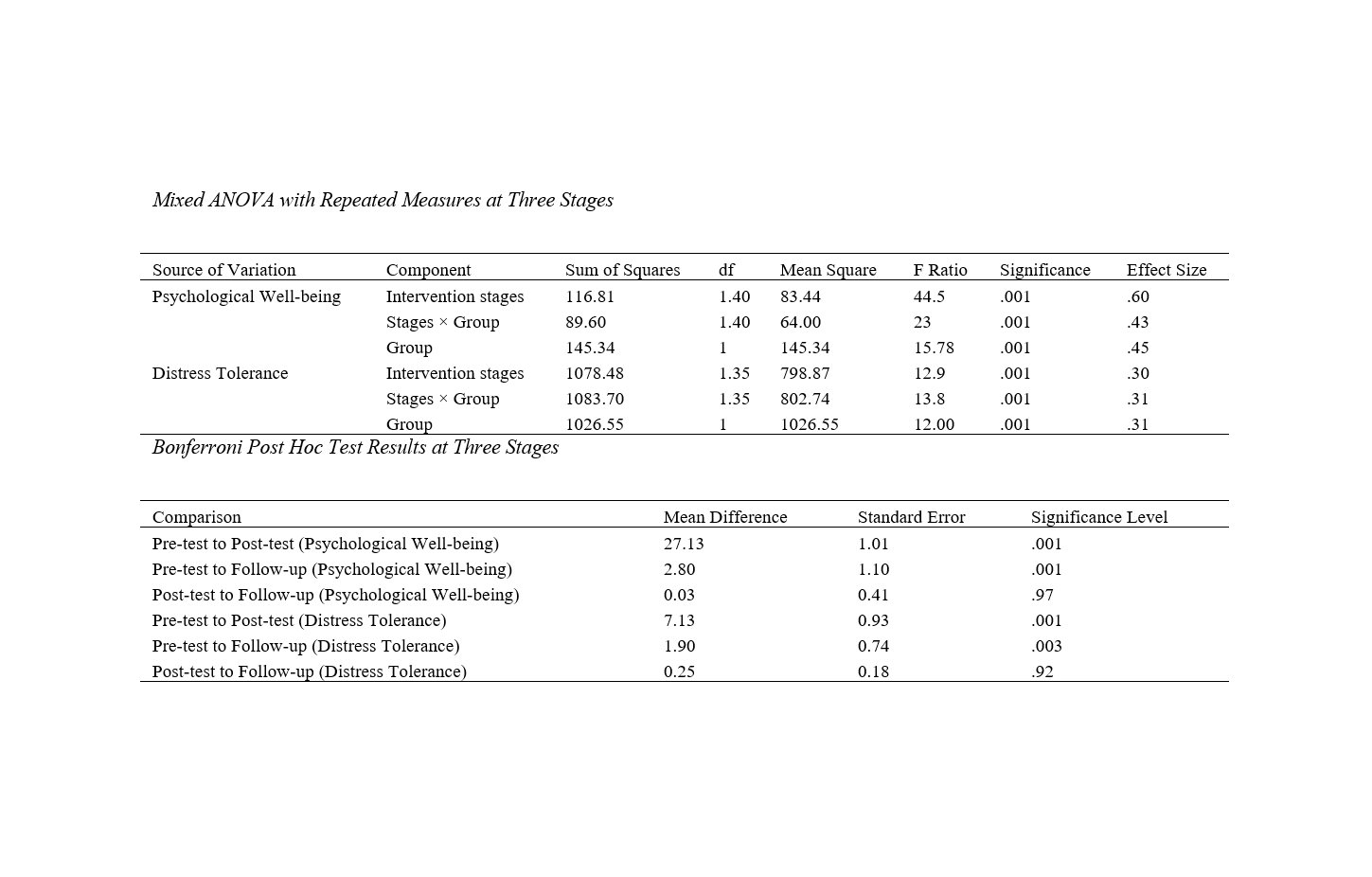
Findings: The results showed that solution-focused couples therapy had a significant effect on the dimensions of psychological well-being (F = 15.78, p = .001) and distress tolerance (F = 12.00, p = .001); these effects were maintained during the follow-up phase (p < .001).
Conclusion: Given the results, therapists can employ solution-focused couples therapy to enhance psychological well-being and distress tolerance among couples, which significantly affects the stability and strength of families.
Downloads
Downloads
Additional Files
Publication Timeline
Issue
Section
License

This work is licensed under a Creative Commons Attribution-NonCommercial 4.0 International License.