Developing a Structural Equation Model of Disordered Eating Behaviors in Patients With Obesity Based on Perfectionism and the Behavioral Activation/Inhibition Systems, With the Mediating Role of Emotion Dysregulation
Keywords:
behavioral brain systems, disordered eating behaviors, emotion dysregulation, obesity, perfectionism, structural equation modelingAbstract
Objective: The present study aimed to develop and test a structural equation model of disordered eating behaviors in patients with obesity based on perfectionism and the behavioral activation/inhibition systems, with the mediating role of emotion dysregulation.
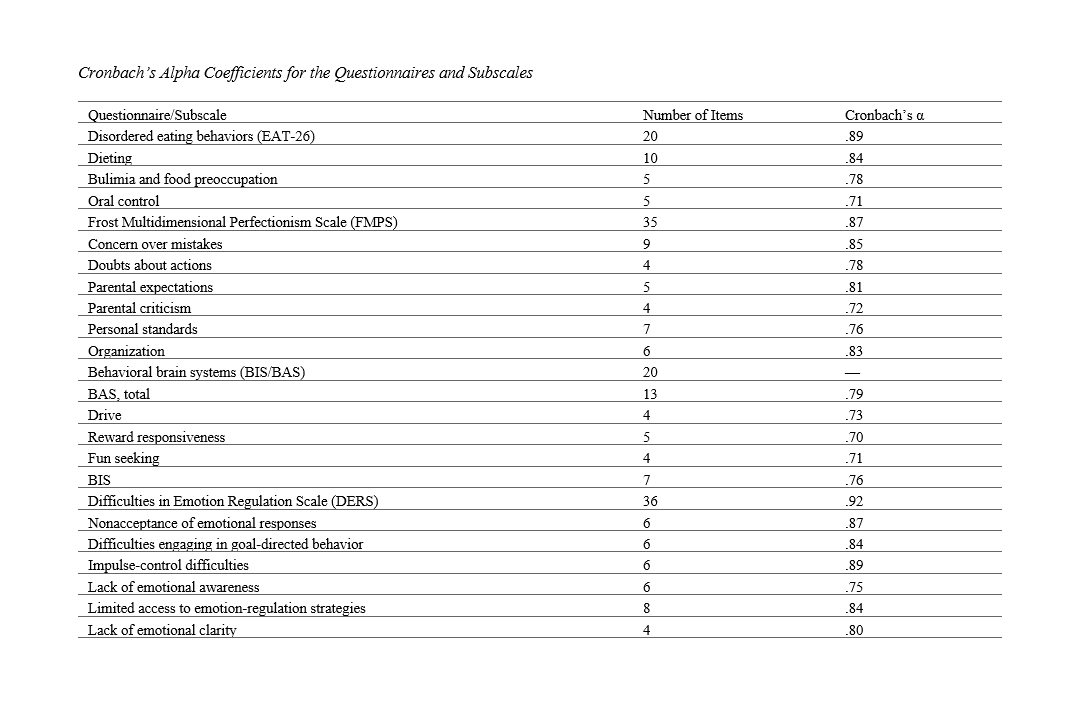
Methods and Materials: This descriptive-correlational study employed a structural equation modeling approach. The statistical population consisted of all women with obesity and a body mass index greater than 30 who attended the Baraka Obesity Treatment Clinic in Tehran during 2025–2026. Of these individuals, 250 were selected through convenience and voluntary sampling. The data collection instruments included the Eating Attitudes Test developed by Garner et al. (1982), the Frost Multidimensional Perfectionism Scale (Frost et al., 1990), the Behavioral Inhibition System/Behavioral Activation System Scales developed by Carver and White (1994), and the Difficulties in Emotion Regulation Scale developed by Gratz and Roemer (2004), all of which had demonstrated satisfactory validity and reliability in Iranian samples. The data were analyzed using Pearson’s correlation coefficient and structural equation modeling in LISREL.
Findings: The findings indicated that the conceptual model had an acceptable fit, CFI = .96, RMSEA = .069, and χ²/df = 1.70. Perfectionism had significant direct effects on disordered eating behaviors (β = .18, p < .05) and emotion dysregulation (β = .48, p < .001). The behavioral activation system (BAS) and behavioral inhibition system (BIS) had significant direct effects on emotion dysregulation (β = .25 and β = .38, respectively, p < .01), whereas their direct effects on disordered eating behaviors were not significant. The indirect effect of perfectionism on disordered eating behaviors through emotion dysregulation was confirmed (β = .264), indicating partial mediation. In contrast, emotion dysregulation fully mediated the relationships of BAS (β = .137) and BIS (β = .209) with disordered eating behaviors. The final model explained 44% of the variance in disordered eating behaviors and 52% of the variance in emotion dysregulation.
Conclusion: The findings suggest that emotion dysregulation functions as a key mediating mechanism in the relationships of perfectionism and behavioral brain systems with disordered eating behaviors among women with obesity. Therefore, psychological interventions designed to improve emotion-regulation skills and modify perfectionistic standards may contribute to reducing disordered eating behaviors and facilitating more effective obesity management. Future research should test this model in diverse populations, including men and different age groups, using longitudinal designs.
Downloads
References
Abad-Jiménez, Z., & Vezza, T. (2025). Obesity: A global health challenge demanding urgent action. Biomedicines, 13(2), 502. https://doi.org/10.3390/biomedicines13020502
Al-Jawaldeh, A., & Abbass, M. M. (2022). Unhealthy dietary habits and obesity: The major risk factors beyond non-communicable diseases in the Eastern Mediterranean Region. Frontiers in Nutrition, 9, 817808. https://doi.org/10.3389/fnut.2022.817808
Anderson, A. J., & Perone, S. (2023). Predicting individual differences in behavioral activation and behavioral inhibition from functional networks in the resting EEG. Biological Psychology, 177, 108483. https://doi.org/10.1016/j.biopsycho.2022.108483
Bernabéu-Brotóns, E., & Marchena-Giráldez, C. (2022). Emotional eating and perfectionism as predictors of symptoms of binge eating disorder: The role of perfectionism as a mediator between emotional eating and body mass index. Nutrients, 14(16), 3361. https://doi.org/10.3390/nu14163361
Damtie, A., Meried, M., Getie, A., & Belayhun, Y. (2024). Assessment of disordered eating attitude and associated factors among female undergraduate students at Arba Minch University, Southern Ethiopia, 2023. Research Square. https://doi.org/10.21203/rs.3.rs-4013300/v1
Daniel, L., Haile, D., & Egata, G. (2023). Disordered eating behaviours and body shape dissatisfaction among adolescents with type 1 diabetes: A cross-sectional study. Journal of eating disorders, 11(1), 169. https://doi.org/10.1186/s40337-023-00876-y
Díaz de León Vázquez, C., & Unikel Santoncini, C. (2019). Parental negative weight/shape comments and their association with disordered eating behaviors: A systematic review. Revista Mexicana De Trastornos Alimentarios/Mexican Journal of Eating Disorders, 10(1), 134-147. https://doi.org/10.22201/fesi.20071523e.2019.1.572
Eneva, K. T., Murray, S., O'Garro-Moore, J., Yiu, A., Alloy, L. B., Avena, N. M., & Chen, E. Y. (2017). Reward and punishment sensitivity and disordered eating behaviors in men and women. Journal of eating disorders, 5, 1-6. https://doi.org/10.1186/s40337-017-0138-2
Fatt, S. J., George, E., Hay, P., Jeacocke, N., Gotkiewicz, E., & Mitchison, D. (2024). An umbrella review of body image concerns, disordered eating, and eating disorders in elite athletes. Journal of clinical medicine, 13(14), 4171. https://doi.org/10.3390/jcm13144171
Iwajomo, T., Bondy, S. J., de Oliveira, C., Colton, P., Trottier, K., & Kurdyak, P. (2021). Excess mortality associated with eating disorders: Population-based cohort study. The British Journal of Psychiatry, 219(3), 487-493. https://doi.org/10.1192/bjp.2020.197
Jurek, J. M., & Maruda, A. (2024). The role of emotional eating as a relief mechanism from psychological distress and its impact on overall well-being. Debates em Psiquiatria, 14, 1-23. https://doi.org/10.25118/2763-9037.2024.v14.1268
MacNeill, L. P., Best, L. A., & Davis, L. L. (2017). The role of personality in body image dissatisfaction and disordered eating: Discrepancies between men and women. Journal of eating disorders, 5, 1-9. https://doi.org/10.1186/s40337-017-0177-8
McClure, Z., Messer, M., Anderson, C., Liu, C., & Linardon, J. (2022). Which dimensions of emotion dysregulation predict the onset and persistence of eating disorder behaviours? A prospective study. Journal of affective disorders, 310, 123-128. https://doi.org/10.1016/j.jad.2022.05.041
Merchán-Clavellino, A., Alameda-Bailén, J. R., Zayas García, A., & Guil, R. (2019). Mediating effect of trait emotional intelligence between the behavioral activation system (BAS)/behavioral inhibition system (BIS) and positive and negative affect. Frontiers in psychology, 10, 424. https://doi.org/10.3389/fpsyg.2019.00424
Mohorić, T., Pokrajac-Bulian, A., Anić, P., Kukić, M., & Mohović, P. (2023). Emotion regulation, perfectionism, and eating disorder symptoms in adolescents: The mediating role of cognitive eating patterns. Current Psychology, 42(32), 28505-28516. https://doi.org/10.1007/s12144-022-03824-2
Morris, A. S., Criss, M. M., Silk, J. S., & Houltberg, B. J. (2017). The impact of parenting on emotion regulation during childhood and adolescence. Child Development Perspectives, 11(4), 233-238. https://doi.org/10.1111/cdep.12238
Purvis, N., Kumari, S., Chandrasekera, D., Papannarao, J. B., Gandhi, S., van Hout, I., & Katare, R. (2021). Diabetes induces dysregulation of microRNAs associated with survival, proliferation, and self-renewal in cardiac progenitor cells. Diabetologia, 64(6), 1422-1435. https://doi.org/10.1007/s00125-021-05405-7
Sala, M., Egbert, A. H., Lavender, J. M., & Goldschmidt, A. B. (2018). Affect, reward, and punishment in anorexia nervosa: A narrative overview. Eating and Weight Disorders—Studies on Anorexia, Bulimia and Obesity, 23, 731-737. https://doi.org/10.1007/s40519-018-0588-9
Smith, M. M., Sherry, S. B., Ge, S. Y., Hewitt, P. L., Flett, G. L., & Baggley, D. L. (2022). Multidimensional perfectionism turns 30: A review of known knowns and known unknowns. Canadian Psychology/Psychologie Canadienne, 63(1), 16. https://doi.org/10.1037/cap0000288
Solomon-Krakus, S., Quesnel, D. A., Uliaszek, A., & Sabiston, C. M. (2025). The relationships between body-related emotion intolerance and restrictive eating as a function of multidimensional perfectionism. Journal of Clinical Psychology. https://doi.org/10.1002/jclp.23770
Sutton, C. A., L'Insalata, A. M., & Fazzino, T. L. (2022). Reward sensitivity, eating behavior, and obesity-related outcomes: A systematic review. Physiology & Behavior, 252, 113843. https://doi.org/10.1016/j.physbeh.2022.113843
Tng, G. Y., & Yang, H. (2021). Interactional effects of multidimensional perfectionism and cognitive emotion regulation strategies on eating disorder symptoms in female college students. Brain Sciences, 11(11), 1374. https://doi.org/10.3390/brainsci11111374
Usubini, A. G., Cattivelli, R., Scarpa, A., Musetti, A., Varallo, G., Franceschini, C., & Castelnuovo, G. (2023). The interplay between emotion dysregulation, psychological distress, emotional eating, and weight status: A path model. International Journal of Clinical and Health Psychology, 23(1), 81-90. https://doi.org/10.1016/j.ijchp.2022.100338
Vacca, M., Ballesio, A., & Lombardo, C. (2021). The relationship between perfectionism and eating-related symptoms in adolescents: A systematic review. European Eating Disorders Review, 29(1), 32-51. https://doi.org/10.1002/erv.2793
Wilson, D. R., Loxton, N. J., & O'Donovan, A. (2021). From BIS to binge: The role of negative affect in the pathway between personality and binge eating. Eating behaviors, 41, 101479. https://doi.org/10.1016/j.eatbeh.2021.101479
Downloads
Additional Files
Publication Timeline
- Submitted
- Revised
- Accepted