Bioinformatics study and expression changes of the ACE gene in rats under the influence of motor stimuli and sports performance
DOI:
https://doi.org/10.61838/kman.intjssh.8.4.2Keywords:
Exercise, angiotensin-II, protein kinase, ACE, Gene ExpressionAbstract
Abstract
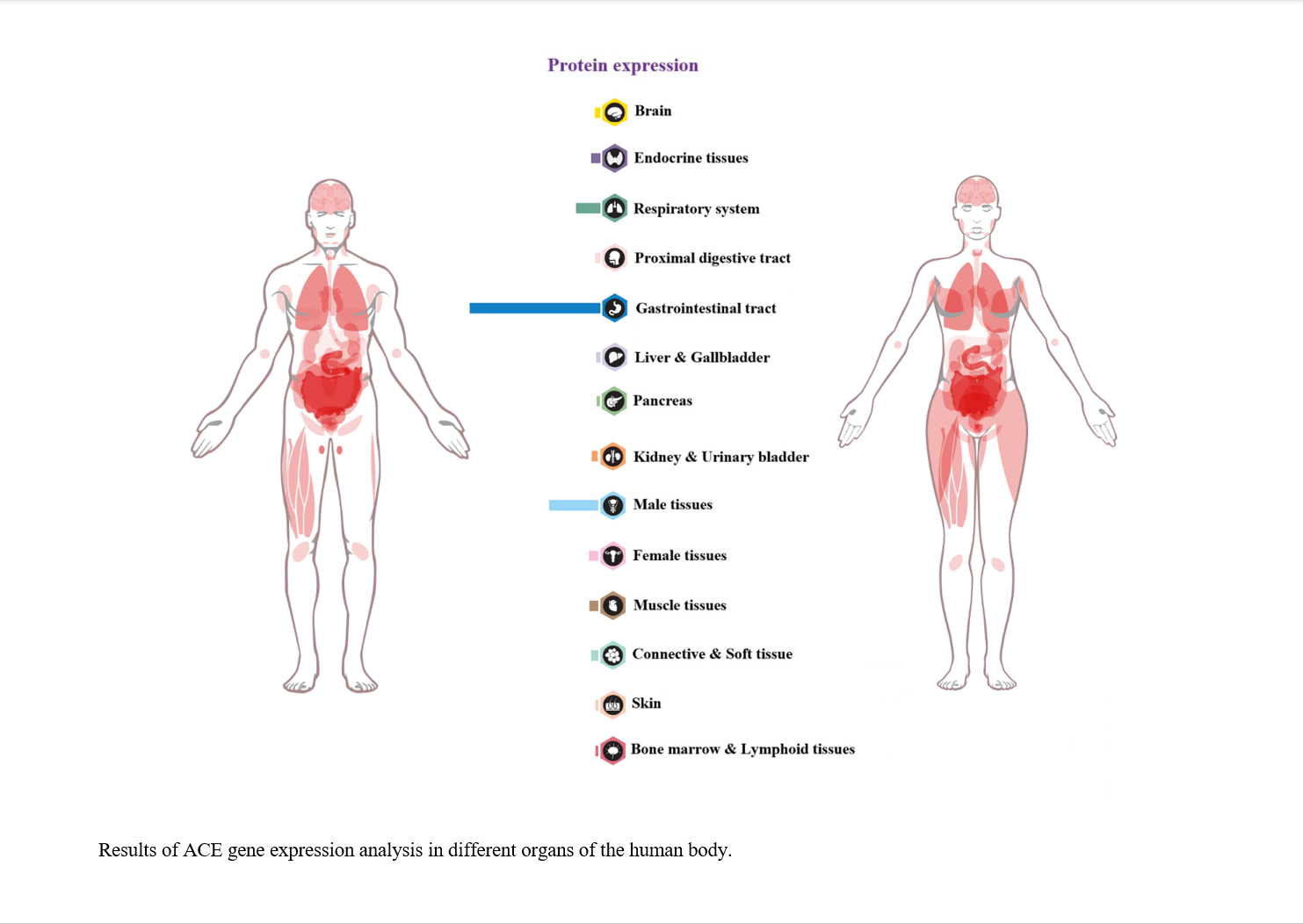
Exercise is the most important factor in preventing mental and physical diseases. Sports activities ensure the health of vital organs of the body, such as the heart and brain. In recent years, researchers have carefully examined the factors affecting changes in the body's metabolism following sports activities. Many of these factors cause major hormonal and genetic changes in the body. One of the genes whose expression changes are always affected by sport activities is the ACE gene. Changes in the expression level of this gene have significant effects on blood pressure and heart health. In general, the ACE gene is a protein kinase that causes the release of large amounts of angiotensin-II in tissues. Increased production of angiotensin-II leads to muscle contraction and increased blood pressure, which in turn increases the risk of heart attack. Also, increased expression of the ACE gene through increased angiotensin-II plays a major role in blood electrolyte balance. In addition, this gene plays an effective role in stimulating the hormone aldosterone, ultimately leading to the regulation of intracellular fluids in the body. This study showed that the expression level of the ACE gene in rats exposed to motor activity increased after 12 hours and decreased after 24 hours. Also, the expression level of the ACE gene in the small intestine and duodenum was higher than in other organs, while this level was at its lowest in the cerebral cortex and skin. In general, these results showed that endurance activities play an effective role in reducing the expression level of the ACE gene. The bioinformatics analysis of this study also showed that there are a total of 14 protein sequences with more than 50% similarity in humans that contain the Lisinopril ligand, while these ligands play an effective role in the electrolyte balance of the ACE protein. In general, this study showed that there is a relatively active relationship between muscular and endurance sports such as running and ACE gene activity. It is hoped that this research, along with other related research, will lead to a greater understanding and identification of the mechanisms of the effect of these genes on energy metabolism and the level of oxygen consumption of cells during sports activities.
Downloads
References
1. Thompson WR, Sallis R, Joy E, Jaworski CA, Stuhr RM, Trilk JL. Exercise is medicine. American Journal of Lifestyle Medicine. 2020;14(5):511-23. [PMID: 32922236] [PMCID: PMC7444006] [DOI]
2. Kramer A. An overview of the beneficial effects of exercise on health and performance
Physical Exercise for Human Health2020. 3-22 p[DOI]
3. Pedersen BK. The physiology of optimizing health with a focus on exercise as medicine. Annual Review of Physiology. 2019;81(1):607-27. [PMID: 30526319] [DOI]
4. Alabdul Razzak I, Fares A, Stine JG, Trivedi HD. The role of exercise in Steatotic liver diseases: an updated perspective. Liver International. 2025;45(1):e16220. [PMID: 39720849] [DOI]
5. Mallett G. The effect of exercise and physical activity on skeletal muscle epigenetics and metabolic adaptations. European Journal of Applied Physiology. 2025:1-17. [PMID: 39775881] [DOI]
6. Agostini F, de Sire A, Sveva V, Finamore N, Savina A, Fisicaro A, et al. Rehabilitative good clinical practice in the treatment of osteoporosis: a comprehensive review of clinical evidences. Disability and Rehabilitation. 2024:1-15. [PMID: 39709548] [DOI]
7. Arias-Crespo M, García-Fernández R, Calvo-Ayuso N, Martín-Vázquez C, de Fátima da Silva Vieira Martins M, Quiroga-Sánchez E. Impact of Physical Exercise on Breast Cancer-Related Lymphedema and Non-Invasive Measurement Tools: A Systematic Review. Cancers. 2025;17(2):333. [PMID: 39858114] [PMCID: PMC11763635] [DOI]
8. Batalik L, Chamradova K, Winnige P, Dosbaba F, Batalikova K, Vlazna D, et al. Effect of exercise-based cancer rehabilitation via telehealth: a systematic review and meta-analysis. BMC Cancer. 2024;24(1):600. [PMID: 38760805] [PMCID: PMC11100177] [DOI]
9. Lewis C, Rafi E, Dobbs B, Barton T, Hatipoglu B, Malin SK. Tailoring Exercise Prescription for Effective Diabetes Glucose Management. The Journal of Clinical Endocrinology & Metabolism. 2025:dgae908. [PMID: 39836084] [DOI]
10. Moser O, Zaharieva DP, Adolfsson P, Battelino T, Bracken RM, Buckingham BA, et al. The use of automated insulin delivery around physical activity and exercise in type 1 diabetes: a position statement of the European Association for the Study of Diabetes (EASD) and the International Society for Pediatric and Adolescent Diabetes (ISPAD). Diabetologia. 2025;68(2):255-80. [PMID: 39653802] [PMCID: PMC11732933] [DOI]
11. Hargreaves M, Spriet LL. Exercise metabolism: Human Kinetics; 2006. [DOI]
12. Moghetti P, Bacchi E, Brangani C, Donà S, Negri C. Metabolic effects of exercise. Front Horm Res. 2016;47:44-57. [PMID: 27348753] [DOI]
13. Trefts E, Williams AS, Wasserman DH. Exercise and the regulation of hepatic metabolism. Progress in Molecular Biology and Translational Science. 2015;135:203-25. [PMID: 26477916] [PMCID: PMC4826571] [DOI]
14. Guedes LJL, Tavares VB, Carneiro SR, Neves LMT. The effect of physical activity on markers of oxidative and antioxidant stress in cancer patients: a systematic review and meta-analysis. BMC Cancer. 2025;25(1):74. [PMID: 39806299] [PMCID: PMC11726932] [DOI]
15. Liu B, Tian H, Momeni MR. The interplay of exercise and green tea: a new road in cancer therapy. Cancer Cell International. 2025;25(1):1-23. [PMID: 39773739] [PMCID: PMC11705833] [DOI]
16. Militello R, Luti S, Gamberi T, Pellegrino A, Modesti A, Modesti PA. Physical activity and oxidative stress in aging. Antioxidants. 2024;13(5):557. [PMID: 38790662] [PMCID: PMC11117672] [DOI]
17. Tsai CL, Chien CY, Pan CY, Tseng YT, Wang TC, Lin TK. Effects of long-term Tai Chi vs. aerobic exercise on antioxidant activity and cognitive function in individuals with Parkinson's disease. Behavioural Brain Research. 2025;476:115274. [PMID: 39332640] [DOI]
18. El Assar M, Álvarez-Bustos A, Sosa P, Angulo J, Rodríguez-Mañas L. Effect of physical activity/exercise on oxidative stress and inflammation in muscle and vascular aging. International Journal of Molecular Sciences. 2022;23(15):8713. [PMID: 35955849] [PMCID: PMC9369066] [DOI]
19. Phillips C, Baktir MA, Srivatsan M, Salehi A. Neuroprotective effects of physical activity on the brain: a closer look at trophic factor signaling. Frontiers in Cellular Neuroscience. 2014;8:170. [PMID: 24999318] [PMCID: PMC4064707] [DOI]
20. Takalokastari T, Alasaarela E, Kinnunen M, Jämsä T. Quality of the wireless electrocardiogram signal during physical exercise in different age groups. IEEE Journal of Biomedical and Health Informatics. 2013;18(3):1058-64. [PMID: 24132026] [DOI]
21. Chastin SF, Abaraogu U, Bourgois JG, Dall PM, Darnborough J, Duncan E, et al. Effects of regular physical activity on the immune system, vaccination and risk of community-acquired infectious disease in the general population: systematic review and meta-analysis. Sports Medicine. 2021;51:1673-86. [PMID: 33877614] [PMCID: PMC8056368] [DOI]
22. Forte P, Branquinho L, Ferraz R. The relationships between physical activity, exercise, and sport on the immune system. International Journal of Environmental Research and Public Health. 2022;19(11):6777. [PMID: 35682358] [PMCID: PMC9180823] [DOI]
23. Romeo J, Wärnberg J, Pozo T, Marcos A. Physical activity, immunity and infection. Proceedings of the Nutrition Society. 2010;69(3):390-9. [PMID: 20569522] [DOI]
24. Yu X, Pei W, Li B, Sun S, Li W, Wu Q. Immunosenescence, Physical Exercise, and their Implications in Tumor Immunity and Immunotherapy. International Journal of Biological Sciences. 2025;21(3):910. [PMID: 39897036] [PMCID: PMC11781184] [DOI]
25. Banavar S, Klimek JJ, Fowler EW, Liu AB, Nelson CM. BPS2025-Physical forces and patterns of differentiation in the developing lung. Biophysical Journal. 2025;124(3):183a. [DOI]
26. Munteanu C, Galaction AI, Onose G, Turnea M, Rotariu M. Harnessing Gasotransmitters to Combat Age-Related Oxidative Stress in Smooth Muscle and Endothelial Cells. Pharmaceuticals. 2025;18(3):344. [PMID: 40143122] [PMCID: PMC11946800] [DOI]
27. Newcomer SC, Thijssen DH, Green DJ. Effects of exercise on endothelium and endothelium/smooth muscle cross talk: role of exercise-induced hemodynamics. Journal of Applied Physiology. 2011;111(1):311-20. [PMID: 21436465] [DOI]
28. Smith J, Rai V. Novel factors regulating proliferation, migration, and differentiation of fibroblasts, keratinocytes, and vascular smooth muscle cells during wound healing. Biomedicines. 2024;12(9):1939. [PMID: 39335453] [PMCID: PMC11429312] [DOI]
29. Myerson S, Hemingway H, Budget R, Martin J, Humphries S, Montgomery H, et al. Human angiotensin I-converting enzyme gene and endurance performance. Journal of Applied Physiology. 1999;87(4):1313-6. [PMID: 10517757] [DOI]
30. Rao X, Huang X, Zhou Z, Lin X. An improvement of the 2ˆ (-delta delta CT) method for quantitative real-time polymerase chain reaction data analysis. Biostatistics, Bioinformatics and Biomathematics. 2013;3(3):71.
Downloads
Additional Files
Publication Timeline
Issue
Section
License
Copyright (c) 2025 Alireza Mirzaei, Sepehr Kahrizi (Author)

This work is licensed under a Creative Commons Attribution-NonCommercial 4.0 International License.