The Level of Students’ Participation in Sports and Extracurricular Activities Following Educational Programs on Virtual Networks
DOI:
https://doi.org/10.61838/kman.intjssh.8.4.10Keywords:
Coronavirus, physical activity, virtual networks, students, sports trainingAbstract
Objective: The COVID-19 pandemic has changed the way millions of people around the world learn and teach, and innovation in education could provide ways to address the COVID-19 pandemic. The outbreak of the COVID-19 virus has brought about significant changes to the education system. This study aimed to investigate the level of students’ participation in sports and extracurricular activities following participation in online educational programs in Guilan Province.
Methods and Materials: The statistical population of this study was all boys’ and girls’ students in elementary (boys: 71,707, girls: 70,646), middle school (boys: 47,124, girls: 45,293) and high school (boys: 42,051, girls: 42,322) in Guilan Province. A total of 1035 questionnaires were filled out and collected by boy students, and 983 questionnaires were filled out and collected by girl students. The data collection method was a virtual questionnaire using the online questionnaire (Porsline site), and the information was collected by completing the questionnaire in a self-report manner; also, their demographic characteristics were recorded. Since the target population in this study was students, the questionnaires were completed under the supervision and with the help of their parents.
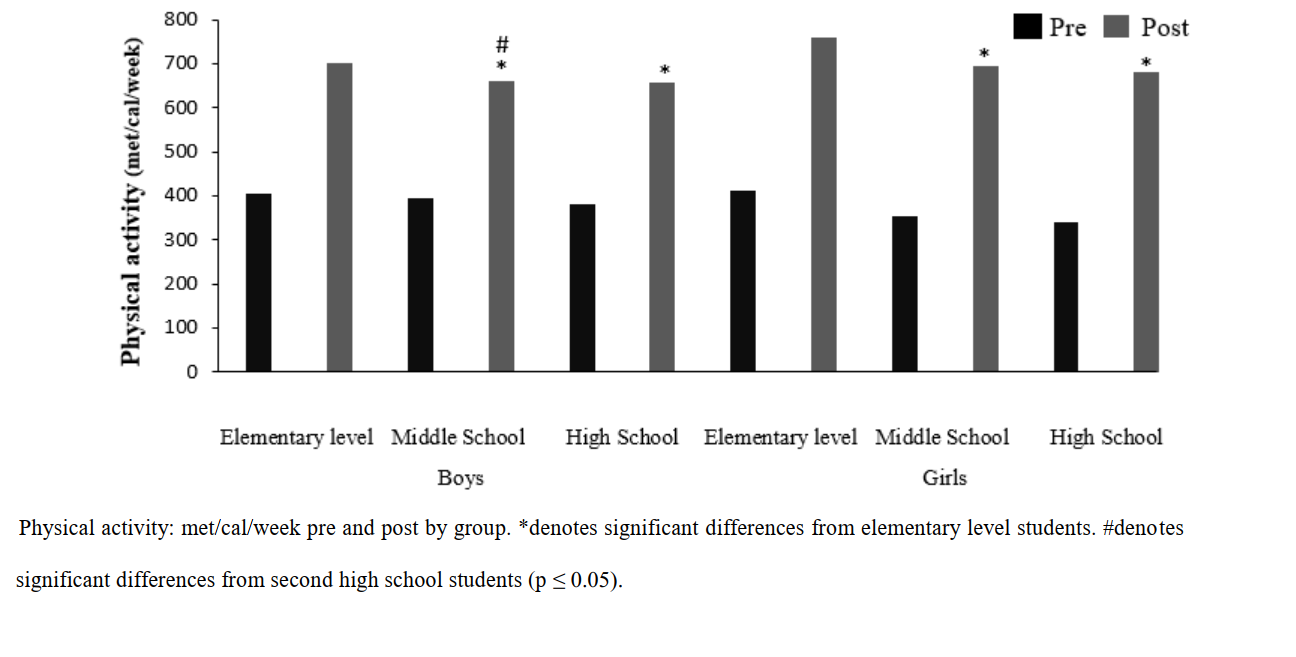
Findings: The results showed that 71% of students did not engage in regular physical activity before participating in physical activities following the educational programs on virtual networks. After participating in the educational programs on virtual networks, 59% of students did physical exercises, and 41% were inactive. The changes in the average physical activity of boys and girls in elementary school, middle school, and high school were significant (p ˂ 0.05). Their average physical activity increased, and their light activity decreased significantly due to their participation in educational programs on virtual networks (p ˂ 0.05).
Conclusion: The results showed that educational programs on virtual networks can have a positive effect on students' physical activity levels and weight. In similar conditions, online and virtual training play a significant role in advancing goals and ensuring the health and well-being of students during remote learning periods.
Downloads
References
1. Ravalli S, Musumeci G. Coronavirus outbreak in Italy: physiological benefits of home-based exercise during pandemic. 2020;5(2):31. [PMID: 33467247] [PMCID: PMC7739427] [DOI]
2. Jakobsson J, Malm C, Furberg M, Ekelund U, Svensson M. Physical activity during the coronavirus (COVID-19) pandemic: prevention of a decline in metabolic and immunological functions. Frontiers in Sports and Active Living. 2020;2:57. [PMID: 33345048] [PMCID: PMC7739799] [DOI]
3. Arazi H, Taati B. Impact of coronavirus (COVID-19) pandemic on physical activity levels in different sub-populations of Iranians: a national survey. Scientific Reports. 2025;15(1):3140. [PMID: 39856100] [PMCID: PMC11761063] [DOI]
4. Dziewior J, Carr LJ, Pierce GL, Whitaker K. College students report less physical activity and more sedentary behavior during the COVID-19 pandemic. Journal of american college HealtH. 2024;72(7):2022-30. [PMID: 35881778] [DOI]
5. Shirvani H, Rostamkhani F. Exercise considerations during coronavirus disease 2019 (COVID-19) Outbreak: A narrative review. Journal of Military Medicine. 2020;22(2):161-8.
6. Caspersen CJ, Powell KE, Christenson GM. Physical activity, exercise, and physical fitness: definitions and distinctions for health-related research. Public health reports. 1985;100(2):126. [PMID: 3920711]
7. Hammami A, Harrabi B, Mohr M, Krustrup P. Physical activity and coronavirus disease 2019 (COVID-19): specific recommendations for home-based physical training. Managing Sport and Leisure. 2022;27(1-2):26-31. [DOI]
8. Wang G, Zhang Y, Zhao J, Zhang J, Jiang F. Mitigate the effects of home confinement on children during the COVID-19 outbreak. The Lancet. 2020;395(10228):945-7. [PMID: 32145186] [DOI]
9. Dunton GF, Do B, Wang SD. Early effects of the COVID-19 pandemic on physical activity and sedentary behavior in children living in the US. BMC public health. 2020;20:1-13. [PMID: 32887592] [PMCID: PMC7472405] [DOI]
10. Qin F, Song Y, Nassis GP, Zhao L, Dong Y, Zhao C, et al. Physical activity, screen time, and emotional well-being during the 2019 novel coronavirus outbreak in China. International journal of environmental research and public health. 2020;17(14):5170. [PMID: 32709003] [PMCID: PMC7399902] [DOI]
11. Basilaia G, Kvavadze D. Transition to online education in schools during a SARS-CoV-2 coronavirus (COVID-19) pandemic in Georgia. Pedagogical Research. 2020;5(4). [DOI]
12. Booth ML, Ainsworth BE, Pratt M, Ekelund U, Yngve A, Sallis JF, et al. International physical activity questionnaire: 12-country reliability and validity. Med sci sports Exerc. 2003;195(9131/03):3508-1381. [PMID: 12900694] [DOI]
13. Hazavehei SMM, Asadi Z, Hassanzadeh A, Shekarchizadeh P. Comparing the effect of two methods of presenting physical education 2 course on the attitudes and practices of female students towards regular physical activity in Isfahan University of Medical Sciences. Iranian Journal of Medical Education. 2008;8(1):121-31.
14. Estebsari F, Shojaizadeh D, Mostafayi D, Farahbakhsh M. Designing and intervention educational to increase physical activity for students girl based on PRECEDE Model to Improve physical activity in female students. Hayat. 2010;16(1):48-54.
15. solhi m, zinat motlagh f, karimzade shirazi k, taghdisi mh, jalilian f. Designing and Implementing Educational Programs to Promote Physical Activity Among Students: An Application of the Theory of Planned Behavior. Internal Medicine Today. 2012;18(1):45-52. [PMCID: A-10-540-1]
16. Gjerdingen DK, Froberg DG, Chaloner KM, McGovern PM. Changes in women's physical health during the first postpartum year. Archives of Family Medicine. 1993;2(3):277-83. [PMID: 8252148] [DOI]
17. Melton B, Marshall E, Bland H, Schmidt M, Guion WK. A merican rural women's exercise self‐efficacy and awareness of exercise benefits and safety during pregnancy. Nursing & health sciences. 2013;15(4):468-73. [PMID: 23663292] [DOI]
18. Hagströmer M, Oja P, Sjöström M. The International Physical Activity Questionnaire (IPAQ): a study of concurrent and construct validity. Public health nutrition. 2006;9(6):755-62. [PMID: 16925881] [DOI]
19. Maddison R, Ni Mhurchu C, Jiang Y, Vander Hoorn S, Rodgers A, Lawes CM, et al. International physical activity questionnaire (IPAQ) and New Zealand physical activity questionnaire (NZPAQ): a doubly labelled water validation. International Journal of Behavioral Nutrition and Physical Activity. 2007;4:1-9. [PMID: 18053188] [PMCID: PMC2219963] [DOI]
20. Moghaddam MB, Aghdam FB, Jafarabadi MA, Allahverdipour H, Nikookheslat SD, Safarpour S. The Iranian Version of International Physical Activity Questionnaire (IPAQ) in Iran: content and construct validity, factor structure, internal consistency and stability. World Appl Sci J. 2012;18(8):1073-80.
21. Li H, Song Y, Wang Y, Feng X, Li C, Peng J, et al. Impact of the COVID-19 pandemic lockdown on Body Mass Index: a three-year follow up study in 6,156 Chinese college students. Frontiers in Endocrinology. 2024;Volume 15 - 2024. [PMID: 38966211] [PMCID: PMC11222588] [DOI]
22. Takaya J, Higashino H, Takaya R, Sakaguchi H, Tanoue J, Higashide T, et al. Effect of the COVID-19 pandemic lockdown on the physique of school-age children in Japan. Annals of Pediatric Endocrinology & Metabolism. 2023;28(2):124-30. [PMID: 37401057] [PMCID: PMC10329943] [DOI]
23. Eisenburger N, Friesen D, Haas F, Klaudius M, Schmidt L, Vandeven S, et al. weight management of children and adolescents with obesity during the COVID-19 pandemic in Germany. PLoS One. 2022;17(4):e0267601. [PMID: 35486630] [PMCID: PMC9053772] [DOI]
24. Rundle A, Park Y, Herbstman J, Kinsey E, COVID YW. 19-Related School Closings and Risk of Weight Gain Among Children., 2020, 28. DOI: https://doi org/101002/oby.22813:1008-9. [PMID: 32227671] [PMCID: PMC7440663] [DOI]
25. Woolford SJ, Sidell M, Li X, Else V, Young DR, Resnicow K, et al. Changes in body mass index among children and adolescents during the COVID-19 pandemic. Jama. 2021;326(14):1434-6. [PMID: 34448817] [PMCID: PMC8511973] [DOI]
26. Lin AL, Vittinghoff E, Olgin JE, Pletcher MJ, Marcus GM. Body weight changes during pandemic-related shelter-in-place in a longitudinal cohort study. JAMA network open. 2021;4(3):e212536-e. [PMID: 33749764] [PMCID: PMC7985720] [DOI]
27. Nishijima C, Miyagawa N, Tsuboyama-Kasaoka N, Chiba T, Miyachi M. Association between lifestyle changes and at-home hours during and after the state of emergency due to the COVID-19 pandemic in Japan. Nutrients. 2021;13(8):2698. [PMID: 34444858] [PMCID: PMC8398728] [DOI]
28. von Hippel PT, Workman J. From kindergarten through second grade, US children's obesity prevalence grows only during summer vacations. Obesity. 2016;24(11):2296-300. [PMID: 27804271] [DOI]
29. Moreno JP, Johnston CA, Woehler D. Changes in weight over the school year and summer vacation: results of a 5‐year longitudinal study. Journal of School Health. 2013;83(7):473-7. [PMID: 23782089] [DOI]
30. Nixon HL. Social network analysis of sport: Emphasizing social structure in sport sociology. Sociology of Sport Journal. 1993;10(3):315-21. [DOI]
31. Colley RC, Janssen I, Tremblay MS. Daily step target to measure adherence to physical activity guidelines in children. Medicine & Science in Sports & Exercise. 2012;44(5):977-82. [PMID: 22051570] [DOI]
32. Henderson KA, Ainsworth BE. The connections between social support and women’s physical activity involvement: The Cultural Activity Participation Study. Women in Sport and Physical Activity Journal. 2000;9(2):27-53. [DOI]
33. Calvó-Armengol A, Patacchini E, Zenou Y. Peer effects and social networks in education. The review of economic studies. 2009;76(4):1239-67. [DOI]
34. BashiriMoosavi F, Farmanbar R, Taghdisi M, AtrkarRoshan Z. Level of physical activity among girl high school students in Tarom county and relevant factors. Iranian Journal of Health Education and Health Promotion. 2015;3(2):133-40.
35. Crawford J, Butler-Henderson K, Rudolph J, Malkawi B, Glowatz M, Burton R, et al. COVID-19: 20 countries’ higher education intra-period digital pedagogy responses. Journal of applied learning & teaching. 2020;3(1):1-20. [DOI]
36. Amin S. The psychology of coronavirus fear: Are healthcare professionals suffering from corona-phobia? International Journal of Healthcare Management. 2020;13(3):249-56. [DOI]
37. Narici M, Vito GD, Franchi M, Paoli A, Moro T, Marcolin G, et al. Impact of sedentarism due to the COVID-19 home confinement on neuromuscular, cardiovascular and metabolic health: Physiological and pathophysiological implications and recommendations for physical and nutritional countermeasures. European journal of sport science. 2021;21(4):614-35. [PMID: 32394816] [DOI]
38. Kang S, Sun Y, Zhang X, Sun F, Wang B, Zhu W. Is physical activity associated with mental health among Chinese adolescents during isolation in COVID-19 pandemic? Journal of epidemiology and global health. 2021;11(1):26-33. [PMID: 32959611] [PMCID: PMC7958283] [DOI]
Downloads
Additional Files
Publication Timeline
Issue
Section
License
Copyright (c) 2025 Hamid Arazi (Corresponding Author); Ehsan Eghbali, Amir Seraji Kalashomi (Author)

This work is licensed under a Creative Commons Attribution-NonCommercial 4.0 International License.