Effect of 8-Weeks PNF Stretching on Muscle Strength and Neuromuscular Activity of the Hamstring Muscles
DOI:
https://doi.org/10.61838/kman.intjssh.6.1.7Keywords:
Muscle Stretching Exercises, Muscle Strength, Hamstring Muscles, Team Sports, Psychomotor PerformanceAbstract
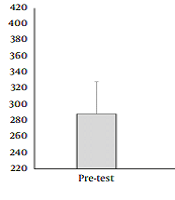
Background: Hamstring injuries are common in sports that involve rapid, forceful lengthening of the hamstring muscles, such as sprinting, jumping, and kicking. This type of injury is more likely to occur in team sports such as football and handball. Objectives: The purpose of this study was to investigate chronic effects of proprioceptive neuromuscular facilitation (PNF) stretching on muscle strength and neuromuscular activity of the hamstring muscle. Methods: Six male team sports players (age: 24.38 ± 1.94 years; height: 180.73 ± 6.05 cm; body-mass: 80.23 ± 10.42 kg) were recruited for this study. Participants completed a 2-month rehabilitation program that included three sessions per week of contract-relax (CR) PNF stretching. Neuromuscular activity and strength were evaluated by electromyography (EMG) and force sensor before and after 8 weeks of CR-PNF stretching. Results: The neuromuscular activity of the medial and lateral hamstring muscles was significantly different between pre-and post-training for the apex and area of muscle (P < 0.01). Similarly, there was a large difference between pre- and post-training for hamstring muscle strength (medial and lateral) in the contract and relax positions (P < 0.001). Conclusions: Eight weeks of contract-relax proprioceptive neuromuscular facilitation (PNF) stretching is effective in increasing neuromuscular activity and muscle strength in the hamstring muscles.Downloads
References
1. Meeuwisse WH, Tyreman H, Hagel B, Emery C. A dynamic model
of etiology in sport injury: the recursive nature of risk and
causation. Clin J Sport Med. 2007;17(3):215–9. [PubMed ID: 17513916].
https://doi.org/10.1097/JSM.0b013e3180592a48.
2. Junge A, Engebretsen L, Mountjoy ML, Alonso JM, Renstrom PA,
Aubry MJ, et al. Sports injuries during the Summer Olympic Games
2008. Am J Sports Med. 2009;37(11):2165–72. [PubMed ID: 19783812].
https://doi.org/10.1177/0363546509339357.
3. Saragiotto BT, Di Pierro C, Lopes AD. Risk factors and injury
prevention in elite athletes: a descriptive study of the opinions
of physical therapists, doctors and trainers. Braz J Phys Ther.
2014;18(2):137–43. [PubMed ID: 24845023]. [PubMed Central ID:
PMC4183252]. https://doi.org/10.1590/s1413-35552012005000147.
4. Heidt Jr RS, Sweeterman LM, Carlonas RL, Traub JA, Tekulve
FX. Avoidance of soccer injuries with preseason conditioning.
Am J Sports Med. 2000;28(5):659–62. [PubMed ID: 11032220].
https://doi.org/10.1177/03635465000280050601.
5. Ekstrand J, Hagglund M, Walden M. Epidemiology of muscle injuries
in professional football (soccer). Am J Sports Med. 2011;39(6):1226–32.
[PubMed ID: 21335353]. https://doi.org/10.1177/0363546510395879.
6. Feeley BT, Kennelly S, Barnes RP, Muller MS, Kelly BT, Rodeo SA, et
al. Epidemiology of National Football League training camp injuries
from 1998 to 2007. Am J Sports Med. 2008;36(8):1597–603. [PubMed ID:
18443276]. https://doi.org/10.1177/0363546508316021.
7. Alonso JM, Junge A, Renstrom P, Engebretsen L, Mountjoy M, Dvorak
J. Sports injuries surveillance during the 2007 IAAF World Athletics
Championships. Clin J Sport Med. 2009;19(1):26–32. [PubMed ID:
19124980]. https://doi.org/10.1097/JSM.0b013e318191c8e7.
8. Hawkins RD, Hulse MA, Wilkinson C, Hodson A, Gibson M. The
association football medical research programme: an audit of
injuries in professional football. Br J Sports Med. 2001;35(1):43–7.
[PubMed ID: 11157461]. [PubMed Central ID: PMC1724279].
https://doi.org/10.1136/bjsm.35.1.43.
9. Ekstrand J, Hagglund M, Walden M. Injury incidence and
injury patterns in professional football: the UEFA injury
study. Br J Sports Med. 2011;45(7):553–8. [PubMed ID: 19553225].
https://doi.org/10.1136/bjsm.2009.060582.
10. Orchard J, Seward H. Epidemiology of injuries in the Australian
Football League, seasons 1997-2000. Br J Sports Med. 2002;36(1):39–44.
[PubMed ID: 11867491]. [PubMed Central ID: PMC1724448].
https://doi.org/10.1136/bjsm.36.1.39.
11. Orchard J, Seward H. AFL injury report 2003. J Sci Med Sport.
2004;7(2):264–5. https://doi.org/10.1016/s1440-2440(04)80018-5.
12. Orchard J, Best TM, Verrall GM. Return to play following muscle
strains. Clin J Sport Med. 2005;15(6):436–41. [PubMed ID: 16278548].
https://doi.org/10.1097/01.jsm.0000188206.54984.65.
13. Schmitt B, Tim T, McHugh M. Hamstring injury rehabilitation and
prevention of reinjury using lengthened state eccentric training:
a new concept. Int J Sports Phys Ther. 2012;7(3):333–41. [PubMed ID:
22666648]. [PubMed Central ID: PMC3362981].
14. Funk DC, Swank AM, Mikla BM, Fagan TA, Farr BK. Impact
of prior exercise on hamstring flexibility: a comparison of
proprioceptive neuromuscular facilitation and static stretching.
J Strength Cond Res. 2003;17(3):489–92. [PubMed ID: 12930174].
https://doi.org/10.1519/1533-4287(2003)017<0489:iopeoh>2.0.co;2.
15. Lucas RC, Koslow R. Comparative study of static, dynamic, and
proprioceptive neuromuscular facilitation stretching techniques on
flexibility. Percept Mot Skills. 1984;58(2):615–8. [PubMed ID: 6739253].
https://doi.org/10.2466/pms.1984.58.2.615.
16. Lazarou L, Kofotolis N, Pafis G, Kellis E. Effects of two proprioceptive
training programs on ankle range of motion, pain, functional
and balance performance in individuals with ankle sprain. J Back
Musculoskelet Rehabil. 2018;31(3):437–46. [PubMed ID: 28946541].
https://doi.org/10.3233/BMR-170836.
17. Alter MJ. Science of Flexibility. Champaign, IL: Human Kinetics; 1996.
18. Freriks B, Hermens HJ. SENIAM 9: European recommendations for
surface electromyography. Enschede: Roessingh Research and
Developmen; 1999.
19. American College of Sports Medicine. ACSM’s Guidelines for Exercise
Testing and Prescription. 6th ed. Philadelphia, PA: Lippincott Williams
& Wilkins; 2000.
20. Ferber R, Osternig L, Gravelle D. Effect of PNF stretch
techniques on knee flexor muscle EMG activity in older adults.
J Electromyogr Kinesiol. 2002;12(5):391–7. [PubMed ID: 12223172].
https://doi.org/10.1016/s1050-6411(02)00047-0.
21. Marek SM, Cramer JT, Fincher AL, Massey LL, Dangelmaier SM,
Purkayastha S, et al. Acute Effects of Static and Proprioceptive
Neuromuscular Facilitation Stretching on Muscle Strength and
Power Output. J Athl Train. 2005;40(2):94–103. [PubMed ID: 15970955].
[PubMed Central ID: PMC1150232].
22. Caplan N, Rogers R, Parr MK, Hayes PR. The effect of proprioceptive
neuromuscular facilitation and static stretch training on running
mechanics. J Strength Cond Res. 2009;23(4):1175–80. [PubMed ID:
19528850]. https://doi.org/10.1519/JSC.0b013e318199d6f6.
23. Zaidi S, Ahamad A, Fatima A, Ahmad I, Malhotra D, Al Muslem WH,
et al. Immediate and Long-Term Effectiveness of Proprioceptive
Neuromuscular Facilitation and Static Stretching on Joint
Range of Motion, Flexibility, and Electromyographic Activity
of Knee Muscles in Older Adults. J Clin Med. 2023;12(7):2610.
[PubMed ID: 37048693]. [PubMed Central ID: PMC10095393].
https://doi.org/10.3390/jcm12072610.
24. Nelson AG, Chambers RS, McGown CM, Penrose KW. Proprioceptive
neuromuscular facilitation versus weight training for enhancement
of muscular strength and athletic performance*. J Orthop
Sports Phys Ther. 1986;7(5):250–3. [PubMed ID: 18802264].
https://doi.org/10.2519/jospt.1986.7.5.250.
25. Nelson AG, Kokkonen J, Arnall DA. Acute muscle stretching
inhibits muscle strength endurance performance. J
Strength Cond Res. 2005;19(2):338–43. [PubMed ID: 15903372].
https://doi.org/10.1519/R-15894.1.
26. Hindle KB, Whitcomb TJ, Briggs WO, Hong J. Proprioceptive
Neuromuscular Facilitation (PNF): Its Mechanisms and Effects on
Range of Motion and Muscular Function. J Hum Kinet. 2012;31:105–13.
[PubMed ID: 23487249]. [PubMed Central ID: PMC3588663].
https://doi.org/10.2478/v10078-012-0011-y.
27. Miyahara Y, Naito H, Ogura Y, Katamoto S, Aoki J. Effects
of proprioceptive neuromuscular facilitation stretching
and static stretching on maximal voluntary contraction. J
Strength Cond Res. 2013;27(1):195–201. [PubMed ID: 22395281].
https://doi.org/10.1519/JSC.0b013e3182510856.
28. Borges MO, Medeiros DM, Minotto BB, Lima CS. Comparison
between static stretching and proprioceptive neuromuscular
facilitation on hamstring flexibility: systematic review
and meta-analysis. Eur J Physiother. 2018;20(1):12–9.
Downloads
Additional Files
Publication Timeline
Issue
Section
License

This work is licensed under a Creative Commons Attribution-NonCommercial 4.0 International License.