The Effect of Vitamin D Supplementation After Resistance Training on Physiological Characteristics in Futsal Players with Vitamin D Deficiency
DOI:
https://doi.org/10.61838/kman.intjssh.5.1.6Keywords:
Cardiorespiratory Fitness, Muscle Strength, Resistance Training, Vitamin DAbstract
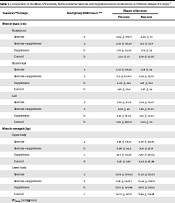
Background: Recent research indicates the prevalence of vitamin D deficiency worldwide and is conflicting evidence as to whether vitamin D supplementation actually improves physical performance. Objectives: The purpose of this study was to investigate the effect of vitamin D supplementation on improving muscle strength, muscle volume and cardiorespiratory fitness through resistance training in male athletes with vitamin D deficiency. Methods: This study was conducted with pre-test and post-test series design and quasi-experimental method. The population included 36 male futsal players with vitamin D deficiency that were randomly divided into four groups of nine: exercise (EX), exercise-supplement (EXS), supplement (SUP) and control (CON). SUP and EXS groups received vitamin D3 (50,000 intramuscular injections) every two weeks for 8 weeks and performed three resistance training (RT) sessions per week at a rate of 75% 1RM. Before and after intervention, blood sampling were drawn and measurements performed for 1RM, muscle volume (cm2), and VO2max by standard Bruce test. Correlated t-test was used to compare pre-test and post-test results and to measure the differences between groups, one-way analysis of variance and LSD post hoc test were used using SPSS statistical software. Results: Muscle volume increased significantly (P-value = 0.001) only in EX and EXS groups. Cardio-respiratory fitness did not change significantly in any of the groups (P > 0.05). There were no significant differences between EXS and SUP groups for any of the measured variables (P ≥ 0.05). Conclusions: It seems that simultaneous application of vitamin D supplementation and resistance training for 8 weeks does not have a significant effect on the improvement of the strength and endurance of futsal players.Downloads
Download data is not yet available.
Downloads
Publication Timeline
Published
Issue
Section
Articles
How to Cite
Motavari, M., Seifi-Skishahr, F., Nabilpour, M., Mayhew, J., Mamshali, E., & Afroundeh, R. (2022). The Effect of Vitamin D Supplementation After Resistance Training on Physiological Characteristics in Futsal Players with Vitamin D Deficiency. International Journal of Sport Studies for Health, 5(1), 41-47. https://doi.org/10.61838/kman.intjssh.5.1.6