Emotional Intelligence: A Systematic Comparison Between Young Athletes and Non-athletes, Gender and Age Groups
DOI:
https://doi.org/10.61838/kman.intjssh.5.1.3Keywords:
Emotion, Intelligence, Gender, Age, Sport StatusAbstract
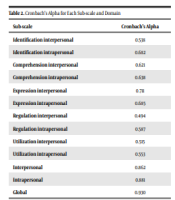
Background: Emotional intelligence (EI) and emotional competence (EC) are considered as multidimensional strategies for dealing with various complex situations. There are conflicting results regarding the effect of age, gender and sports status on EI and EC dimensions. Objectives: In the present study, we compared the EI between young athletes and non-athletes, as well as in terms of both genders and different age groups Methods: Four hundred seventy-nine young individuals (239 athletes, 240 non-athletes) aged 12 - 18 years old participated in this study. They were classified according to their age (12 - 15 years and 16 - 18 years) and gender (239 male, 240 female). All participants completed the Profile of Emotional Competence (PEC); for assessing the intra- and interpersonal EC and global EI. Results: Athletes had significantly higher values of global EI and altogether the intra- and interpersonal EC dimensions (all, P < 0.001). The comparison between genre and age groups highlighted those males and younger participants showed significantly higher components for both inter- and intrapersonal EC and global EI than females and older participants respectively (0.05 < P < 0.001). Conclusions: Based on the result of the current study, we conclude that engagement and involvement in sports can be considered as a key factor for developing adequate EI. Psychologists and sport-scientists need to be aware about the specific-related psychological skills for both age and gender requirements, particularly EI.Downloads
Download data is not yet available.
Downloads
Publication Timeline
Published
Issue
Section
Articles
How to Cite
Aouani, H., Slimani, M., Ghouili, H., Tod, D., Znazen, H., Bragazzi, N. L., Hamrouni, S., Chtara, M., & Elloumi, M. (2022). Emotional Intelligence: A Systematic Comparison Between Young Athletes and Non-athletes, Gender and Age Groups. International Journal of Sport Studies for Health, 5(1), 14-23. https://doi.org/10.61838/kman.intjssh.5.1.3