Effects of Aquatic Exercise and Transcranial Direct Current Stimulation on Motor Skills and Cognitive Functions in Children with Autism Spectrum Disorder
DOI:
https://doi.org/10.61838/kman.intjssh.4522Keywords:
Neuroplasticity, Executive Function Enhancement, Motor Learning, Neurorehabilitation in AutismAbstract
Objective: Children with autism spectrum disorder (ASD) experience distinctive neurophysiological characteristics associated with impairments in motor coordination, balance, and executive function. In recent years, aquatic exercise (hydrotherapy) and transcranial direct current stimulation (tDCS) have been introduced as promising non-invasive interventions targeting these deficits. While each approach has shown therapeutic potential when used independently, the combined effects of these interventions remain underexplored. This study aimed to examine the integrated impact of aquatic exercise and tDCS on motor performance and cognitive flexibility in children with ASD.
Methods and Materials: This quasi-experimental study included 30 children aged 7–10 years diagnosed with ASD, randomly assigned to either an experimental group (aquatic exercise + tDCS; n=15) or a sham control group (n=15). The intervention lasted six weeks and comprised 18 sessions. Motor performance was assessed using the Bruininks–Oseretsky Test of Motor Proficiency (BOT-2), and cognitive flexibility was evaluated through the Wisconsin Card Sorting Test (WCST). Data were analyzed using analysis of covariance (ANCOVA) to compare pre- and post-test differences between groups.
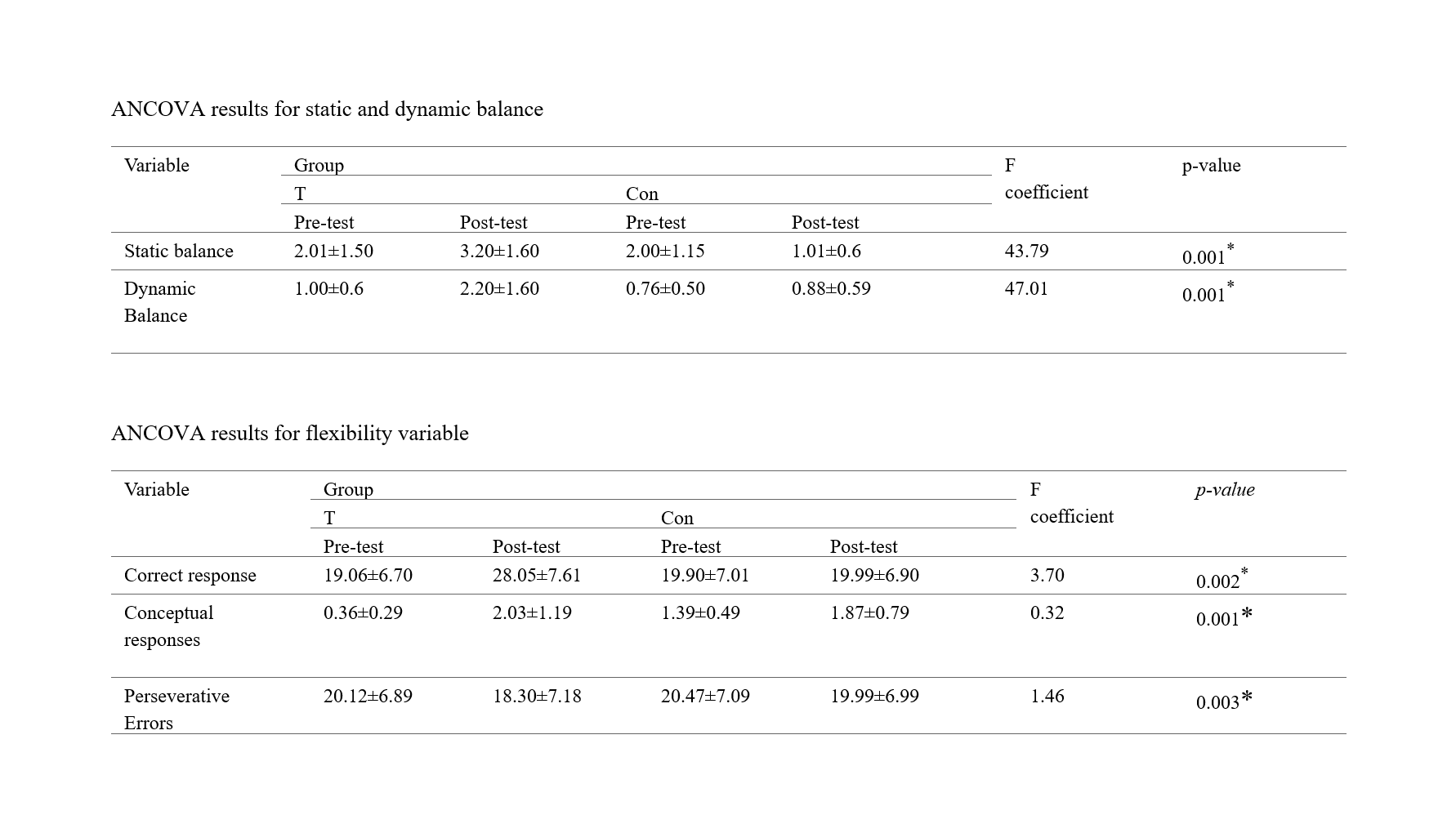
Result: The analysis revealed significant post-intervention improvements in both static and dynamic balance, as well as cognitive flexibility, in the experimental group compared with the sham group (P<0.05). These findings suggest that the combined intervention effectively enhanced both motor and executive functions in children with ASD.
Conclusion: The results indicate that combining aquatic exercise with transcranial direct current stimulation can produce synergistic effects, improving balance and cognitive flexibility in children with autism spectrum disorder. This integrated, non-invasive approach may represent a valuable adjunct to conventional rehabilitation methods, though larger-scale studies with follow-up assessments are recommended to confirm long-term efficacy.
Downloads
References
1. Bicks LK, Geschwind D. Functional neurogenomics in autism spectrum disorders: A decade of progress. Current Opinion in Neurobiology. 2024;86:102858.
2. Inal‐Kaleli I, Dogan N, Kose S, Bora E. Investigating the Presence of Autistic Traits and Prevalence of Autism Spectrum Disorder Symptoms in Anorexia Nervosa: A Systematic Review and Meta‐Analysis. International Journal of Eating Disorders. 2025;58(1):66-90.
3. Daniel KS, Jiang Q, Wood MS. The Increasing Prevalence of Autism Spectrum Disorder in the US and Its Implications for Pediatric Micronutrient Status: A Narrative Review of Case Reports and Series. Nutrients. 2025;17(6):990.
4. Chistol LT, Bandini LG, Must A, Phillips S, Cermak SA, Curtin C. Sensory sensitivity and food selectivity in children with autism spectrum disorder. Journal of autism and developmental disorders. 2018;48:583-91.
5. Turner M. The role of drugs in the treatment of autism. Australian Prescriber. 2020;43(6):185.
6. Rivera RA, Robertson MC, McCleery JP. Exercise Interventions for Autistic People: An Integrative Review of Evidence from Clinical Trials. Current Psychiatry Reports. 2025:1-21.
7. Yang X, Wu J, Tang Y, Ren Z. Effects of anodic transcranial direct current stimulation combined with physical training on the performance of elite swimmers. Frontiers in Physiology. 2024;15:1383491.
8. Steinberg F, Pixa NH, Fregni F. A review of acute aerobic exercise and transcranial direct current stimulation effects on cognitive functions and their potential synergies. Frontiers in Human Neuroscience. 2019;12:534.
9. Faraji S, Najafabadi MG, Zandi HG, Shaw I. Effect of aquatic therapy on motor skill and executive function in children with autism spectrum disorder. South African Journal for Research in Sport, Physical Education and Recreation. 2023;45(2):17-27.
10. Marzouki H, Soussi B, Selmi O, Hajji Y, Marsigliante S, Bouhlel E, et al. Effects of Aquatic Training in Children with Autism Spectrum Disorder. Biology 2022, 11, 657. s Note: MDPI stays neutral with regard to jurisdictional claims in published …; 2022.
11. Chen X-L, Yu L-P, Zhu Y, Wang T-Y, Han J, Chen X-Y, et al. Combined effect of hydrotherapy and transcranial direct-current stimulation on children with cerebral palsy: A protocol for a randomized controlled trial. Medicine. 2021;100(49):e27962.
12. Markowska A, Tarnacka B. Molecular Changes in the Ischemic Brain as Non-Invasive Brain Stimulation Targets—TMS and tDCS Mechanisms, Therapeutic Challenges, and Combination Therapies. Biomedicines. 2024;12(7):1560.
13. Luckhardt C, Boxhoorn S, Schuetz M, Fann N, Freitag CM. Brain stimulation by tDCS as treatment option in Autism Spectrum Disorder—A systematic literature review. Progress in brain research. 2021;264:233-57.
14. Cenci GI, Rocha RB, Ferreira Bomtempo F, Nager GB, Silva GD, Figueiredo EG, et al. Efficacy of transcranial direct current stimulation in patients with dysphagia after stroke: a systematic review. Neurological Sciences. 2024;45(5):2119-25.
15. Najafabadi MG, Saghaei B, Shariat A, Ingle L, Babazadeh-Zavieh SS, Shojaei M, et al. Validity and reliability of the movement assessment battery second edition test in children with and without motor impairment: A prospective cohort study. Annals of Medicine and Surgery. 2022;77:103672.
16. Miles S, Howlett CA, Berryman C, Nedeljkovic M, Moseley GL, Phillipou A. Considerations for using the Wisconsin Card Sorting Test to assess cognitive flexibility. Behavior research methods. 2021;53(5):2083-91.
17. Murphy KL, Liu M. Water Orientation Skills and Basic Safety and Swimming Skills of Children with Autism Spectrum Disorder. International Journal of Aquatic Research and Education. 2025;14(4):5.
18. Shariat A. Musculoskeletal disorders and their relationship with physical activities among office workers: a review. Malaysian Journal of Public Health Medicine. 2016:62-74.
19. Ansari S, Hosseinkhanzadeh AA, AdibSaber F, Shojaei M, Daneshfar A. The effects of aquatic versus kata techniques training on static and dynamic balance in children with autism spectrum disorder. Journal of Autism and Developmental Disorders. 2021;51:3180-6.
20. Oftadegan M, Moghadas Tabrizi Y, Minoonejad H. Enhancing neuromuscular training effect on balance and gait in autistic children by transcranial direct current stimulation. Sport Sciences and Health Research. 2023;15(2):181-91.
21. Chen Y-CB, Lin H-Y, Wang L-J, Hung K-C, Brunoni AR, Chou P-H, et al. A network meta-analysis of non-invasive brain stimulation interventions for autism spectrum disorder: evidence from randomized controlled trials. Neuroscience & Biobehavioral Reviews. 2024:105807.
22. Radwan A, Eltalawy HA, Abdelziem FH, Macaluso R, O’Brien MK, Jayaraman A. Effect of Transcranial Direct Current Stimulation versus Virtual Reality on Gait for Children with Bilateral Spastic Cerebral Palsy: A Randomized Clinical Trial. Children. 2023;10(2):222.
23. Stins JF, Emck C. Balance performance in autism: A brief overview. Frontiers in psychology. 2018;9:901.
24. Zhao P, Chen K, Zhu G, Li H, Chen S, Hu J, et al. Effects of aquatic exercise intervention on executive function and brain-derived neurotrophic factor of children with autism spectrum disorder. Research in Developmental Disabilities. 2024;150:104759.
25. Elmaghraby R, Blank E, Miyakoshi M, Gilbert DL, Wu SW, Larsh T, et al. Probing the Neurodynamic Mechanisms of Cognitive Flexibility in Depressed Individuals with Autism Spectrum Disorder. Journal of Child and Adolescent Psychopharmacology. 2025.
Downloads
Additional Files
Publication Timeline
- Submitted
- Revised
- Accepted