From Motivation to Action: Investigating the Impact of Theory of Planned Behavior Components on the Use of Performance-Enhancing Substances in Young Iraqi Weightlifters
DOI:
https://doi.org/10.61838/kman.hn.3.1.5Keywords:
Theory of Planned Behavior, perceived behavioral control, attitude, subjective norms, dietary supplements, performance-enhancing substances, weightliftingAbstract
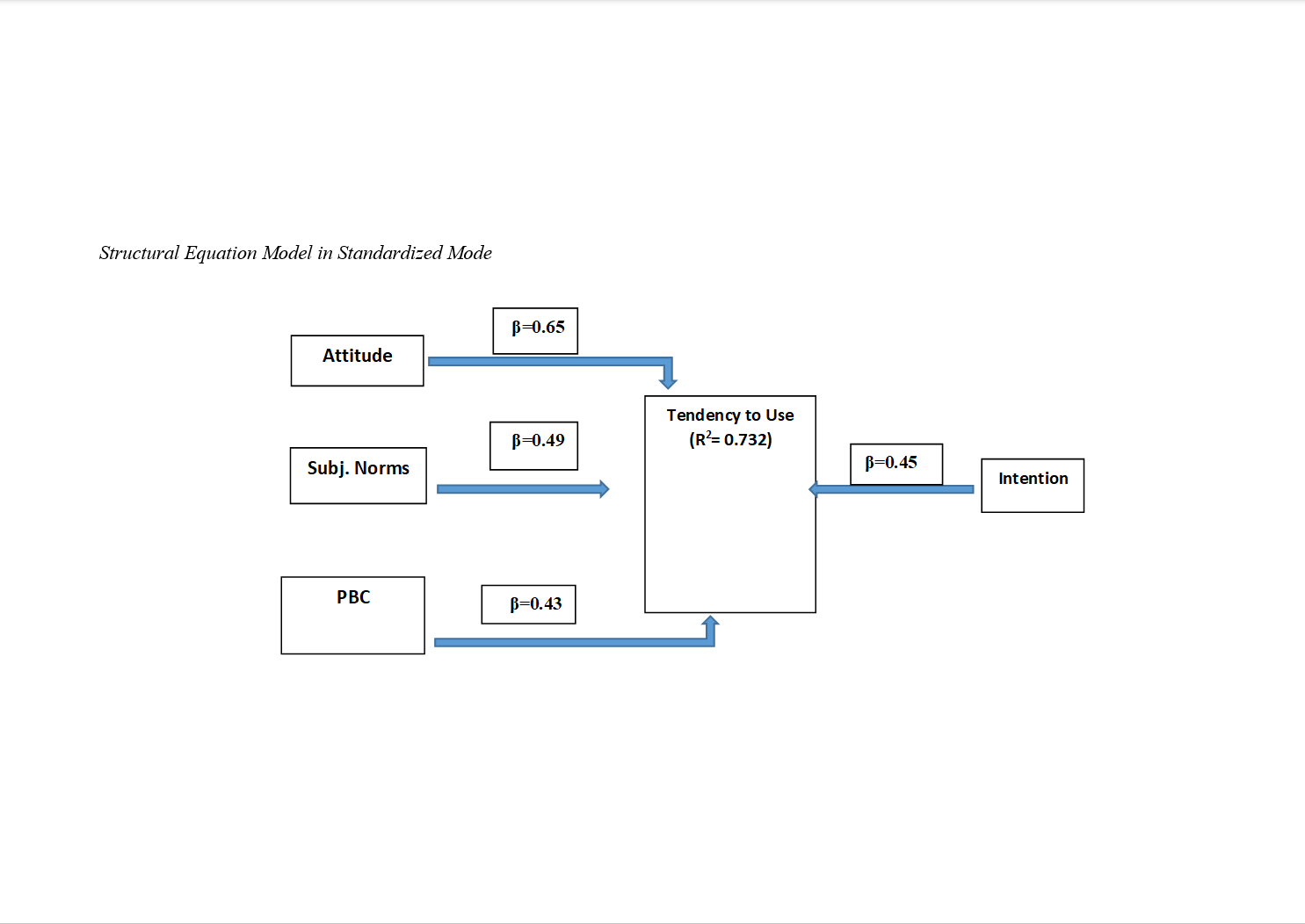
The use of dietary supplements among athletes (including weightlifters) is highly prevalent. The aim of the present study was to analyze the components influencing the consumption of dietary supplements and performance-enhancing substances based on the Theory of Planned Behavior among young Iraqi weightlifters. This study employed a descriptive-correlational design and was conducted using a survey method. The statistical population consisted of 376 active weightlifters from 17 cities in Iraq during the years 2023–2024, of whom 324 individuals were selected using proportional stratified random sampling. A researcher-made questionnaire was used to measure the variables under investigation. This questionnaire was designed to assess the levels of attitude, perceived behavioral control, and subjective norms regarding the consumption of dietary supplements and performance-enhancing substances. The reliability of the questionnaire was confirmed with a Cronbach’s alpha coefficient above 0.70, and its validity was approved by experts in the field of sports. Data were analyzed using SPSS version 25 and SmartPLS software. The findings revealed that there is a significant and positive relationship between attitude (β = 0.653, P = 0.001), subjective norms (β = 0.498, P = 0.001), and perceived behavioral control (β = 0.498, P = 0.001) with the consumption of dietary supplements and performance-enhancing substances among young Iraqi weightlifters. Young Iraqi weightlifters are influenced by a complex set of psychological factors that drive them toward the use of dietary supplements and performance-enhancing substances, thereby increasing the prevalence of such behaviors among these athletes. It is recommended to organize educational and awareness programs about the negative consequences of using performance-enhancing substances, ethical considerations, and healthy alternatives for improving sports performance. These efforts can help in changing attitudes, reducing social pressure, and supporting young Iraqi weightlifters in achieving their athletic goals.
Downloads
References
1. Akoğlu HE, Ayyıldız E, Sunay H, editors. Uluslararası spor organizasyonlarına katılan sporcuların sporda ahlaktan uzaklaşma ve sportmenlik davranışlarının incelenmesi. Dünya Spor Bilimleri Araştırmaları Kongresi; 2019.
2. Ayyildiz E. Toplumun uluslararasi spor organizasyonlarina bakiş açisinin incelenmesi. Uluslararası Güncel Eğitim Araştırmaları Dergisi. 2021;7(2):630-41.
3. Gülü M, DoĞAn AA. The Effect of 6 Week Nordic Hamstring Exercise on Sprint and Jumping Performance. Spor Bilimleri Araştırmaları Dergisi. 2021;6(2):421-30. doi: 10.25307/jssr.978869.
4. Horwitz H, Andersen J, Dalhoff K. Health consequences of androgenic anabolic steroid use. Journal of internal medicine. 2019;285(3):333-40. doi: 10.1111/joim.12850.
5. Lucidi F. The social cognitive mechanisms regulating doping behavior. Frontiers in Psychology. 2017;8:1-8.
6. Lucidi F, Grano C, Leone L, Lombardo C, Pesce C. Determinants of the intention to use doping substances: an empirical contribution in a sample of Italian adolescents. International journal of sport psychology. 2004. doi: 10.1037/e547922012-223.
7. Lucidi F, Mallia L, Alivernini F, Chirico A, Manganelli S, Galli F, et al. The effectiveness of a new school-based media literacy intervention on adolescents' doping attitudes and supplements use. Frontiers in psychology. 2017;8:749. doi: 10.3389/fpsyg.2017.00749.
8. Lucidi F, Zelli A, Mallia L, Grano C, Russo PM, Violani C. the social-cognitive mechanisms regulating adolescents' use of doping substances. Journal of sports sciences. 2008;26(5):447-56. doi: 10.1080/02640410701579370.
9. Bagge AL, Rosén T, Fahlke C, Ehrnborg C, Eriksson B, Moberg T, et al. Somatic effects of AAS abuse: A 30-years follow-up study of male former power sports athletes. Journal of science and medicine in sport. 2017;20IS - 9:814-8. doi: 10.1016/j.jsams.2017.03.008.
10. Holt RI, Erotokritou-Mulligan I, Sönksen PH. The history of doping and growth hormone abuse in sport. Growth Hormone & IGF Research. 2009;19(4):320-6. doi: 10.1016/j.ghir.2009.04.009.
11. Gleaves J, Christiansen AV. Athletes' perspectives on WADA and the code: a review and analysis. International journal of sport policy and politics. 2019;11(2):341-53. doi: 10.1080/19406940.2019.1577901.
12. Petroczi A. Attitudes and doping: a structural equation analysis of the relationship between athletes' attitudes, sport orientation and doping behaviour. Substance abuse treatment, prevention, and policyVL - 2. 2007:1-15. doi: 10.1186/1747-597X-2-34.
13. Petroczi A. the doping mindset-Part I: Implications of the functional use theory on mental representations of doping. Performance Enhancement & Health. 2013;2(4):153-63. doi: 10.1016/j.peh.2014.06.001.
14. Petróczi A, Aidman E. Measuring explicit attitude toward doping: Review of the psychometric properties of the Performance Enhancement Attitude Scale. Psychology of Sport and Exercise. 2009;10(3):390-6. doi: 10.1016/j.psychsport.2008.11.001.
15. Petroczi A, Strauss B. Understanding the psychology behind performance-enhancement by doping. Psychology of Sport and Exercise. 2015;16:137-9. doi: 10.1016/j.psychsport.2014.09.002.
16. Haugen KK, Nepusz T, Petroczi A. The multi-player performance-enhancing drug game. PloS one. 2013;8(5):e63306. doi: 10.1371/journal.pone.0063306.
17. Hauw D, Mohamed S. Patterns in the situated activity of substance use in the careers of elite doping athletes. Psychology of Sport and Exercise. 2015;16:156-63. doi: 10.1016/j.psychsport.2013.09.005.
18. Morente-Sánchez J, Zabala M. Doping in sport: a review of elite athletes' attitudes, beliefs, and knowledge. Sports Medicine. 2013;43(6):395-411. doi: 10.1007/s40279-013-0037-x.
19. Ntoumanis N, Ng JY, Barkoukis V, Backhouse S. Personal and psychosocial predictors of doping use in physical activity settings: a meta-analysis. Sports Medicine. 2014;44(11):1603-24. doi: 10.1007/s40279-014-0240-4.
20. Alipour M, Mohammadi R, Hosseini S. Investigating psychological factors affecting performance-enhancing substance use in athletes. Journal of Sports Science. 2021;12(3):45-60.
21. Hosseini A, Mohammadi R, Norouzi K. Consequences of performance-enhancing substance use in professional athletes. Iranian Journal of Sports Science. 2022;15(2):78-95.
22. Ajzen I. The theory of planned behavior: Frequently asked questions. Human Behavior and Emerging Technologies. 2020;2(4):314-24. doi: 10.1002/hbe2.195.
23. Vafaeenajar A, Masihabadi M, Moshki M, Ebrahimipour HTH, Esmaily H. Determining the theory of planned behavior's predictive power on adolescents' dependence on computer games. Iranian journal of health education and health promotion. 2015;2(4):303-11.
24. Alemi A, Rezaian Kochi MH, Mishki M. The application of the theory of planned behavior in predicting the intention and behavior of tobacco use prevention among students of Gonabad University of Medical Sciences2014.
25. Ghahrmani L, Nazari M. Comparison of how to predict sports intentions and behaviors based on the theory of self-efficacy and the theory of planned behavior2013.
26. Armitage CJ, Conner M. Efficacy of the theory of planned behaviour: A meta‐analytic review. British journal of social psychology. 2001;40(4):471-99. doi: 10.1348/014466601164939.
27. Samoggia A, Rossi G, Argiriou N. What drives consumers' intention towards fairness-oriented products purchasing? An emotion-extended model of theory of planned behaviour. Heliyon. 2025;11(1):e41285.
28. Ullah I. Integrating Social Media-Based Community of Inquiry With Theory of Planned Behavior to Promote Equitable Educational Intentions Among Pre-Service Teachers in Gilgit Baltistan, Pakistan. Frontiers in Psychology. 2024;14. doi: 10.3389/fpsyg.2023.1150421.
29. Pourfaraj A, Razavi S. The role of perceived behavioral control in doping prevention. Journal of Ethics in Sport. 2020;5(1):32-48.
30. Zelli A. Social cognitive predictors of doping intentions in elite-level athletes. Journal of Sports Sciences. 2019;37(5):537-44.
31. Al-Husseini M. Doping in Middle Eastern sports: A review of current evidence. Asian Journal of Sports Medicine. 2022;13(1):e12345.
32. Nakhai MR, Pakrovan M. Studying the frequency and causes of nutritional supplements consumption among athletes in Kerman city gyms, 20132014.
33. Peterson CC, Wellman HM, Liu D. Steps in theory‐of‐mind development for children with deafness or autism. Child development. 2005;76(2):502-17. doi: 10.1111/j.1467-8624.2005.00859.x.
34. Hurst P. Are dietary supplements a gateway to doping? A retrospective survey of athletes' substance use. Substance Use & Misuse. 2023;58(3):365-70. doi: 10.1080/10826084.2022.2161320.
35. Ali MA, Ali N. Prevalence and Attitudes of Supplement Use among Bodybuilders and Weightlifters in Iraq. Journal of Sports Sciences. 2018;36(8):1234-41.
36. Bagheri Sheykhangafshe F, Shabahang R, Kukli M, Sedighian SF, Alizadeh D. the role of dark triad personality and mental toughness in predicting bodybuilders' attitude toward Doping. Journal of Sports Psychology. 2021;13(2):1-13.
37. Mettler S, Lehner G, Morgan G. Widespread supplement intake and use of poor quality information in elite adolescent Swiss athletes. International journal of sport nutrition and exercise metabolism. 2021;32(1):41-8. doi: 10.1123/ijsnem.2021-0043.
38. Saxe R, Kanwisher N. People thinking about thinking people: the role of the temporo-parietal junction in "theory of mind": Psychology Press; 2013. 171-82 p.
39. Nelson K, Plesa Skwerer D, Goldman S, Henseler S, Presler N, Fried Walkenfeld F. entering a community of minds: An experiential approach to 'theory of mind'. Human Development. 2003;46(1):24-46. doi: 10.1159/000067779.
40. Vinden PG, Astington JW. Culture and understanding other minds. Ajzen, I (1991) The theory of planned behavior Organizational Behavior and Human Decision Processes. 2000;50(2):179-211. doi: 10.1016/0749-5978(91)90020-T.
41. Barati M, Elahwardipour H, Moini B, Farhadi Nasab A, Mahjoub H, Jalilian F. The effectiveness of teaching assertiveness skills in reducing abstract norms encouraging drug use among students. Scientific Journal of the University of Science Hamedan Medicine and Healthcare Services. 2013;18(3):49-0.
42. Kavussanu M, Ntoumanis N. Participation in sport and moral functioning: Does ego orientation mediate their relationship? Journal of Sport and Exercise Psychology. 2003;25(4):501-18. doi: 10.1123/jsep.25.4.501.
43. Safari M, Shojaizadeh D, Ghofranipour F, Haydarnia A, Pakpour Haji Agha A. Theories, models and methods of health education and health promotion (4th edition (in Persian) Ed.). Tehran: Sobhan Art Publications; 2016.
44. Grist P. The Relationship Between the World Anti-doping Agency's Spirit of Sport Values & Anti-doping Beliefs Among Elite US Athletes: Direct-Based Measures Using the Theory of Planned Behavior 2023.
45. Campbell A, Carins J, Rundle-Thiele S, Deshpande S, Baker B. Motivators of indiscriminate and unsafe supplement use among young Australians. International journal of environmental research and public health. 2021;18(19):9974. doi: 10.3390/ijerph18199974.
46. Chein J, Albert D, O'Brien L, Uckert K, Steinberg L, Espeño PR, et al. Analysis of Actual Fitness Supplement Consumption among Health and Fitness Enthusiasts. Foods. 2011;13(9):1424. doi: 10.1111/j.1467-7687.2010.01035.x 10.3390/foods13091424.
47. Pickett W, Dostaler S, Craig W, Janssen I, Simpson K, Shelley SD, et al. Associations between risk behavior and injury and the protective roles of social environments: an analysis of 7235 Canadian school children. Injury Prevention. 2006;12:87-92. doi: 10.1136/ip.2005.011106.
Downloads
Additional Files
Publication Timeline
- Submitted
- Revised
- Accepted
License
Copyright (c) 2024 Salih Mahdi Mukheef Fatlawi (Author); Hamid Zahedi (Corresponding Author); Ali Shaboot Ibrahim, Rokhsare Badami (Author)

This work is licensed under a Creative Commons Attribution-NonCommercial 4.0 International License.