Intrapersonal Conflict Resolution Mechanisms in Women with High Trait Shame: A Qualitative Study
DOI:
https://doi.org/10.61838/kman.pwj.4331Keywords:
Trait shame, intrapersonal conflict, women’s mental health, qualitative research, emotional regulation, cognitive coping, self-compassionAbstract
Objective: This study aimed to explore the intrapersonal conflict resolution mechanisms employed by women with high trait shame through a qualitative lens.
Methods and Materials: A qualitative phenomenological research design was employed to investigate the lived experiences of 21 women residing in Georgia who reported persistently high levels of trait shame. Participants were recruited using purposive sampling, and data collection continued until theoretical saturation was achieved. Semi-structured, in-depth interviews were conducted to gather detailed personal narratives. All interviews were audio-recorded, transcribed verbatim, and analyzed using Braun and Clarke’s thematic analysis approach with the support of NVivo 14 software. Trustworthiness of the data was ensured through member checking, peer debriefing, and audit trails.
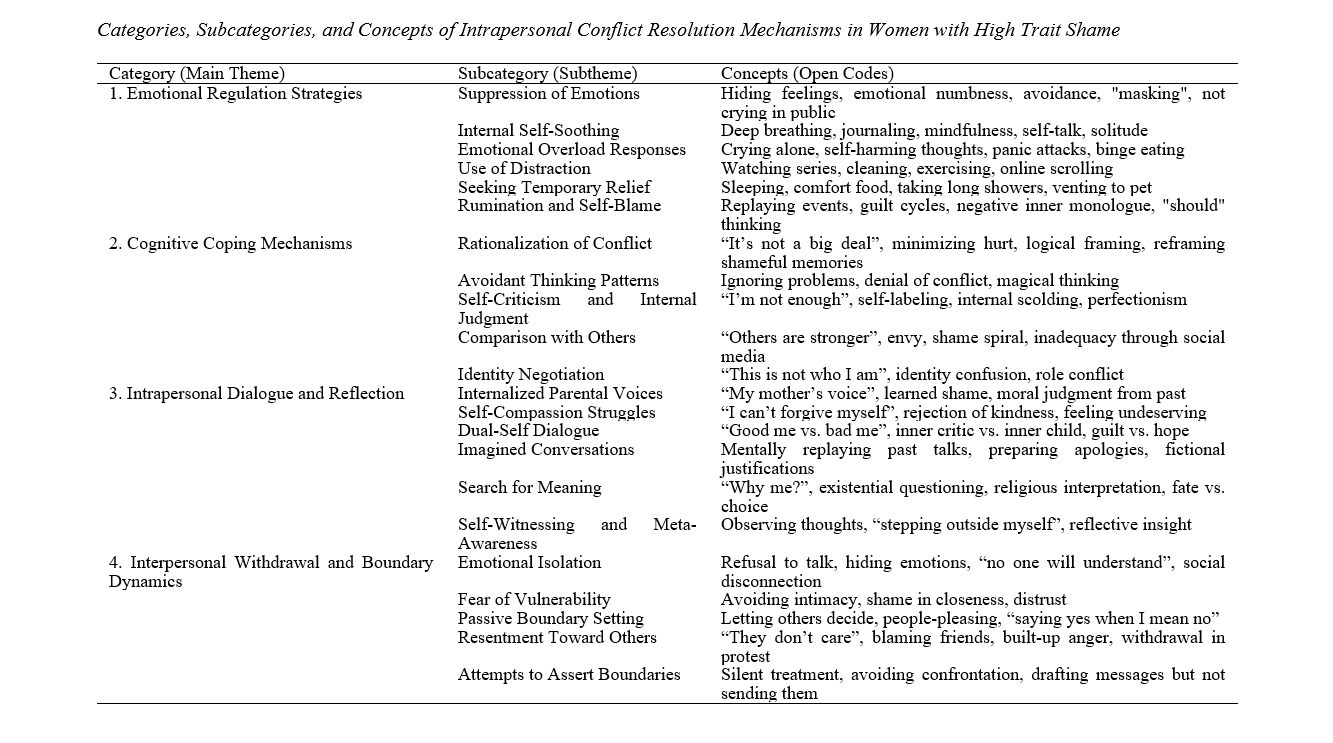
Findings: Thematic analysis revealed four major categories of intrapersonal conflict resolution: (1) Emotional Regulation Strategies, including suppression, self-soothing, and distraction; (2) Cognitive Coping Mechanisms, such as rationalization, self-criticism, and identity negotiation; (3) Intrapersonal Dialogue and Reflection, encompassing internalized parental voices, dual-self conversations, and self-compassion struggles; and (4) Interpersonal Withdrawal and Boundary Dynamics, characterized by emotional isolation, fear of vulnerability, and covert boundary-setting. Participants often demonstrated complex internal negotiations, marked by inner conflict, shame resilience attempts, and reflective awareness. The findings align with existing literature on shame, psychological distress, and gendered identity development.
Conclusion: These findings highlight the importance of therapeutic interventions that foster self-compassion, emotional awareness, and identity integration. Understanding these mechanisms provides critical insight into the internal lives of shame-affected women and offers a foundation for culturally informed mental health support.
Downloads
References
Aini, N., Lestari, D., & Nurrahmi, H. (2025). Cognitive Restructuring Techniques in Increasing Self-Confidence of Body Shaming Victims Shaming Student of SMK N 8 Pontianak. Counseling as Syamil Jurnal Ilmiah Bimbingan Konseling Islam, 4(2), 41-51. https://doi.org/10.24260/as-syamil.v4i2.3140
Alvarez, D. V. (2020). Using Shame Resilience to Decrease Depressive Symptoms in an Adult Intensive Outpatient Population. Perspectives in psychiatric care, 56(2), 363-370. https://doi.org/10.1111/ppc.12443
Bdier, D., Khalili, F., & Mahamid, F. (2024). Gender-Based Violence, Depressive Symptoms, and Stress Among Palestinian Women: The Mediating Role of Feelings of Shame, Resilience, and Anxiety. Psychology of violence. https://doi.org/10.1037/vio0000571
Cabral, J., & Pinto, T. M. (2023). Gender, Shame, and Social Support in LGBTQI+ Exposed to Discrimination: A Model for Understanding the Impact on Mental Health. Social Sciences, 12(8), 454. https://doi.org/10.3390/socsci12080454
Cotter, C. A., O’Neill, M., Stevens, M. N., Sanders, P. G., & Henninger, J. (2023). Counseling With Male Clients: The Case for Relational Resilience Approach. American Journal of Men S Health, 17(3). https://doi.org/10.1177/15579883231179328
Dey, S., & Anandan, D. (2024). Resisters: An Illustrated Project Addressing Shame Among Women. Journal of Illustration, 11(1), 89-114. https://doi.org/10.1386/jill_00086_1
Fatollahzadeh, S., Kianimoghadam, A. S., Bahri, R., Khesali, M., Aghaei, Z. P. S., & Arani, A. M. (2023). The Effectiveness of Compassion-Focused Therapy on Resilience, Shame, Internal Self-Criticism, and Quality of Life of Patients With Vitiligo. Iranian journal of psychiatry and behavioral sciences, 17(4). https://doi.org/10.5812/ijpbs-137483
Febriyani, S. W., & Sa'idah, Z. (2024). Gerakan Perlawanan Body Shaming Melalui Musik Video Lagu Berhak Bahagia. Mukasi Jurnal Ilmu Komunikasi, 3(1), 47-57. https://doi.org/10.54259/mukasi.v3i1.2434
Goffnett, J., Routon, J. M., & Flores, R. (2021). The Construction of Shame and Pride: A Grounded Theory Model of Identity, Emotions, and Wellbeing Among Sexual Minority Adolescents. Youth & Society, 54(2), 289-311. https://doi.org/10.1177/0044118x211019783
Hu, Y. (2025). Advancing Psychological Interventions to Combat Mental Health Stigma and Foster Community Resilience in the Philippines: A Culturally-Informed Framework for Social Development. Ijphmr, 4(1), 13-24. https://doi.org/10.62051/ijphmr.v4n1.03
Khalik, S., Mustika, M., & Hermansyah, S. (2022). The Siri’ Culture of Makassar Women in Pakarena Anida Dance. Loj, 8(1), 55-59. https://doi.org/10.55678/loj.v8i1.601
Kurbatfinski, S., Létourneau, N., Novick, J., Marshall, S., Griggs, K., McBride, D. L., & Nixon, K. L. (2025). “Don’t You Love Me?” Abusers’ Use of Shame-to-Guilt to Coercively Control 2SLGBTQQIA+ Individuals and Rural Women Experiencing Intimate Partner Violence. Women S Health, 21. https://doi.org/10.1177/17455057251335361
Li, P., Jiang, J. J., Han, M., Fu, S., Bai, X., & Wang, X. (2024). The Relationship Between Psychological Resilience and Learning Engagement of College Students: Moderated Mediation Effects of Upward Social Comparison and Shame. https://doi.org/10.21203/rs.3.rs-5040948/v1
McHugh, M. C. (2020). Menstrual Shame: Exploring the Role of ‘Menstrual Moaning’. 409-422. https://doi.org/10.1007/978-981-15-0614-7_32
Muayyanah, F., Khuzaemah, E., & Mulyaningsih, I. (2022). Celaan Fisik Pada Film Imperfect Karya Ernest Prakasa (Kajian Mitos Kecantikan Naomi Wolf). Medan Makna Jurnal Ilmu Kebahasaan Dan Kesastraan, 20(1), 85. https://doi.org/10.26499/mm.v20i1.4128
Mustafa, M. T., Sukarno, S., & Setiawan, I. (2024). Analysis of Body Shaming Construction on Women in the Film "Imperfect”. Ijeltal (Indonesian Journal of English Language Teaching and Applied Linguistics), 9(2), 289. https://doi.org/10.21093/ijeltal.v9i2.1712
Nelson, N., Hakhmigari, M. K., & Horesh, N. (2022). Initiating Salary Negotiations: A Mixed-Methods Study Into the Effects of Gender, Shame and Pay-Raise Justifications. International Journal of Conflict Management, 34(2), 317-338. https://doi.org/10.1108/ijcma-02-2022-0025
Pineau, C., Williams, P. L., Brady, J., Waddington, M., & Frank, L. (2021). Exploring Experiences of Food Insecurity, Stigma, Social Exclusion, and Shame Among Women in High-Income Countries: A Narrative Review. Canadian Food Studies / La Revue Canadienne Des Études Sur L Alimentation, 8(3). https://doi.org/10.15353/cfs-rcea.v8i3.473
Quiroga-Garza, A., & Cavalera, C. (2024). The Resilience Factor: Examining Its Potential to Alleviate Shame and Guilt in School Bullying. Journal of interpersonal violence. https://doi.org/10.1177/08862605241270075
Yue, J. (2021). Speaking Shame and Laughing It Off: Using Humorous Narrative to Conquer the Shame of Anorectal Illness. Qualitative Health Research, 31(5), 847-858. https://doi.org/10.1177/1049732320987832
Zainiya, M. A., & Aesthetika, N. M. (2022). John Fiske’s Semiotic Analysis About Body Shaming in Imperfect Film. Indonesian Journal of Cultural and Community Development, 11. https://doi.org/10.21070/ijccd2022773
Downloads
Additional Files
Publication Timeline
- Submitted
- Revised
- Accepted
Issue
Section
License
Copyright (c) 2025 Zeynep Acar (Author); Nino Mchedlidze; Rana Kareem (Author)

This work is licensed under a Creative Commons Attribution-NonCommercial 4.0 International License.