
Exploring Identity Shifts in Individuals Undergoing Long-Term Psychodynamic Therapy
DOI:
https://doi.org/10.61838/kman.cp.psynexus.3.8Keywords:
psychodynamic therapy, identity transformation, long-term psychotherapyAbstract
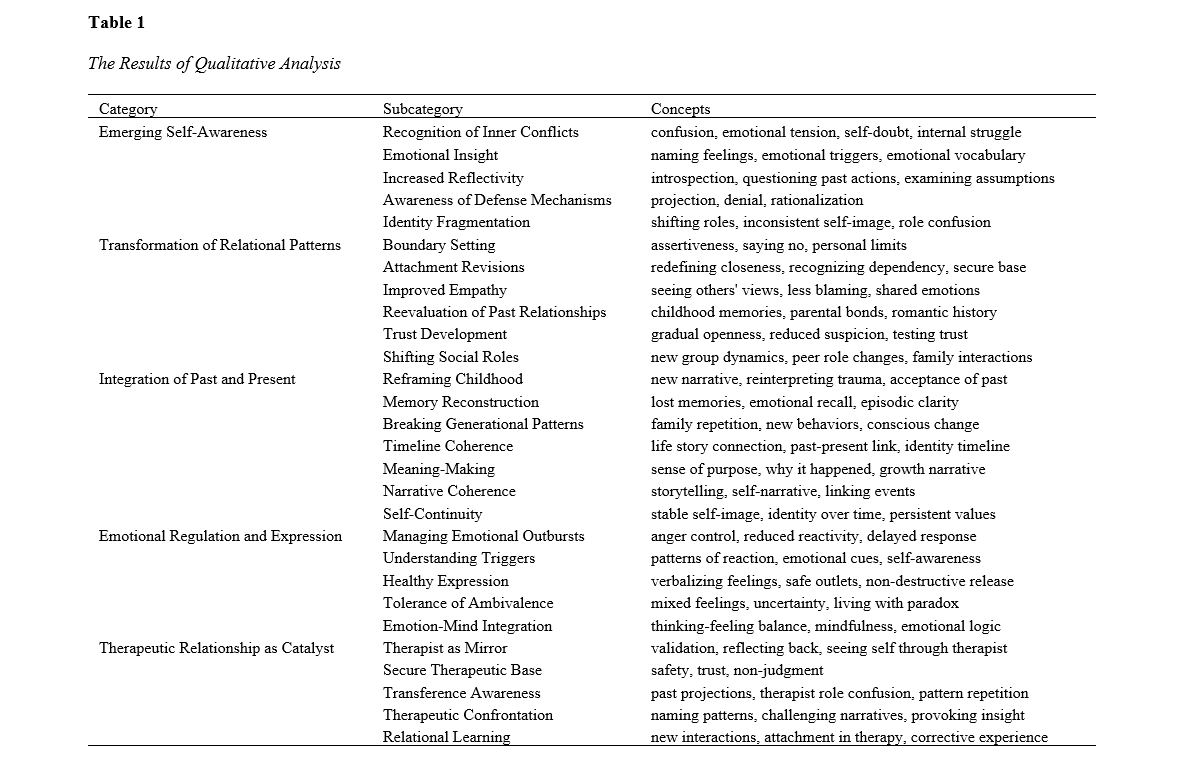
This study aimed to explore the lived experiences of individuals undergoing long-term psychodynamic therapy. This qualitative research employed a phenomenological design to gain an in-depth understanding of identity transformation in therapy. Data were collected through semi-structured interviews with 24 participants from Germany, all of whom had been engaged in psychodynamic therapy for at least two years. Participants were recruited through therapy clinics and online mental health platforms using purposive sampling. The interviews, lasting between 60 to 90 minutes, were transcribed verbatim and analyzed thematically using NVivo software. The process of theoretical saturation was achieved after the 24th interview, and data analysis involved iterative coding and theme development guided by constant comparison. Analysis revealed five major themes reflecting the participants’ experiences of identity shifts: Emerging Self-Awareness, Transformation of Relational Patterns, Integration of Past and Present, Emotional Regulation and Expression, and Therapeutic Relationship as Catalyst. Subthemes included recognition of inner conflicts, emotional insight, boundary setting, reframing childhood, managing emotional outbursts, and relational learning. Participants described a growing sense of coherence, self-continuity, and emotional resilience as therapy progressed. They attributed these changes to the reflective, safe, and relationally rich environment of long-term psychodynamic therapy, where insight, emotional processing, and narrative reconstruction facilitated profound identity development. The findings suggest that long-term psychodynamic therapy supports multidimensional identity transformation by fostering emotional awareness, relational restructuring, narrative integration, and self-reflection. The therapeutic relationship plays a pivotal role as both a mirror and catalyst for these changes. These insights underscore the value of sustained psychodynamic work in addressing complex identity issues and highlight its relevance for individuals with developmental and relational trauma histories.
Downloads
References
Amodeo, A. L., Picariello, S., Valerio, P., Bochicchio, V., & Scandurra, C. (2017). Group Psychodynamic Counselling With Final-Year Undergraduates in Clinical Psychology: A Clinical Methodology to Reinforce Academic Identity and Psychological Well-Being. Psychodynamic Practice, 23(2), 161-180. https://doi.org/10.1080/14753634.2017.1308834
Ardiyani, I. D., & Karimah, A. (2021). Application of Transference Focused Psychotherapy in Borderline Personality Disorders. Jurnal Psikiatri Surabaya, 10(2), 66. https://doi.org/10.20473/jps.v10i2.22396
Barnard, A., & Flotman, A.-P. (2020). Coping Dynamics of Consulting Psychology Doctoral Students Transitioning a Professional Role Identity: A Systems Psychodynamic Perspective. International journal of environmental research and public health, 17(15), 5492. https://doi.org/10.3390/ijerph17155492
Basten, C., & Touyz, S. (2019). Sense of Self: Its Place in Personality Disturbance, Psychopathology, and Normal Experience. Review of General Psychology, 24(2), 159-171. https://doi.org/10.1177/1089268019880884
Cilliers, F. (2018). The Experienced Impact of Systems Psychodynamic Leadership Coaching Amongst Professionals in a Financial Services Organisation. South African Journal of Economic and Management Sciences, 21(1). https://doi.org/10.4102/sajems.v21i1.2091
Harari, E., & Grant, D. C. (2022). Clinical Wisdom, Science and Evidence: The Neglected Gifts of Psychodynamic Thinking. Australian & New Zealand Journal of Psychiatry, 56(6), 594-602. https://doi.org/10.1177/00048674221077622
Haskayne, D., Hirschfeld, R., & Larkin, M. (2014). The Outcome of Psychodynamic Psychotherapies With Individuals Diagnosed With Personality Disorders: A Systematic Review. Psychoanalytic Psychotherapy, 28(2), 115-138. https://doi.org/10.1080/02668734.2014.888675
Ivey, G., & Deans, C. (2019). Y Model Psychotherapy Training: A Qualitative Investigation of Students’ Experiences. American Journal of Psychotherapy, 72(1), 9-20. https://doi.org/10.1176/appi.psychotherapy.20180005
Katzman, J. W. (2018). Narcissism and Its Discontents: Diagnostic Dilemmas and Treatment Strategies With Narcissistic Patients. American Journal of Psychiatry, 175(12), 1269-1270. https://doi.org/10.1176/appi.ajp.2018.18070791
Kirkland, K., & King, S. T. (2019). Rap and Recovery: A Music Therapy Process-Oriented Intervention for Adults With Concurrent Disorders. Aijmt, 13(1). https://doi.org/10.56883/aijmt.2021.157
Leichsenring, F., Steinert, C., & Crits‐Christoph, P. (2018). On Mechanisms of Change in Psychodynamic Therapy. Zeitschrift Für Psychosomatische Medizin Und Psychotherapie, 64(1), 16-22. https://doi.org/10.13109/zptm.2018.64.1.16
Levenson, H., Gay, V., & Binder, J. L. (2023). Exercise 6. Introducing the Rationale for Treatment. 85-94. https://doi.org/10.1037/0000351-008
Malark, A. (2017). Sexuality, Religion, and Atheism in Psychodynamic Treatment. Psychology of Sexual Orientation and Gender Diversity, 4(4), 412-421. https://doi.org/10.1037/sgd0000254
Petriglieri, G. (2020). A Psychodynamic Perspective on Identity as Fabrication. 168-184. https://doi.org/10.1093/oxfordhb/9780198827115.013.22
Rowe, N. (2023). Intersectional Psychodynamic Music Therapy. 195-211. https://doi.org/10.1093/oxfordhb/9780192898364.013.13
Schechter, M., Ronningstam, E., Herbstman, B., & Goldblatt, M. J. (2019). Psychotherapy With Suicidal Patients: The Integrative Psychodynamic Approach of the Boston Suicide Study Group. Medicina, 55(6), 303. https://doi.org/10.3390/medicina55060303
Schruijer, S., & Curşeu, P. L. (2014). Looking at the Gap Between Social Psychological and Psychodynamic Perspectives on Group Dynamics Historically. Journal of Organizational Change Management, 27(2), 232-245. https://doi.org/10.1108/jocm-08-2012-0121
Seiler, N. (2025). Psychodynamic and Psychoanalytic Psychotherapy in the Older Population: A Systematic Review. Journal of Contemporary Psychotherapy. https://doi.org/10.1007/s10879-025-09671-z
Timberlake, A. F. V., & Fesel, D. (2023). The Development of Narrative Identity in the Psychodynamic Treatment of Avoidant Personality Disorder: A Case Study. Frontiers in Psychiatry, 14. https://doi.org/10.3389/fpsyt.2023.1141768
Wijaya, A. R., Septiani, L., & Tirtasari, N. A. (2024). Teori Psikodinamika : Perspektif Multikultural Dalam Trend Pendekatan Psikodinamika. Aktivisme, 1(3), 12-24. https://doi.org/10.62383/aktivisme.v1i3.251
Downloads
Additional Files
Publication Timeline
- Submitted
- Revised
- Accepted
Issue
Section
License

This work is licensed under a Creative Commons Attribution-NonCommercial 4.0 International License.