Examining Factors Contributing to Mental Disorders Among Grade 12 Male Learners in Limpopo Province, South Africa
DOI:
https://doi.org/10.61838/kman.jarac.7.3.11Keywords:
Grade 12 male learners, Help-seeking behaviour, mental health stigma, gender roles, Toxic masculinity, self-harmAbstract
Objective: Male learners usually do not disclose easily about their problems, and this makes them to be more at risk of attempting suicide than adults. This also affects their relationships with their friends, family, colleagues, and community. This study aims to examine the factors that contribute to mental disorders among grade 12 male learners in Limpopo Province, South Africa.
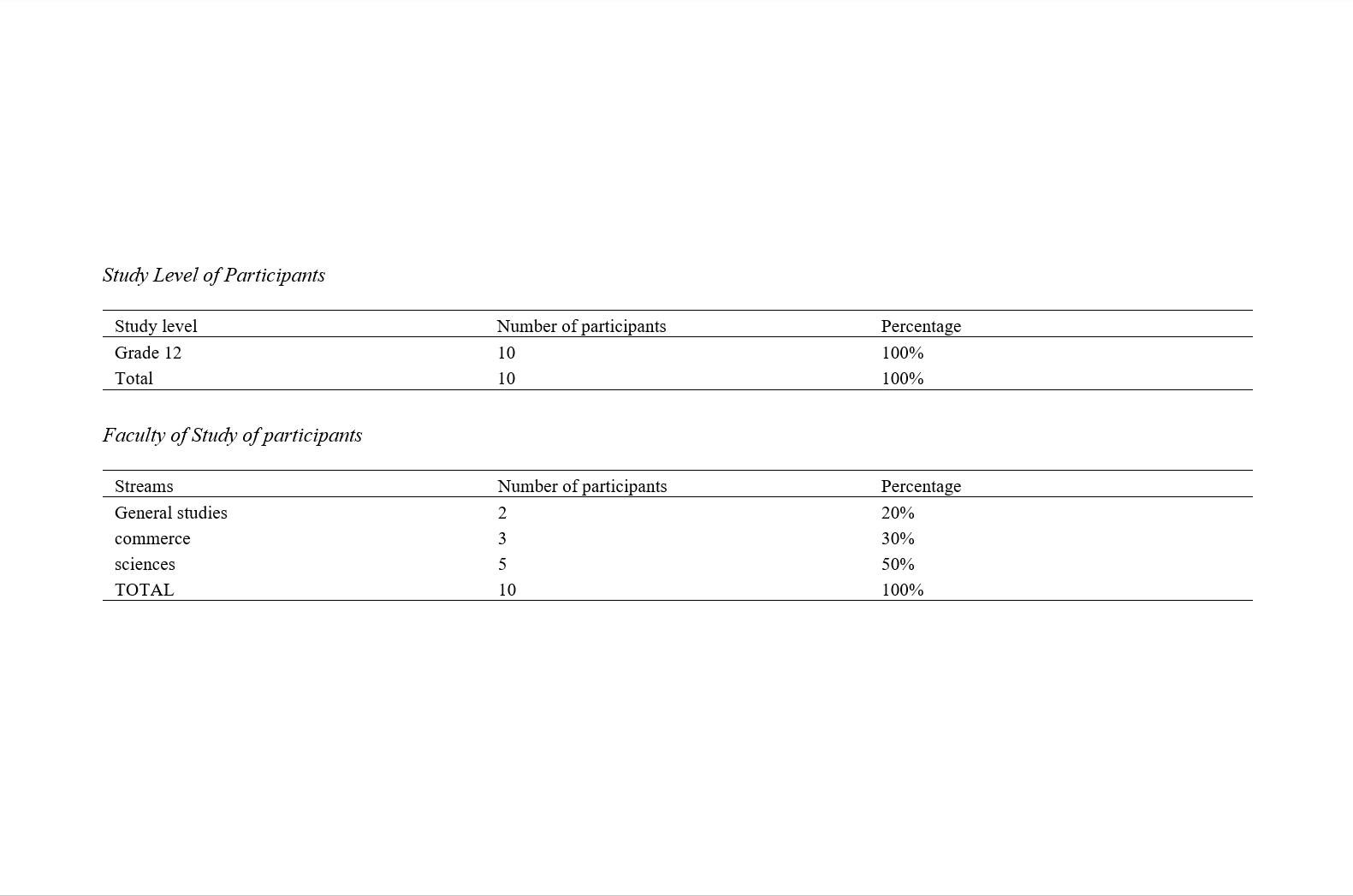
Methods and Materials: This study is qualitative in nature, and the thematic content analysis method is used to analyse and interpret data. The study used semi-structured interviews with 10 male learners about their perceptions on their mental health at schools. Purposive and convenience sampling methods were used in order for the researcher to gather information from 10 male participants who are specifically in intimate relationships and data was collected using semi-structured interviews so to gather as much information as possible so to get more insight about men’s perceptions and awareness on their mental well-being.
Findings: The findings of this study confirmed that learners are aware of their mental health. Majority of the participants believe that their mental health is often overlooked due to societal or cultural norms. For instance, toxic masculinity around male learners.
Conclusion: These norms have a great influence on help-seeking behaviour of learners, majority of male learners do not seek help because they fear that society will regard them as powerless, not man enough, or weak. Researcher recognised challenges that men face when trying to seek help, these include societal expectations, societal norms, and toxic masculinity (gender roles for men). Fear of being mocked, and fear of being rejected are some of the reasons that discourage men from seeking professional help.
Downloads
References
Apalkova, Y., Butovskaya, M. L., Bronnikova, N., Burkova, V., Shackelford, T. K., & Fink, B. (2018). Assessment of male physical risk-taking behavior in a sample of Russian men and women. Evolution. Psychology. Science, 4(3), 314-321. https://doi.org/10.1007/s40806-018-0140-1
Chacin, M., & McBeath, A. (2023). Exploring fathers' experience of their first child's early years: Representations versus reality. European Journal for Qualitative Research in Psychotherapy, 13. https://ejqrp.org/index.php/ejqrp/article/view/229&ved=2ahUKEwjYxKaaypWKAxVX-QIHHa8XHzcQFnoECBwQAQ&usg=AOvVaw2A1yGRltfP68IKFnYX7ZLK
Chatmon, B. N. (2020). Males and Mental Health Stigma. American Journal of Men's Health, 17-19. https://doi.org/10.1177/1557988320949322
Ezeugwu, C. R. (2020). Masculine norms and mental health of African men: what can psychology do? Science Direct, 6(12), 1-6. https://doi.org/10.1016/j.heliyon.2020.e05650
Gragg, J. W., Bishop, L., Gilberts, R., Greg, M., Lowden, T., Mancini, M., Martins de Barros, C., & Wheatstone, P. (2024). Involvement and engagement. [Unspecified Journal Title], 10(39). https://doi.org/10.1186/s40900-024-00572-4
Heywood, M. (2021). Suicide nation: We are humans not numbers. https://verbumetecclesia.org.za/index.php/ve/article/view/2318/5194&ved=2ahUKEwjK5428ypWKAxWuzAIHHZm8N_4QFnoECBsQAQ&usg=AOvVaw0EPih28mTUCk-NMgsmEKps
Komariah, N., & Nihayah, I. (2023). Improving the personality character of students through learning Islamic religious education. At-Tadzkir: Islamic Education Journal, 2(1), 65-77. https://doi.org/10.59373/attadzkir.v2i1.15
Lönn, A., Weurlander, M., Seeberger, A., Hult, H., Thornberg, R., & Wernerson, A. (2023). The impact of emotionally challenging situations on medical students' professional identity formation. Advances in Health Sciences Education, 28(5), 1557-1578. https://doi.org/10.1007/s10459-023-10229-8
McKenzie, S. K., Collings, S., Jenkin, G., & River, J. (2018). Masculinity, Social Connectedness, and Mental Health: Men's Diverse Patterns of Practice. American Journal of Men's Health, 12(5), 1247-1261. https://doi.org/10.1177/1557988318772732
Mthethwa, T. (2018). The Perception of Clinical Depression amongst Black Male University Students in Durban KwaZulu Natal. 83-93. https://core.ac.uk/download/pdf/322918178.pdf&ved=2ahUKEwjHr8_uypWKAxXBywIHHasLFKUQFnoECB0QAQ&usg=AOvVaw32HaKEcRGZXwDyKjlmMiR-
Nugroho, A. S., Sari, R. T., Cahyono, H., Siswanto, P., & Jambari, O. (2023). Investigating causing factors of speaking anxiety. EDUKASIA: Jurnal Pendidikan dan Pembelajaran, 4(2), 1289-1294. https://doi.org/10.62775/edukasia.v4i2.435
Phelan, S. M., Salinas, M., Pankey, T., Cummings, G., Allen, J. S. P., Waniger, A., & Doubeni, C. A. (2023). Patient and health care professional perspectives on stigma in integrated behavioral health: barriers and recommendations. The Annals of Family Medicine, 21(2), S56-S60. https://doi.org/10.1370/afm.2924
Reeves, R. V. (2022). Of boys and men: Why the modern male is struggling, why it matters, and what to do about it. Brookings Institution Press. https://www.amazon.de/-/en/Richard-V-Reeves/dp/0815740662&ved=2ahUKEwjTj_aAy5WKAxVZ3QIHHSzJAHEQFnoECCAQAQ&usg=AOvVaw0jVZLbl8FSvppvyX1Co5ZY
Rogier, D., & Rasmussen, A. (2022, 2022-05-06). What is Toxic Masculinity: How to combat it. https://www.masterclass.com/articles/wnat-is-toxic-mascuilinity
Sagar-Ouriaghli, I., Godfrey, E., Graham, S., & Brown, J. S. L. (2020a). Engaging male students with mental health support: A qualitative focus group study. BMC Public Health, 9-12. https://doi.org/10.1186/s12889-020-09269-1
Sagar-Ouriaghli, I., Godfrey, E., Graham, S., & Brown, J. S. L. (2020b). Improving Mental Health Help-Seeking Behaviours for Male Students: A Framework for Developing a Complex Intervention. International Journal of Environmental Research and Public Health, 17(14), 4965. https://doi.org/10.3390/ijerph17144965
Stuart, H. (2006). Media portrayal of mental illness and its treatments: what effect does it have on people with mental illness? CNS Drugs, 20(2), 99-106. https://doi.org/10.2165/00023210-200620020-00002
Talanquer, V., & Kelly, R. (2024). Thinking and Learning in Nested Systems: The Individual Level. Journal of Chemical Education, 101(2), 283-294. https://doi.org/10.1021/acs.jchemed.3c00838
Venable, P. (2022). Men's mental health and toxic masculinity. https://www.burlingtoncountytimes.com/story/lifestyle/2022/05/06/mens-mental-health-toxic-masculinity-suicide-teen-takes/6506148001
Vinney, C. (2019). Social Constructionism. http://www.thoughtco.com/social-constructionism-4586374
Weinberger, M., Zhitomirsky-Geffet, M., & Bouhnik, D. (2023). Sex differences in attitudes towards online privacy and anonymity among Israeli students with different technical backgrounds. https://arxiv.org/abs/2308.03814
Whitworth, & Pharmacy. (2021, 2021-05-28). Men's mental health: Why men are often overlooked. https://whitworthchemists.co.uk/block/articles/men-s-mental-health-why-men-are-often-overlooked
Who. (2021). Suicide worldwide in 2019: Global health estimates. http://www.who.int/publications/i/item/9789240026643
Who. (2022). Mental health: Strengthening our response. https://www.who.int/news-room/fact-sheets/detail/mental-health-strengthening-our-response
Downloads
Additional Files
Publication Timeline
- Submitted
- Revised
- Accepted
Issue
Section
License
Copyright (c) 2024 Michael Mbongiseni Buthelezi (Corresponding Author)

This work is licensed under a Creative Commons Attribution-NonCommercial 4.0 International License.