Phenomenology of Management Accounting from the Perspective of the Board of Directors
DOI:
https://doi.org/10.61838/kman.ijimob.5.4.15Keywords:
Phenomenology, Management accounting, Board of Directors perspectiveAbstract
Objective: This study aims to phenomenologically explore management accounting from the perspective of the board of directors to understand its fundamental categories and challenges in organizational contexts.
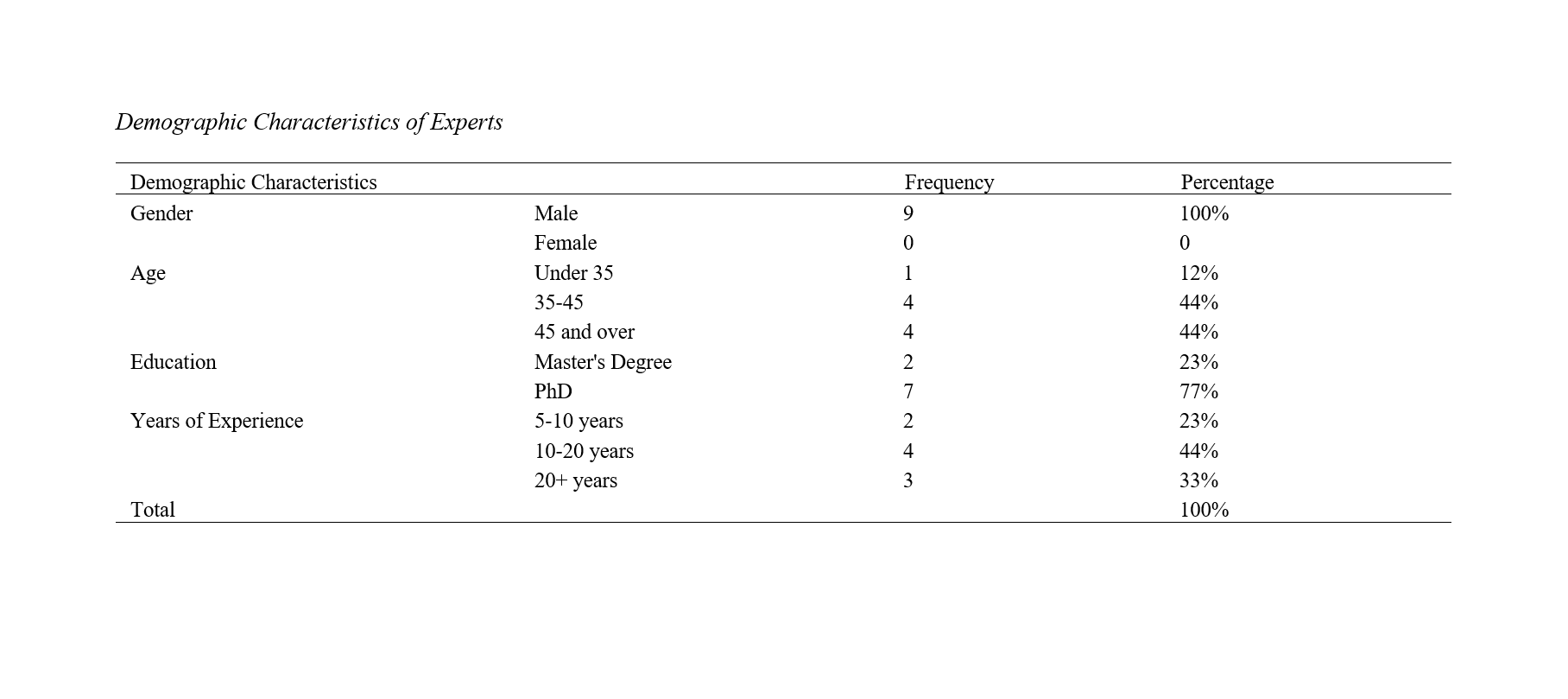
Methodology: This qualitative study adopts an interpretive philosophy and employs an inductive approach. Data were collected through semi-structured interviews with nine board members, selected using purposive snowball sampling until theoretical saturation was achieved. Colaizzi's seven-step method was applied for thematic analysis, supported by MAXQDA 20 software.
Findings: The analysis identified 91 subcategories grouped into nine main themes: organizational culture, individual characteristics of accountants, understanding the company’s historical and future performance, monitoring operational decisions, comprehensive management performance evaluation, modern management strategies, challenges in management accounting, roles of the management accounting unit, and identifying opportunities for operational improvement.
Conclusion: The research highlights the importance of management accounting as a strategic tool for enhancing decision-making, accountability, and organizational efficiency. Recommendations emphasize fostering an adaptive organizational culture, enhancing the skills of accountants, addressing structural challenges, and leveraging modern management strategies to optimize the role of management accounting in corporate governance and decision-making.
Downloads
References
Abdollahi, E. (2023). Investigating the compatibility of management accounting with organizational changes and identifying factors affecting the flexibility of management accounting. Studies in Economics, Financial Management, and Accounting, 10(1), 63-72. https://www.noormags.ir/view/en/articlepage/2143899/%D8%A8%D8%B1%D8%B1%D8%B3%DB%8C-%D8%B3%D8%A7%D8%B2%DA%AF%D8%A7%D8%B1%DB%8C-%D8%AD%D8%B3%D8%A7%D8%A8%D8%AF%D8%A7%D8%B1%DB%8C-%D9%85%D8%AF%DB%8C%D8%B1%DB%8C%D8%AA-%D8%A8%D8%A7-%D8%AA%D8%BA%DB%8C%DB%8C%D8%B1%D8%A7%D8%AA-%D8%B3%D8%A7%D8%B2%D9%85%D8%A7%D9%86%DB%8C-%D9%88-%D8%B4%D9%86%D8%A7%D8%B3%D8%A7%DB%8C%DB%8C-%D8%B9%D9%88%D8%A7%D9%85%D9%84-%D9%85%D9%88%D8%AB%D8%B1-%D8%A8%D8%B1-%D8%A7%D9%86%D8%B9%D8%B7%D8%A7%D9%81-%D9%BE%D8%B0%DB%8C%D8%B1%DB%8C-%D8%AD%D8%B3%D8%A7%D8%A8%D8%AF%D8%A7%D8%B1%DB%8C-%D9%85%D8%AF%DB%8C%D8%B1%DB%8C%D8%AA
Ahmadi, S. M., & Khavajouyan, M. R. (2023). A Review of Strategic Management Accounting. Ardabil.
Alvari Chenari, H. (2023). An Introduction to Management Accounting Theories: A Systematic Literature Review. New Research Approaches in Management and Accounting, 7(25), 1567-1595. https://majournal.ir/index.php/ma/article/view/2104
Attari, M., & Nasiri, H. (2013). Human resource accounting: A challenge or an opportunity?
Colaizzi, P. F. (1978). Psychological research as the phenomenologist views it. https://philpapers.org/rec/COLPRA-5
Dahal, R. K. (2020). Changing role of management accounting in 21st Century. Review of Public Administration and Management, 7(3), 1-8. https://www.researchgate.net/publication/373335067_Changing_Role_of_Management_Accounting_in_21st_Century
Dwiyani, T., Kristantiningtyas, D., Apsari, H. L., & Putra, A. S. B. (2024). Board and Director Traits, Company Growth's Impact on Green Accounting Policy Moderated by Media Exposure. International Journal of Economics (Ijec), 3(1), 300-309. https://doi.org/10.55299/ijec.v3i1.769
Einabadi, J., & Soleimani-Pouria, M. (2022). Investigating the impact of managers' personality traits on the tendency to manipulate financial reports. Accounting and Management Outlook, 5(56), 129-144. https://www.jamv.ir/article_148284.html?lang=en
Eriksson, K., Höglund, L., & Mårtensson, M. (2023). Strategic management accounting for change and flexibility (Vol. 14). https://doi.org/10.4324/9781003295945-11
Farzaneh, H., Mohammadi, A., Zinali, M., & Baradaran-Hasanzadeh, R. (2023). Foundations and strategies of the origin of management accounting in the light of timely reporting and sustainable development. Auditing Knowledge, 23(93), 34-61. https://danesh.dmk.ir/browse.php?a_id=3124&sid=1&slc_lang=en
Fizyzadeh, A., & Ahmadi Siyah Astalkhi, I. (2023). Using management accounting techniques to evaluate research and development projects. New Findings in Management, Psychology, and Accounting, 7(1), 360-370. https://www.noormags.ir/view/en/articlepage/2175740/%D8%A7%D8%B3%D8%AA%D9%81%D8%A7%D8%AF%D9%87-%D8%A7%D8%B2-%D8%AA%DA%A9%D9%86%DB%8C%DA%A9-%D9%87%D8%A7%DB%8C-%D8%AD%D8%B3%D8%A7%D8%A8%D8%AF%D8%A7%D8%B1%DB%8C-%D9%85%D8%AF%DB%8C%D8%B1%DB%8C%D8%AA-%D8%A8%D8%B1%D8%A7%DB%8C-%D8%A7%D8%B1%D8%B2%DB%8C%D8%A7%D8%A8%DB%8C-%D9%BE%D8%B1%D9%88%DA%98%D9%87-%D9%87%D8%A7%DB%8C-%D8%AA%D8%AD%D9%82%DB%8C%D9%82-%D9%88-%D8%AA%D9%88%D8%B3%D8%B9%D9%87
Khalfi, S., Farhamnadian, P., Yousefi, F., & Pakzad Qadiklai, H. (2022). The Impact of Organizational Culture on Accounting Information Systems. Tehran.
Khan, S., & Gupta, S. (2023). Using a hermeneutic phenomenological approach to Twitter content: a social network's analysis of green accounting as a dimension of sustainability. Qualitative Research in Financial Markets, 15(4), 672-692. https://doi.org/10.1108/QRFM-02-2022-0031
Khosropour, A., & Novidi Abbaspour, I. (2023). The impact of weak internal controls on the relationship between accounting conservatism and political connections of the board of directors. Accounting and Management Outlook, 6(79), 227-238. https://www.jamv.ir/article_173788.html?lang=en
Majidi-Yazdi, M., Velian, H., Shahri, M., & Abdoli, M. R. (2023). A phenomenological study of shadow accounting in the context of petrochemical companies. Accounting Advances, 15(1), 289-325. https://jaa.shirazu.ac.ir/article_7248.html?lang=en
Maulana, B. H., Kudus, M., Rohman, A., & Prabowo, T. (2022). Doing qualitative research of phenomenology in accounting. Academy of Accounting and Financial Studies Journal, 26, 1-7. https://www.abacademies.org/articles/doing-qualitative-research-of-phenomenology-in-accounting-13120.html
Miller, E., Cross, L., & Lopez, M. (2010). Sampling in qualitative research. FBB Research Group, 19(3), 249-261.
Miratus, B. K., & Sokarina, A. (2024). Redefining Green Accounting in the Health Field: A Phenomenological Study. International Journal of Business and Applied Economics, 3(3), 431-454. https://doi.org/10.55927/ijbae.v3i3.9103
Mohammadbeigi, U., Aref Mansh, Z., & Dehghani Ashkezari, M. M. (2023). Culture and components of ethical decision-making of certified public accountants: The mediating role of individual risk-taking propensity. Financial Accounting and Auditing Research, 59, 1-28. https://www.sid.ir/paper/1099186/en
Nizampour, E., & Askari Shahmabadi, M. J. (2022). Theoretical study of management accounting tools in managers' abilities. New Research Approaches in Management and Accounting, 6(23), 1260-1269. https://www.magiran.com/paper/2554128/%D9%85%D8%B7%D8%A7%D9%84%D8%B9%D9%87-%D9%86%D8%B8%D8%B1%DB%8C-%D8%A7%D8%A8%D8%B2%D8%A7%D8%B1%D9%87%D8%A7%DB%8C-%D8%AD%D8%B3%D8%A7%D8%A8%D8%AF%D8%A7%D8%B1%DB%8C-%D9%85%D8%AF%DB%8C%D8%B1%DB%8C%D8%AA-%D8%AF%D8%B1-%D8%AA%D9%88%D8%A7%D9%86%D8%A7%DB%8C%DB%8C-%D9%85%D8%AF%DB%8C%D8%B1%D8%A7%D9%86
Odonkor, B., Kaggwa, S., Uwaoma, P. U., Hassan, A. O., & Farayola, O. A. (2024). A review of US management accounting evolution: Investigating shifts in tools and methodologies in light of national business dynamics. International Journal of Applied Research in Social Sciences, 6(1), 51-72. https://doi.org/10.51594/ijarss.v6i1.726
Pasanda, E., Said, D., & Usman, A. (2024). Human Capital Academic Accounting Point of View Accounting Students: Study Phenomenology.
Romero-Carazas, R., Chávez-Díaz, J. M., Ochoa-Tataje, F. A., Segovia-Abarca, E., & Bernedo-Moreira, D. H. (2024). The Ethics of the Public Accountant: A Phenomenological Study. Academic Journal of Interdisciplinary Studies, 13(1), 339-351. https://doi.org/10.36941/ajis-2024-0025
Sajjadi, S. H., Khoeiini, M., Mahmoudkhani, M., & Gharamabadi, F. (2019). A review of management accounting research. Review of Management Accounting Research, 17(1), 1-22.
Salmanzadeh, H., Kordestani, G., & Kazemi, H. (2023). The role of management accounting in enhancing transparency and preventing corruption in the public sector. Accounting and Social Benefits, 13(4), 1-24. https://jaacsi.alzahra.ac.ir/article_8148.html
Trevisan, P., & Mouritsen, J. (2023). Compromises and compromising: Management accounting and decision-making in a creative organisation. Management Accounting Research, 60, 100839. https://doi.org/10.1016/j.mar.2023.100839
Vatanparast, M., Tasaddikari, J., & Ahmadzadeh-Layeq, N. (2018). A review of the history and techniques of management accounting. Accounting and Management Outlook, 1(2), 39-53. https://www.jamv.ir/article_75276.html?lang=en
Yazdani, F., Mohagheq, A., & Fazli, N. (2023). Designing a structural model of domestic factors affecting behavioral management accounting. Financial Accounting and Auditing Research, 15(60), 202-232. https://srb.sanad.iau.ir/en/Article/1074016?FullText=FullText
Downloads
Additional Files
Publication Timeline
- Submitted
- Revised
- Accepted
Issue
Section
License
Copyright (c) 2024 Hossein Haghshenas, Ali Ebrahimi Kordlar, Ezatollah Abbasian (Author)

This work is licensed under a Creative Commons Attribution-NonCommercial 4.0 International License.