Designing a Human Resource Productivity Model for the Deaf Sports Federation: A Combined Delphi-Fuzzy and Interpretive Structural Modeling Approach
DOI:
https://doi.org/10.61838/kman.intjssh.7.1.7Keywords:
Human resource productivity, Authority-responsibility alignment, Organizational culture, Deaf Sports Federation, Interpretive Structural ModelingAbstract
Objective: The objective of this study was to design a human resource productivity model for the Deaf Sports Federation using a combined Delphi-Fuzzy and Interpretive Structural Modeling approach.
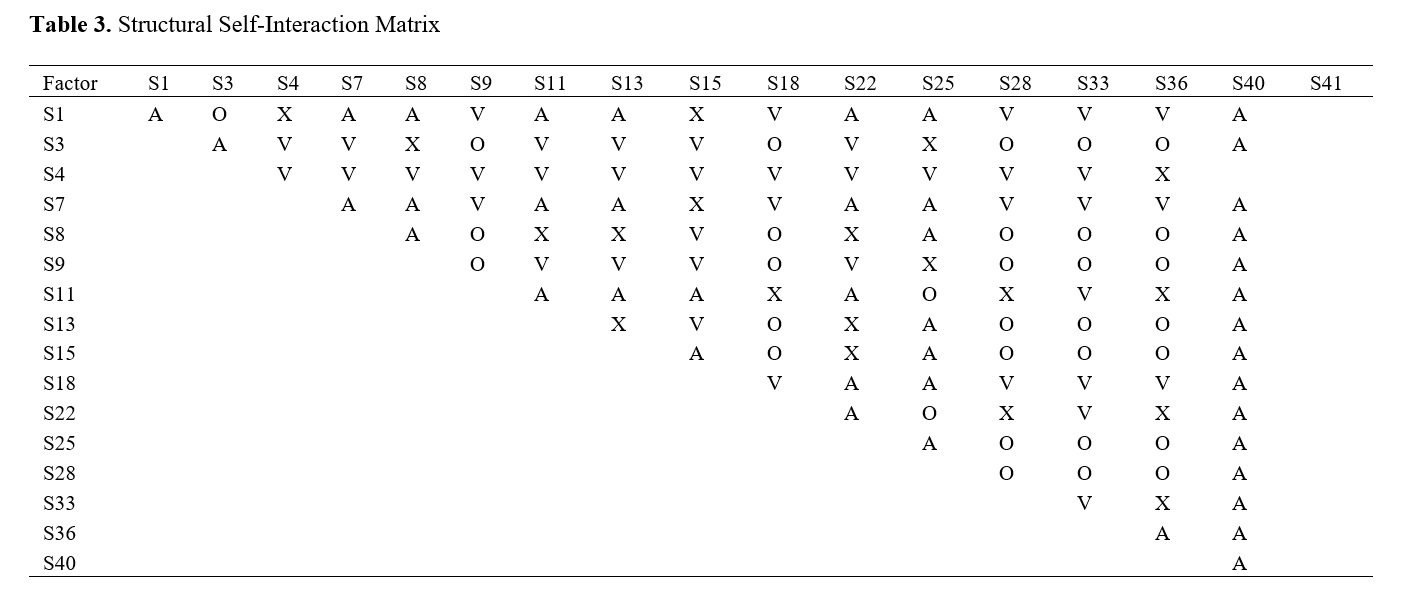
Methods and Materials: The methodology of this research was mixed (qualitative and quantitative). Participants included managers and officials of committees within the Deaf Sports Federation of the Islamic Republic of Iran and elites in deaf sports, including coaches, referees, and athletes. The selection of these individuals was purposeful, based on criteria of expertise and experience, representation, diversity, and cooperation potential, with 18 individuals chosen. Data collection tools were a 41-question questionnaire and a 17x17 dimensional matrix, both validated for reliability and validity. Data analysis was conducted using Delphi-Fuzzy and subsequently Interpretive Structural Modeling. It is noteworthy that for these analyses, Excel macros and the SmartISM web program were utilized respectively.
Results: Findings identified 17 determinant factors related to human resource productivity in the Deaf Sports Federation, which were categorized into five levels based on interpretive structural analysis, forming a hierarchical relationship model that indicates the fundamental factors in optimizing human resources in the Deaf Sports Federation are the alignment of authority-responsibility and organizational culture, which ultimately lead to an individual’s perception of their role.
Conclusions: Accordingly, in planning to enhance human resource productivity in the Deaf Sports Federation, the initial step should involve establishing a balance of authority-responsibility and promoting values that assist employees in understanding their roles.
Downloads
References
1. Putra GA, Badruzaman J, Supriadi A. The Effect of
Training, Job Stress, and Motivation on Work Productivity with
Unsafe Actions as An Intervening Variable. Review on Islamic
Accounting. 2024;4(1). [DOI]
2. Rony Z, Wijaya I, Nababan D, Julyanthry J, Silalahi M,
Ganiem L, et al. Analyzing the Impact of Human Resources
Competence and Work Motivation on Employee Performance: A
Statistical Perspective. Naturalspublishing Com. 2024.
3. Mukhopadhyay S. Using Alienation to Understand the
Link Between Work and Capabilities. Journal of Human
Development and Capabilities. 2024;25(1):151-69. [DOI]
4. Taghvaee V, Sharifpour Y, Akbari F, Arani AA, Tatar M.
Integrated sustainability of social, environment and economy:
Defining the hypotheses and theories interconnecting the pillars of
sustainable development. Reference Module in Social Sciences:
Elsevier; 2023. [DOI]
5. van Zyl G, Magau MD. Employee productivity spillovers
generated by incentive schemes. SA Journal of Human Resource
Management; Vol 22 (2024). 2024. [DOI]
6. Shamounian E, Mohamadian F, Nobakht Ramazani Z. A
Survey on the Productivity of Sports Federations in Professional
Dimension. Sport Management Studies. 2019;11(55):143-62.
7. Shamsipour M, Taherirozbahani M. The Effect of
Organizational Anomics on Human Resource Productivity by
Explaining the Mediating Role of Organizational Commitment
(Case of Study: Boroujard City Municipality). Urban Management
Studies. 2023;15(55):87-98.
8. Barani M, Talebpour M, keshtidar m. Investigating the
aRelationship between Totl Quality Management and Productivity
in Sports Organizations. journal of motor and behavioral sciences.
2021;4(2):163-73.
9. Kashtidar M, Rasekh N, Ghasemi H, Darabi M,
Maghsoodi Imen HR. Designing a Productivity Management
Model for Physical Education Departments in Universities and
Higher Education Institutions in Iran with the aim of Improving
Accountability System. Human Resource Management in Sports.
2024;11(1):151-76.
10. Kwarteng S, Frimpong SO, Asare R, Wiredu TJN. Effect
of employee recognition, employee engagement on their
productivity: the role of transformational leadership style at Ghana
Health Service. Current Psychology. 2024;43(6):5502-13. [DOI]
11. Safaralizadeh A, Nikbakhsh R, Afarinesh khaki A.
Designing causal relationships in the goals and strategic plan of the
Deaf Sports Federation with the BSC-DEMATEL approach. Sport
Management and Development. 2021;10(3):1-22.
12. Yandi A. Literature Review Analysis of the Effect of
Leadership, Organizational Culture, and Work Environment on
Employee Productivity. International Journal of Advanced
Multidisciplinary. 2022;1(1):12-24. [DOI]
13. Almaamari QA. Factors Influencing Employees’
Productivity in Bahraini Alhelli Company—Literature Review. In:
Hamdan A, Harraf A, Buallay A, Arora P, Alsabatin H, editors.
From Industry 40 to Industry 50: Mapping the Transitions. Cham:
Springer Nature Switzerland; 2023. p. 383-7. [DOI]
14. Baquero A. Hotel Employees’ Burnout and Intention to
Quit: The Role of Psychological Distress and Financial Well-Being
in a Moderation Mediation Model. Behavioral Sciences [Internet].
2023; 13(2). [PMID: 36829313] [PMCID: PMC9952249] [DOI]
15. Aghel Azad F, Najaf Zade MR, Janani H, Barghi
Moghaddam J. Designing a Human resource Productivity Model
Based on Organizational Citizenship Behavior and Organizational
Productivity (Case Study of Employees of Sports and Youth
Departments of East Azerbaijan province). Sport Physiology &
Management Investigations. 2023;15(1):115-28.
16. Al-aloosy KFQ, Mirvalad S, Shabakhty N. Evaluating
the impact of internet communication quality in human resource
management on the productivity of construction projects. Heliyon.
2024;10(7). [PMID: 38601673] [PMCID: PMC11004755] [DOI]
17. Erica D, Hoiriah H, Fauziah S, Mulyadi M, Susila MN.
The Influence Of Work Discipline and Job Training On Employee
Work Productivity At The Petukangan Utara District Office. Jurnal
Ekonomi. 2024;13(01):2075-80.
18. Nie X. Human Capital impact on productivity in Chinese
enterprises: analyzing the mediating role of innovation2024. [DOI]
19. Habibi A, Firouzi jahantigh F, Sarafrazi A. Fuzzy Delphi
Technique for Forecasting and Screening Items. 2015;5:130-43.
[DOI]
20. Williams J, Netten A. English Local Authority Powers,
Responsibilities and Guidelines for Managing the Care Home
Closure Process. The British Journal of Social Work.
2005;35(6):921-36. [DOI]
21. Romme AGL. Ladders of Authority, Status,
Responsibility and Ideology: Toward a Typology of Hierarchy in
Social Systems. Systems [Internet]. 2021; 9(1). [DOI]
22. Grover V, Tseng S-L, Pu W. A theoretical perspective on
organizational culture and digitalization. Information &
Management. 2022;59(4):103639. [DOI]
Downloads
Additional Files
Publication Timeline
Issue
Section
License
Copyright (c) 2024 Masoud Farahanitajar, Mahdi Naderinasab, Hossein Kalhor (Author)

This work is licensed under a Creative Commons Attribution-NonCommercial 4.0 International License.