Validation of A Somatic Maturity Prediction Model in North America and Development of Original Japanese Model with Ogi Growth Study
DOI:
https://doi.org/10.61838/kman.intjssh.7.1.5Keywords:
maturity offset, Adolescence, peak height velocity age, development, maturationAbstract
Objective: While peak height velocity age (PHVA) forecasting models exist for Westerners, there are no equations that target the Japanese. This study aimed to analyze the suitability of Canadian equations model using data from a large-scale study of Japanese participants to verify their applicability (study 1) and to create model equations that are optimal for Japanese participants by multiple regression analysis using the same data (study 2).
Methods and Materials: In Study 1, 3,211 and 2,611 data points from boys and girls, respectively, were used to analyze the fit of Asian data to the sex-specific regression equations developed by Mirwald et al. (2002) and Moore et al. (2015). The participants were used in Study 2 to create an optimal maturity prediction model for the Japanese population, and the applicability of the model was verified. In addition, to verify the external validity of the Maturity prediction model, the data were randomly divided for analysis and for validation prior to the creation of the model equation.
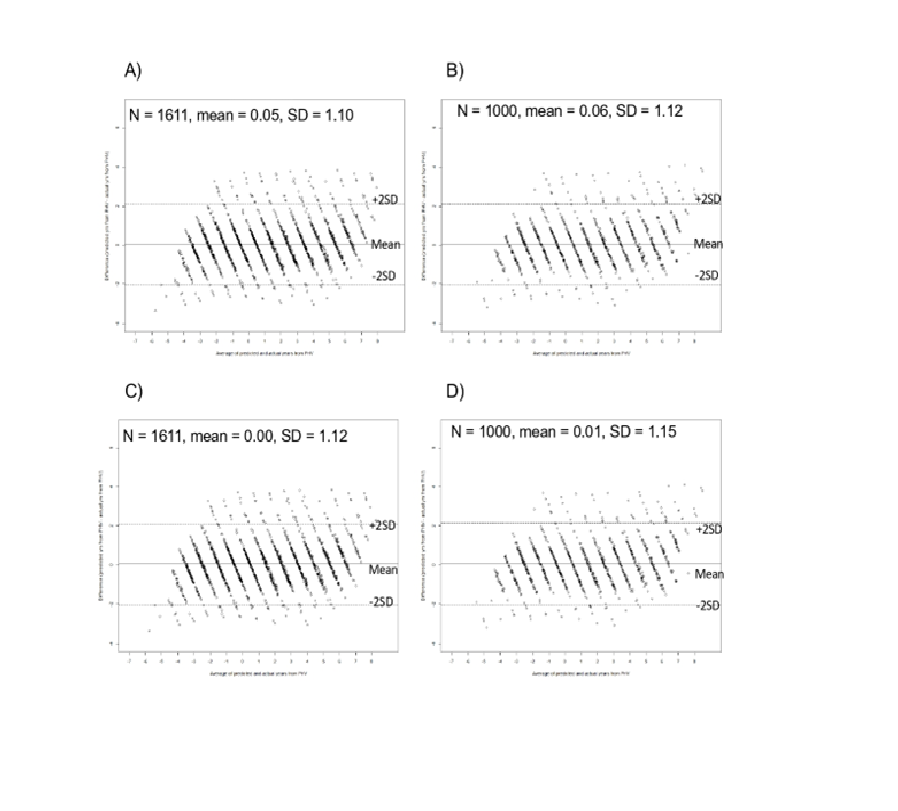
Results: The results of Study 1 revealed that previous prediction models were underestimated PHVA for Japanese individuals of both males and females at younger ages and overestimated PHVA at older ages. Thus, it is suggested that the Moore model might not be suitable for the Japanese population. However, by using Study 2, we confirmed that our PHVA prediction model was suitable.
Conclusions: The development of a predictive model suitable for the Japanese population through this study may assist in the establishment of optimal training prescriptions and environments during the growth and development period.
Downloads
References
1. Sekine Y, Hoshikawa S, Hirose N. Longitudinal AgeRelated Morphological and Physiological Changes in Adolescent
Male Basketball Players. J Sports Sci Med. 2019;18(4):751-7.
[PMID: 31827360] [PMCID: PMC6873134]
2. Boreham CA, McKay HA. Physical activity in childhood
and bone health. Br J Sports Med. 2011;45(11):877-9. [PMID:
21807670] [DOI]
3. Vaeyens R, Malina RM, Janssens M, Van Renterghem B,
Bourgois J, Vrijens J, Philippaerts RM. A multidisciplinary
selection model for youth soccer: the Ghent Youth Soccer Project.
Br J Sports Med. 2006;40(11):928-34; discussion 34. [PMID:
16980535] [PMCID: PMC2465033] [DOI]
4. Granacher U, Lesinski M, Büsch D, Muehlbauer T,
Prieske O, Puta C, et al. Effects of Resistance Training in Youth
Athletes on Muscular Fitness and Athletic Performance: A
Conceptual Model for Long-Term Athlete Development. Front
Physiol. 2016;7:164. [PMID: 27242538] [PMCID: PMC4861005]
[DOI]
5. Tanner JM. Issues and advances in adolescent growth
and development. J Adolesc Health Care. 1987;8(6):470-8. [PMID:
3121548] [DOI]
6. Torres-Unda J, Zarrazquin I, Gil J, Ruiz F, Irazusta A,
Kortajarena M, et al. Anthropometric, physiological and
maturational characteristics in selected elite and non-elite male
adolescent basketball players. J Sports Sci. 2013;31(2):196-203.
[PMID: 23046359] [DOI]
7. Malina RM, Rogol AD, Cumming SP, Coelho e Silva
MJ, Figueiredo AJ. Biological maturation of youth athletes:
assessment and implications. Br J Sports Med. 2015;49(13):852-9.
[PMID: 26084525] [DOI]
8. Croix Mde S. Advances in paediatric strength
assessment: changing our perspective on strength development. J
Sports Sci Med. 2007;6(3):292-304. [PMID: 24149415] [PMCID:
PMC3787279]
9. Malina RM, Eisenmann JC, Cumming SP, Ribeiro B,
Aroso J. Maturity-associated variation in the growth and functional
capacities of youth football (soccer) players 13-15 years. Eur J
Appl Physiol. 2004;91(5-6):555-62. [PMID: 14648128] [DOI]
10. Lloyd RS, Oliver JL, Faigenbaum AD, Myer GD, De Ste
Croix MB. Chronological age vs. biological maturation:
implications for exercise programming in youth. J Strength Cond
Res. 2014;28(5):1454-64. [PMID: 24476778] [DOI]
11. Malina RM. Skeletal age and age verification in youth
sport. Sports Med. 2011;41(11):925-47. [PMID: 21985214] [DOI]
12. Mirwald RL, Baxter-Jones AD, Bailey DA, Beunen GP.
An assessment of maturity from anthropometric measurements.
Med Sci Sports Exerc. 2002;34(4):689-94. [PMID: 11932580]
[DOI]
13. Moore SA, McKay HA, Macdonald H, Nettlefold L,
Baxter-Jones AD, Cameron N, Brasher PM. Enhancing a Somatic
Maturity Prediction Model. Med Sci Sports Exerc.
2015;47(8):1755-64. [PMID: 25423445] [DOI]
14. Suwa S, Tachibana K, Maesaka H, Tanaka T, Yokoya S.
Longitudinal Standards for Height and Height Velocity for
Japanese Children from Birth to Maturity. Clinical Pediatric
Endocrinology. 1992;1(1):5-13. [DOI]
Downloads
Publication Timeline
Issue
Section
License
Copyright (c) 2024 Katsunori Tsuji, Yosuke Tsuchiya, Yuichi Hirano, Eisuke Ochi (Author)

This work is licensed under a Creative Commons Attribution-NonCommercial 4.0 International License.