Acute and Chronic Effects of Physical Activity on Emerging Risk Factors of Heart Attack in Overweight Men
DOI:
https://doi.org/10.61838/kman.intjssh.2.2.4Keywords:
Exercise, Resistance, Homocysteine, Fibrinogen, C-Reactive ProteinAbstract
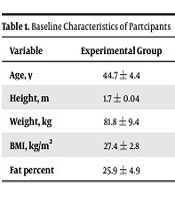
Background: Homocysteine, fibrinogen and C-reactive protein (CRP) are three independent factors that independently and strongly predict the cardiovascular risks. Objectives: The purpose of this study was to evaluate the acute and chronic responses of these cardiovascular risk factors following physical activity in overweight healthy inactive middle-aged men. Methods: The subjects included 21 healthy inactive men that were assigned into two groups of experimental (N = 11) and control (N = 10). The exercise protocol consisted of circuit resistance exercise (one session protocol) with intensity of 35% of 1RM; endurance training protocol lasting for 12 weeks (three sessions a week) and running exercise with intensity of 75% to 85% of maximum heart rate. Blood samplings were taken in pretest and posttest. The data was used using paired and independent samples t-test were used for statistical analysis of data. Results: The results indicated that there was a significant increase in homocysteine and CRP following circuit resistance exercise (P ≤ 0.05) while no significant change was found in fibrinogen in experimental group after exercise (P > 0.05). Additionally, the levels of CRP and homocysteine were significantly decreased after three months of aerobic exercises, (P ≤ 0.05) however no significant change of fibrinogen was observed (P > 0.05). Conclusions: Although it seems that atherogenic inflammatory processes are more sensitive to exercise than coagulatory processes in inactive middle-aged men, more researches are needed for crucial decisions.Downloads
Download data is not yet available.
Downloads
Publication Timeline
Published
Issue
Section
Articles
License

This work is licensed under a Creative Commons Attribution-NonCommercial 4.0 International License.
How to Cite
Jafari, M., Bizheh, N., Ebrahimi Atri, A., & Fathi Aralloo, S. (2019). Acute and Chronic Effects of Physical Activity on Emerging Risk Factors of Heart Attack in Overweight Men. International Journal of Sport Studies for Health, 2(2), 22-25. https://doi.org/10.61838/kman.intjssh.2.2.4