Prediction of Endurance Performance and Repeated Sprint Ability Based on Critical Velocity in Soccer Players Depending on their Playing Position
DOI:
https://doi.org/10.61838/kman.hn.3.1.7Keywords:
Critical velocity, anaerobic capacity, football, running speed, physical performanceAbstract
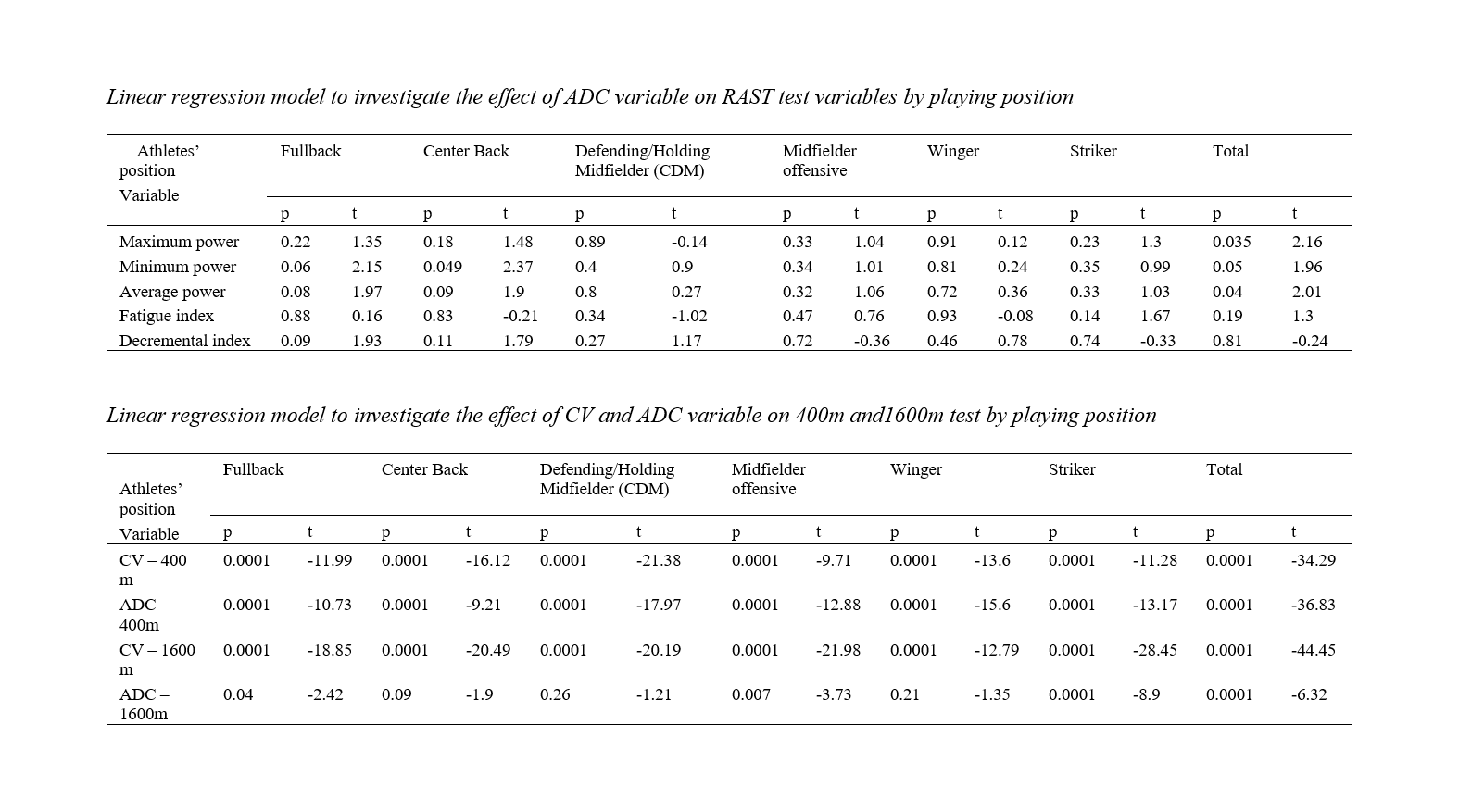
Tests and regular monitoring of the athlete’s’ performance is an important aspect of a successful training program. However, the methods of conducting tests are challenging, particularly in team sports. The present study is an attempt to predict endurance performance and repeated sprint ability based on critical velocity (CV) and anaerobic distance capacity (ADC) in soccer players according to their playing position. The current research used a causal ex post facto design. 60 players from the same team (Ilam, Iran) participating in 3-5 regular practice sessions a week, with an age range of 16-20 years participated in this study as volunteers. They are divided in 6 playing positions (Fullback, Center Back, Defending/Holding Midfielder (CDM), Midfielder Offensive, Winger and Striker) presenting homogeneous level, experience, volume and intensity of training. Body composition, 400m and 1600m running tests and Running-Based Anaerobic Sprint Test (RAST) were measured. CV and ADC were measured using 400m and 1600m running time data. Linear regression test was used to predict the relationship between the variables and one-way analysis of variance (ANOVA) was used to determine the differences between the players in different positions. Results of the linear regression model showed that CV and ADC ha significantly impact maximum, minimum, average power, aerobic and anaerobic performance in irrespective of the playing position. Regardless of the game positional role. CV of Fullback had an effect on the minimum, average power and decremental index, and the ADC variable in the Center Back position had an effect on the minimum power. However, CV and ADC variables had a significant effect on the prediction of aerobic and anaerobic performance in all six game positions. The results of the one-way ANOVA statistical test showed that there was a significant difference between the different positions only in the deceleration index factor (p=0.015), and the results of the Bonferroni test showed that this difference was between the Midfielder Offensive and winger groups (p=0.012). This study has shown relevant information for coaching about the use of C.V and ADC in order to propose new keys and ways of planning training sessions.
Downloads
References
1. Mayer EA, Ryu HJ, Bhatt RR. The neurobiology of irritable bowel syndrome. Molecular Psychiatry. 2023;28(4):1451-65. [PMID: 36732586] [PMCID: PMC10208985] [DOI]
2. Staudacher HM, Black CJ, Teasdale SB, Mikocka-Walus A, Keefer L. Irritable bowel syndrome and mental health comorbidity- approach to multidisciplinary management. Nature Reviews. 2023;20(9):582-96. [PMID: 37268741] [PMCID: PMC10237074] [DOI]
3. Camilleri M, Boeckxstaens G. Irritable bowel syndrome: treatment based on pathophysiology and biomarkers. Gut. 2023;72(3):590-9. [PMID: 36307180] [PMCID: PMC9990119] [DOI]
4. Mearin F, Lacy BE, Chang L, Chey WD, Lembo AJ, Simren M, et al. Bowel disorders. Gastroenterology. 2016;150(6):1393-407. [PMID: 27144627] [DOI]
5. Oka P, Parr H, Barberio B, Black CJ, Savarino EV, Ford AC. Global prevalence of irritable bowel syndrome according to Rome III or IV criteria: A systematic review and meta-analysis. The Lancet. 2020;5(10):908-17. [PMID: 32702295] [DOI]
6. Lovell RM, Ford AC. Global prevalence of and risk factors for irritable bowel syndrome: A meta-analysis. Clinical Gastroenterology and Hepatology. 2012;10(7):712-21. [PMID: 22426087] [DOI]
7. Lai YT, Chen CY, Bair MJ. Epidemiology, clinical features, and prescribing patterns of irritable bowel syndrome in Taiwan. Frontiers in Pharmacology. 2021;12:788795. [PMID: 34975485] [PMCID: PMC8717931] [DOI]
8. Alvand S, Mohammadi Z, Rashidian L, Cheraghian B, Rahimi Z, Danehchin L. Irritable bowel syndrome: psychological disorder or poverty? Results of a large cross-sectional study in Iran. Archives of Iranian Medicine. 2020;23(12):821-6. [PMID: 33356339] [DOI]
9. Safaee A, Khoshkrood-Mansoori B, Pourhoseingholi MA, Moghimi-Dehkord B, Pourhoseingholi A, Habibi M. Prevalence of irritable bowel syndrome: A population based study. Studies in Medical Sciences. 2013;24(1):17-23.
10. Hayatbakhsh M, Zahedi M, Darvish moghadam S, Seyed Mirzaei S, Najafipor H, Haghdost A, et al. The prevalence of irritable bowel syndrome, and its clinical symptoms and related factors among the adult population of Kerman, Iran. Journal of Kerman University of Medical Sciences. 2013;20(4):331-42.
11. Ghorbani Ashin Y, Seirafi M, Abolmaali Alhoseini K, Ahadi M. The experience of patients with irritable bowel syndrome is one of the underlying factors of the disease. Rooyesh. 2024;13(1):73-82.
12. Hetterich L, Stengel A. Psychotherapeutic interventions in irritable bowel syndrome. Frontiers in Psychiatry. 2020;11:286. [PMID: 32425821] [PMCID: PMC7205029] [DOI]
13. Creed F. Risk factors for self-reported irritable bowel syndrome with prior psychiatric disorder: The lifelines cohort study. Journal of Neurogastroenterology and Motility. 2022;28(3):442-53. [PMID: 35799238] [PMCID: PMC9274465] [DOI]
14. Hajishafiee M, Keshteli AH, Saneei P, Feinle-Bisset C, Esmaillzadeh A, Adibi P. Healthy lifestyle score and irritable bowel syndrome: A cross-sectional study in adults. Neurogastroenterology and Motility. 2020;32(5):e13793. [PMID: 31912611] [DOI]
15. Low EXS, Mandhari MNKA, Herndon CC, Loo EXL, Tham EH, Siah KTH. Parental, perinatal, and childhood risk factors for development of irritable bowel syndrome: A systematic review. Journal of Neurogastroenterology and Motility. 2020;26(4):437-46. [PMID: 32989183] [PMCID: PMC7547188] [DOI]
16. Huang KY, Wang FY, Lv M, Ma XX, Tang XD, Lv L. Irritable bowel syndrome: Epidemiology, overlap disorders, pathophysiology and treatment. World Journal of Gastroenterology. 2023;29(26):4120-35. [PMID: 37475846] [PMCID: PMC10354571] [DOI]
17. Slouha E, Patel B, Mohamed A, Razeq Z, Clunes LA, Kollias TF. Psychotherapy for irritable bowel syndrome: A systematic review. Cureus. 2023;15(12):e51003. [DOI]
18. Black CJ, Thakur ER, Houghton LA, Quigley EMM, Moayyedi P, Ford AC. Efficacy of psychological therapies for irritable bowel syndrome: systematic review and network meta-analysis. Gut. 2020;69(8):1441-51. [PMID: 32276950] [DOI]
19. Hayes SC. Acceptance and commitment therapy, relational frame theory, and the third wave of behavioral and cognitive therapies- Republished article. Behavior therapy. 2016;47(6):869-85. [PMID: 27993338] [DOI]
20. Hayes SC, Levin ME, Plumb-Viladaga J, Villatte LL, Pistorello J. Acceptance and commitment therapy and contextual behavioral science: Examining the progress of a distinctive model of behavioral and cognitive therapy. Behavior Therapy. 2013;44(2):180-98. [PMID: 23611068] [PMCID: PMC3635495] [DOI]
21. Hayes SC, Strosahl KD, Wilson KG. Acceptance and commitment therapy: An experiential approach to behavior change: Guilford Press; 2003.
22. Ezzati Z, Shahabizadeh F, Soleimannejad K, Nasri M. The Effective of behavioral cognitive intervention based uncertainty intolerance and acceptance and commitment intervention on anxiety, severity of gastrointestinal symptoms and cortisol level of irritable bowel syndrome patients with generalized anxiety disorder; follow up for three months. JAP. 2021;12(3):60-79.
23. Ezzati Z, Shahabizadeh F, Soleimannejad K, Nasri M. The efficacy of commitment and acceptance and behavioral cognitive interventions on emotional schemas and quality of life in patients with irritable bowel syndrome with generalized anxiety disorder. Journal of Psychological Science. 2021;21(117):1833-50. [DOI]
24. Farokhzadian AA, Ahmadian F, Andalib L. The effectiveness of acceptance and commitment therapy on the severity of symptoms and quality of life in soldiers with irritable bowel syndrome. Journal of Military Medicine. 2022;21(1):44-52.
25. Pashang S, Sarah P, Aniss Khosh Lahjeh S. Acceptance and commitment therapy compared with metacognition therapy in reducing symptoms and increasing life satisfaction in patients with irritable bowel syndrome. Govaresh. 2019;24:22-9. [DOI]
26. Shakernegad S, Khalatbari J, Mahmoud Aliloo M. Effectiveness of acceptance and commitment therapy on safety performance, quality of life and somatic symptoms in patients with irritable bowel syndrome. Depiction of Health. 2021;12(2):158-69. [DOI]
27. Taghvaeinia A, Karami M, Azizi A. Comparison of the effect of dialectical behavior therapy, acceptance and commitment therapy mindfulness-based Stress reduction on irritable bowel syndrome symptoms, quality of life, anxiety and depression: A pilot randomized controlled trial. The Psychiatric Quarterly. 2024;95(1):53-68. [PMID: 37976011] [DOI]
28. Tajeri B, Pashang S, Aniss Khosh Lahjeh S. Comparison of effectiveness acceptance commitment therapy and metacognitive therapy on hopefulness and flexibility of patients suffering from irritable bowel syndrome. Thoughts and Behavior in Clinical Psychology. 2018;12(48):37-46.
29. Moqtadaei K, Ebrahimi A, Haghayegh SA, Rezaei Jamaloui H, Adibi P. Investigating the effectiveness of acceptance and commitment therapy on treatment compliance and pain intensity in patients with irritable bowel syndrome. Journal of Research in Behavioral Sciences. 2023;21(1):22-31.
30. Eskafi-Sabet Z, Ghorban-Shiroodi S, Zarbakhsh-Bahri MR, Aminian K. The effectiveness of acceptance and commitment group therapy on disease severity, quality of life and psychological well-being of patients with irritable bowel syndrome. Salamat Ijtimai (Community Health). 2022;9(1):36-46.
31. Karimian Z, Haghayegh SA, Emami-Najafi-Dehkordi SMH, Raisi M. The comparison of the effectiveness of trans-diagnostic treatment and the Acceptance and Commitment Therapy (ACT) on emotion regulation and illness perception in patients with Irritable Bowel Syndrome (IBS). Journal of Research in Behavioral Sciences. 2021;19(3):477-88. [DOI]
32. Karimian Z, Haghayegh SA, Emami-Najafi-Dehkordi SMH, Raisi M. The comparison of the effectiveness of trans-diagnostic treatment and the Acceptance and Commitment Therapy (ACT) on quality of life in patients with Irritable Bowel Syndrome (IBS). Journal of Sabzevar University of Medical Sciences. 2023;30(1):22-34.
33. Ferreira NB, Gillanders D, Morris PG, Eugenicos M. Pilot study of acceptance and commitment therapy for irritable bowel syndrome: A preliminary analysis of treatment outcomes and processes of change. Clinical Psychologist. 2018;22(2):241-50. [DOI]
34. Ghafari Jahed Z, Amini N, Deyreh E, Mirzaei K. The effectiveness of commitment and admission approach on irrational belief and physical image in patients suffering from irritable bowel syndrome. Scientific Journal of Social Psychology. 2021;14(59):1-13.
35. GhafariJahed Z, Amini N, Deyreh E, Mirzaei K. Comparison of the effectiveness of acceptance and commitment therapy with compassion-focused therapy on psychological flexibility in male patients with irritable bowel syndrome. Community Health Journal. 2021;15(3):1-10.
36. Hassannezhad N, Alipour A, Hosseini N. Comparison of the effectiveness of mindfulness-based cognitive therapy and acceptance and commitment-based therapy on perceived stress and depression in patients with irritable bowel syndrome. Medical Journal of Mashhad University of Medical Sciences. 2021;64(2):2953-63.
37. Rezaei M, Kalantary M, Abedi M. Comparison of the efficacy of cognitive-behavioral therapy and acceptance and commitment therapy (experience-based therapy package) on anxiety, depression and quality of life in female patients with irritable bowel syndrome. Journal of Applied Psychological Research. 2022;13(3):395-412.
38. Shahkaram H, Yaztappeh JS, Sadeghi A, Kianimoghadam AS, Soltanabadi S, Bakhtiari M, et al. Comparing the effectiveness of transdiagnostic treatment with acceptance and commitment therapy on emotional disorders, rumination, and life satisfaction in patients with irritable bowel syndrome: A randomized clinical trial. BMC Gastroenterology. 2024;24(1):66. [PMID: 38321387] [PMCID: PMC10845775] [DOI]
39. Ito M, Muto T. Effectiveness of acceptance and commitment therapy for irritable bowel syndrome non-patients: A pilot randomized waiting list controlled trial. Journal of Contextual Behavioral Science. 2019;15:85-91. [DOI]
40. Mirsharifa SM, Mirzaian B, Dousti Y. The efficacy of Acceptance and Commitment Therapy (ACT) matrix on depression and psychological capital of the patients with irritable bowel syndrome. Open Access Macedonian Journal of Medical Sciences. 2019;7(3):421-27. [PMID: 30834014] [PMCID: PMC6390158] [DOI]
41. Aghalar S, Moradi Manesh F, Saraj Khorami N, Hafezi F. The effectiveness of acceptance and commitment-based therapy and its comparison with cognitive behavioral therapy on cognitive regulatory strategies excitement of patients with irritable bowel syndrome. Medical Journal of Mashhad University of Medical Sciences. 2020;63(2):2455-70.
42. Kamran A, Rostamifar R, Moghtadaei K. The effectiveness of acceptance and commitment therapy on experiential avoidance and emotional processing in patients with irritable bowel syndrome. Health Psychology. 2022;11(41):155-70.
43. Gillanders D, Ferreira NB, Angioni E, Carvalho SA, Eugenicos MP. An implementation trial of ACT-based bibliotherapy for irritable bowel syndrome. Journal of Contextual Behavioral Science. 2017;6(2):172-77. [DOI]
Downloads
Additional Files
Publication Timeline
- Submitted
- Revised
- Accepted
License

This work is licensed under a Creative Commons Attribution-NonCommercial 4.0 International License.