Identification and Prioritization of Dimensions for Empowering Hospitalized Patients in Public Hospitals of Shahid Sadoughi University of Medical Sciences, Yazd
DOI:
https://doi.org/10.61838/kman.hn.2.4.6Keywords:
Empowerment, Hospitals, PatientsAbstract
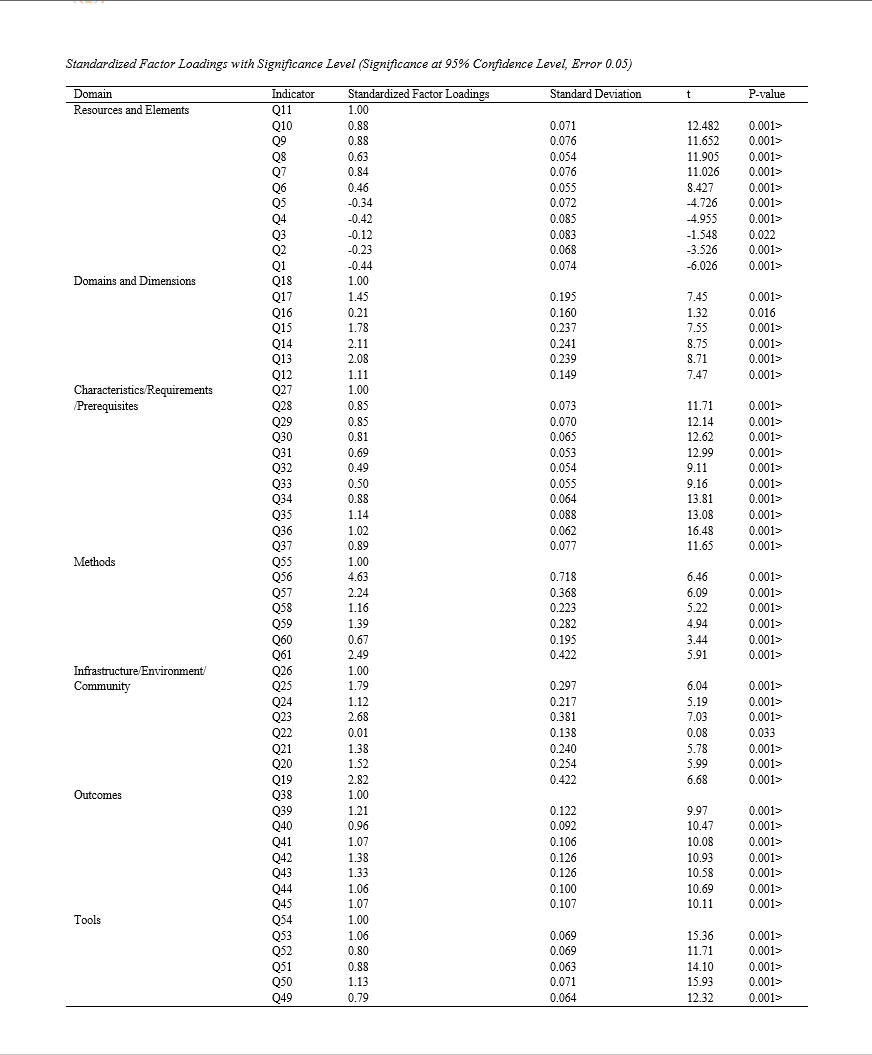
Identifying factors that impact patient experience is crucial for implementing strategies that support patient engagement and ultimately achieve better health outcomes. This study aimed to present a model for empowering hospitalized patients. This study is a quantitative-qualitative cross-sectional study conducted using stratified sampling with appropriate allocation in public hospitals affiliated with Shahid Sadoughi University of Medical Sciences, Yazd. The study involved 230 participants, including hospital directors, managers, matrons, supervisors, clinical and paraclinical unit heads, staff units, nurses, and physicians. Data were collected using demographic information tools and a researcher-made questionnaire designed to create a model for empowering hospitalized patients. The model's capability was determined by fitting the data using confirmatory factor analysis. Data were analyzed using SPSS version 16 and Amos version 24 software. The questionnaire designed for the patient empowerment model in hospitals comprised 8 domains and 61 items or components. In this study, the chi-square ratio to degrees of freedom was significant (p < 0.0001), indicating a good fit for the model. The Goodness of Fit Index (GFI) was estimated at 0.93, showing that the model fit was appropriate. The values of GFI and the Adjusted Goodness of Fit Index (AGFI) for the hospitalized patient empowerment model were above 0.8. Organizations and educational healthcare centers can use this model to empower patients. The necessary groundwork for enhancing patient empowerment should be provided by medical universities and affiliated hospitals.
Downloads
References
1. Marks R, Allegrante JP. Falls-prevention programs for older ambulatory community dwellers: from public health research to health promotion policy. Sozial- und Praventivmedizin. 2004;49(3):171-8. [PMID: 15224538] [DOI]
2. McAlearney AS, Fareed N, Gaughan A, MacEwan SR, Volney J, Sieck CJ. Empowering Patients during Hospitalization: Perspectives on Inpatient Portal Use. Applied clinical informatics. 2019;10(1):103-12. [PMID: 30759491] [PMCID: PMC6374145] [DOI]
3. McAlearney AS, Sieck CJ, Hefner JL, Aldrich AM, Walker DM, Rizer MK, et al. High touch and high tech (HT2) proposal: transforming patient engagement throughout the continuum of care by engaging patients with portal technology at the bedside. JMIR Research Protocols. 2016;5(4):e6355. [PMID: 27899338] [PMCID: PMC5172441] [DOI]
4. Davis K, Schoenbaum SC, Audet A-M. A 2020 vision of patient-centered primary care. Journal of general internal medicine. 2005;20:953-7. [PMID: 16191145] [PMCID: PMC1490238] [DOI]
5. Woollen J, Prey J, Wilcox L, Sackeim A, Restaino S, Raza ST, et al. Patient experiences using an inpatient personal health record. Applied clinical informatics. 2016;7(02):446-60. [PMID: 27437053] [PMCID: PMC4941852] [DOI]
6. Gammon J. Analysis of the stressful effects of hospitalisation and source isolation on coping and psychological constructs. International journal of nursing practice. 1998;4(2):84-96. [PMID: 9748937] [PMCID: 10.1046/j.1440-172X.1998.00084.x]
7. Collins SA, Rozenblum R, Leung WY, Morrison CR, Stade DL, McNally K, et al. Acute care patient portals: a qualitative study of stakeholder perspectives on current practices. Journal of the American Medical Informatics Association. 2017;24(e1):e9-e17. [PMID: 27357830] [PMCID: PMC7651924] [DOI]
8. Jerofke-Owen T, Bull M. Nurses’ experiences empowering hospitalized patients. Western journal of nursing research. 2018;40(7):961-75. [PMID: 28367680] [DOI]
9. LaSalle JR. Empowering patients during insulin initiation: a real-world approach. Journal of Osteopathic Medicine. 2010;110(2):69-78.
10. Babaei S, Abolhasani S. Family's Supportive Behaviors in the Care of the Patient Admitted to the Cardiac Care Unit: A Qualitative Study. Journal of caring sciences. 2020;9(2):80-6. [PMID: 32626669] [PMCID: PMC7322406] [DOI]
11. Guerrero AD, Chen J, Inkelas M, Rodriguez HP, Ortega AN. Racial and ethnic disparities in pediatric experiences of family-centered care. Medical Care. 2010;48(4):388. [PMID: 20220533] [PMCID: PMC7412580] [DOI]
12. Nygårdh A, Malm D, Wikby K, Ahlström G. The experience of empowerment in the patient–staff encounter: the patient's perspective. Journal of clinical nursing. 2012;21(5‐6):897-904. [PMID: 22081948] [DOI]
13. Chen J, Mullins CD, Novak P, Thomas SB. Personalized Strategies to Activate and Empower Patients in Health Care and Reduce Health Disparities. Health education & behavior : the official publication of the Society for Public Health Education. 2016;43(1):25-34. [PMID: 25845376] [PMCID: PMC4681678] [DOI]
Downloads
Additional Files
Publication Timeline
License
Copyright (c) 2024 Safar Ali Dehghani Shoraki (Author); Somayeh Hessam (Corresponding Author); Roya Biabani khankahdani (Author)

This work is licensed under a Creative Commons Attribution-NonCommercial 4.0 International License.