The effectiveness of The Paradoxical Therapy Model on Behavioral Emotion Regulation, Perceived Rejection, and Cognitive State of Retirees
DOI:
https://doi.org/10.61838/kman.hn.2.2.6Keywords:
Paradoxical therapy model, behavioral emotion regulation, perceived rejection, cognitive state, retirees of Bank Melli TehranAbstract
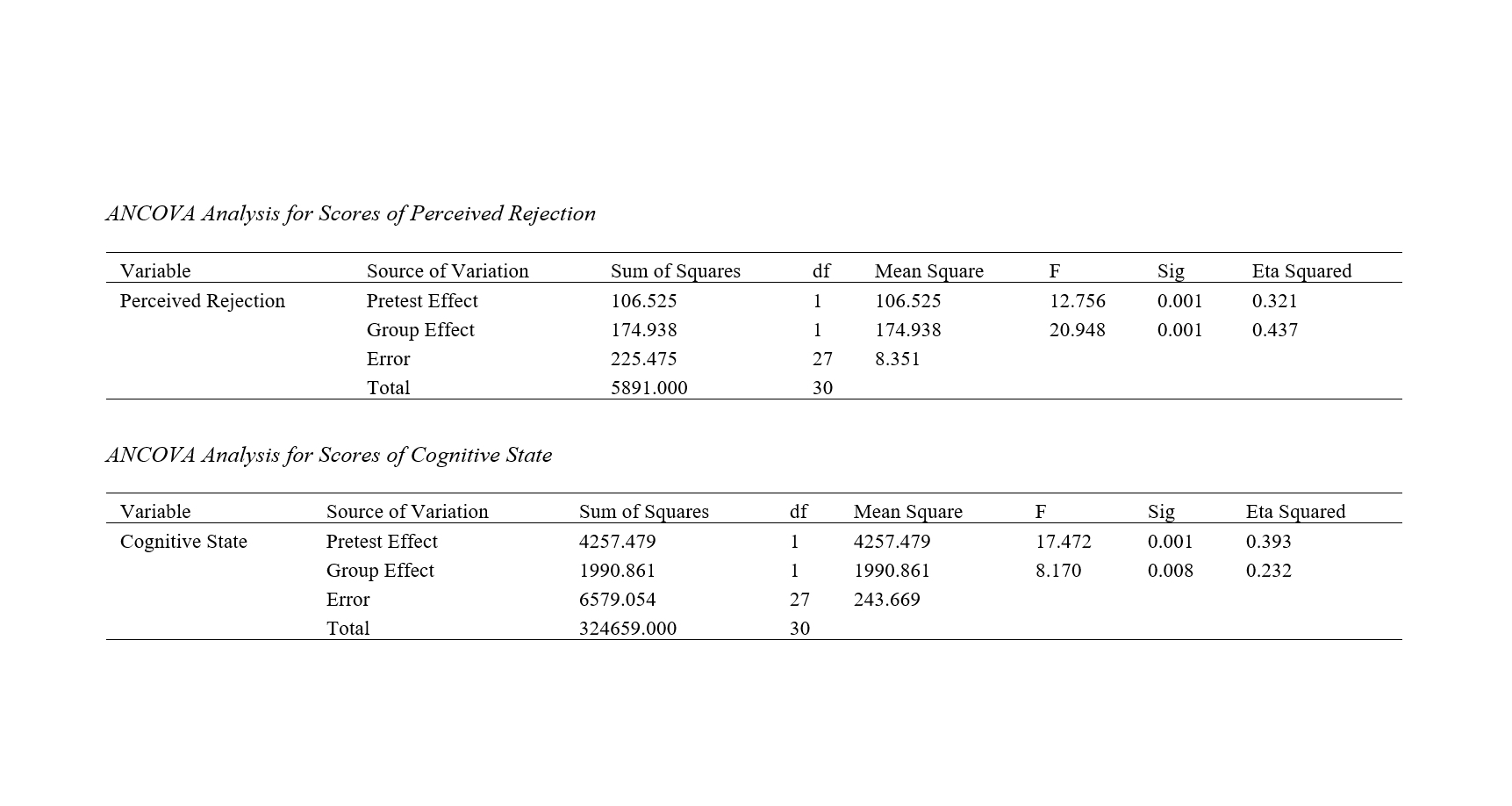
The current research aimed to determine the effectiveness of the paradoxical therapy model on behavioral emotion regulation, perceived rejection, and cognitive status of retirees from Bank Melli in Tehran. The study employed a quasi-experimental method with experimental and control groups in a pretest-posttest design. The population consisted of all male and female retirees of Bank Melli Tehran in 2023, and based on a convenience sampling method, 30 individuals were selected and randomly assigned to the experimental (15 individuals) and control (15 individuals) groups. The data collection tools included the Kraaij and Garnefski Behavioral Emotion Regulation Questionnaire (2019), the Leary and McDonald Rejection Sensitivity Questionnaire (2010), and the Nejati Cognitive Skills Questionnaire (2013). The paradoxical therapy sessions comprised six 60-minute sessions held weekly. Data were analyzed using multivariate and univariate analysis of covariance with the SPSS software package. The results showed a significant difference in the linear combination of scores for behavioral emotion regulation, perceived rejection, and cognitive status of the retirees participating in this study based on the group (F = 7.669, sig = 0.0001). Furthermore, the eta-squared coefficients indicated that 78.2% of the variance in the dependent variables was accounted for by the grouping variables (experimental and control groups). Thus, the implementation of the paradoxical therapy approach has improved emotional regulation behavior and cognitive status, and reduced the scores for perceived rejection.
Downloads
References
1. Stein D. The new meaning of retirement: Citeseer; 2000.
2. Karami A, Shahmohammadi M. The Prediction of Happiness in Military Retired Personnels based on Tolerance of Ambiguity and Spiritual Well-being. Journal of Military Psychology. 2023;14(53):101-16.
3. Ryser V-A, Wernli B. How does transitioning into retirement impact the individual emotional system? Evidence from the Swiss context. Advances in Life Course Research. 2017;32:42-54. [DOI]
4. Fogel Y, Rosenblum S, Hirsh R, Chevignard M, Josman N. Daily Performance of Adolescents with Executive Function Deficits: An Empirical Study Using a Complex-Cooking Task. Occupational Therapy International. 2020;2020:3051809. [PMID: 32099539 ] [PMCID: PMC7026736] [DOI]
5. Dehghani B, Dashtban farouji M, Khoshnoodi A, Alinejad Mofrad M. The Effects of Population Aging on the Future of Iran's Pension System. Iranian Population Studies. 2020;6(1):261-88.
6. Chan PCC. Retirement planning, transition and life satisfaction: A study of younger male retirees in Hong Kong. 2016.
7. Kraaij V, Garnefski N. The Behavioral Emotion Regulation Questionnaire: Development, psychometric properties and relationships with emotional problems and the Cognitive Emotion Regulation Questionnaire. Personality and Individual Differences. 2019;137:56-61. [DOI]
8. Vaseghi Z, Ahadi H, Bigdeli H, Khalatbari J. Developing a Structural Model of the Relationship between Primary Maladaptive Schemas and Emotional Regulation with Marital Satisfaction with the Mediation of Resilience in Married Women Referring to Islamic Lifestyle Counseling Centers. islife. 2022;6(1):620-9.
9. MacDonald G, Leary MR. Why Does Social Exclusion Hurt? The Relationship Between Social and Physical Pain. Psychological Bulletin. 2005;131(2):202-23. [PMID: 15740417] [DOI]
10. Ebrahimi S, Laripour R, Ghyasi H, Ramshini M, Delbari A. Grascophobia Among Student of University of Social Welfare and Rehabilitation Science. Salmand: Iranian Journal of Ageing. 2020;15(1):82-93. [DOI]
11. Ghaemi F, Rostami R, Mirkamali SM, Salehi K. Systematic and analytical review of theories, components and models of executive functions of the brain. Rooyesh-e-Ravanshenasi Journal(RRJ). 2021;10(6):211-26.
12. Vahidi Nesab H, Abbasi M. Predicting academic vitality based on the psychosocial atmosphere of teaching and family communication pattern. Journal of new achievements in humanities studies. 2020;3(32):149-57.
13. Besharat MA. Evaluating the effectiveness of paradox therapy for the treatment of obsessive-compulsive disorder: A case study. Journal of Psychological Studies. 2019;14(4):7-36.
14. Nikan A, Lotfi Kashani F, Vaziri S, Mojtabaie M. Comparison of paradoxical timetable and cognitive behavioral therapy on worry and rumination of individuals with social anxiety. Rooyesh-e-Ravanshenasi Journal(RRJ). 2021;10(1):1-14.
15. Dehaghin V, Basharat MA, Gholam Ali Lavasani M, Naqsh Z. The effectiveness of paradoxical therapy on relational practical obsessive-compulsive symptoms. Journal of adolescent and youth psychological studies. 2023;4(4):164-83. [DOI]
16. Dehaqin V, Gholamali Lavasani M, Naghsh Z. The effectiveness of paradoxical therapy on relational practical obsessive-compulsive symptoms. Journal of Adolescent and Youth Psychological Studies (JAYPS). 2023;4(4):118-33. [DOI]
17. Ashori M, Najafi F. Cognitive Emotion Regulation Training on Cognitive Flexibility and Alexithymia in Hearing-Impaired Students. Middle Eastern Journal of Disability Studies. 2020;10(0):50-.
18. Brown SL, Mitchell SM, Roush JF, La Rosa NL, Cukrowicz KC. Rejection sensitivity and suicide ideation among psychiatric inpatients: An integration of two theoretical models. Psychiatry Research. 2019;272:54-60. [PMID: 30579182] [DOI]
19. Nejat A, Rafezi Z, Hossseinsabet F. Predicting Obsessive-Compulsive Disorder based on Mindfulness, Cognitive Emotion Regulation Strategies, and Coping Strategies. Journal of Research in Behavioural Sciences. 2020;18(2):249-59. [DOI]
20. Nejati V. Cognitive abilities questionnaire: Development and evaluation of psychometric properties. Advances in Cognitive Science. 2013;15(2):11-9.
21. Rajabpour S, Nejat H. Comparison of the Cognitive-Behavioral Therapy and Drug Therapy with Bupropion on Sexual Satisfaction and Marital Disturbance in Women with Sex Anxiety. Middle Eastern Journal of Disability Studies. 2019;9(0):28-.
22. Ghadimi Nouran M, Shafiabady A, Khodabakhshi Koolaee A, Asgari M. Develop a Therapy Protocol Based on the Paradoxical Timetabling Model and Its Effectiveness on Binge Eating Disorder among Women. Journal title. 2020;14(2):81-94.
Downloads
Additional Files
Publication Timeline
License
Copyright (c) 2024 Fatemeh Ebrahimpour Khartoomi (Author); Hossein Khedmatgozar (Corresponding Author)

This work is licensed under a Creative Commons Attribution-NonCommercial 4.0 International License.